
Luke 19: Zacchaeus The Tax Collector
The journey from Luke 18 to Luke 19 reminds us that whether we are flat on our backs, begging by the wayside, or hidden up in the branches of a sycamore tree, trying to maintain our distance, Jesus is actively seeking us out. He comes to bring us both sight and salvation.
The Parable of the Ten Minas
Introduction
Good evening, brothers and sisters. May the peace of the Lord Jesus Christ and His abundant blessings be with you as we study His Word together today.
In Luke 18, Jesus famously stated that it is easier for a camel to go through the eye of a needle than for a rich man to enter the Kingdom of God, causing the crowd to ask in despair, “Who then can be saved?” Jesus answered, “What is impossible with man is possible with God.”
Zacchaeus is the ultimate "camel" stuck outside the needle's eye. Yet, the same grace that opened the eyes of the blind beggar completely transforms the heart of this wealthy extortioner. Where the Rich Ruler walked away in sorrow, gripping his wealth, a seed was nevertheless planted. Jesus looked at him with love, leaving him with a profound choice: to continue clinging to his wealth, or to give it up and follow The Way.
As we cross into Luke 19, we see the beautiful fruit of that same choice made right. Zacchaeus stands up in joy, giving half his goods to the poor and restoring his frauds fourfold.
The journey from Luke 18 to Luke 19 reminds us that whether we are flat on our backs, begging by the wayside, or hidden up in the branches of a sycamore tree, trying to maintain our distance, Jesus is actively seeking us out. He comes to bring us both sight and salvation.
Personal Reflection & Application
This beautiful picture of Jesus’s patience and grace hits very close to home for me tonight. Just recently, coming off a fantastic, blessed evening, I faced a painful moment where someone accused me of not raising my child in a "God-like, Christian fashion."
My daughter and her friend had gone downtown to explore the sights and sounds of the marketplace, simply enjoying themselves along the way. She posted pictures of her experience, full of happiness and joy. Yet, others were quick to judge.
It made me think deeply about our role as Christian parents and leaders. We need to communicate with our children both verbally and with our ears, listening with an open mind. If we don't, we risk turning them completely away from God. Look at how Jesus handled people. He did not harshly rebuke or force the rich man; He stated the truth plainly and left him with a choice. In the same manner, Zacchaeus was given a choice.
As parents and believers, we are called to be lights and beacons for our children, guiding them home—not firemen trying to put out their joy, or rigid rulers who lack empathy for the youth.
When we give them the room to choose God out of genuine joy, rather than rules and coercion, we see the same transformation that Zacchaeus experienced. With that spirit of stewardship over what has been entrusted to us, let us open our hearts to the text itself and see how Jesus models this exact grace in Jericho.
Zacchaeus, the Tax Collector
Luke 19:1-10 (Scripture)
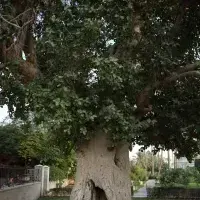
1 Jesus entered Jericho and was passing through. 2 A man was there by the name of Zacchaeus; he was a chief tax collector and was wealthy. 3 He wanted to see who Jesus was, but because he was short, he could not see over the crowd. 4 So he ran ahead and climbed a sycamore-fig tree to see him, since Jesus was coming that way.
5 When Jesus reached the spot, he looked up and said to him, “Zacchaeus, come down immediately. I must stay at your house today.” 6 So he came down at once and welcomed him gladly. 7 All the people saw this and began to mutter, “He has gone to be the guest of a sinner.”
8 But Zacchaeus stood up and said to the Lord, “Look, Lord! Here and now I give half of my possessions to the poor, and if I have cheated anybody out of anything, I will pay back four times the amount.”
9 Jesus said to him, “Today salvation has come to this house, because this man, too, is a son of Abraham. 10 For the Son of Man came to seek and to save the lost.”
Commentary & Deeper Study
1. The Outcast in the Tree
To understand the weight of this moment, we have to look at who Zacchaeus was. As a chief tax collector in Jericho, he was deeply despised. Jews viewed tax collectors as traitors who sold out to Rome, skimming wealth off the backs of their own people. He was wealthy, but completely isolated.
When Jesus passes through, Zacchaeus faces a practical barrier: his short stature. But notice his creative, undignified solution—a wealthy, powerful man running ahead to climb a sycamore-fig tree just for a glimpse of Jesus. He never expected to be noticed; he just wanted to see.
2. The Invitation of Grace, Not Coercion
The entire turning point hinges on verse 5. Jesus stops, looks up, and calls him by name: “Zacchaeus, come down immediately. I must stay at your house today.”
Notice what Jesus doesn't do. He doesn't stand at the bottom of the tree shouting a list of Zacchaeus's sins. He doesn't demand repentance before offering community. Just like He did with the Rich Ruler, Jesus states his intention plainly and invites a relationship. The onlookers scoff and mutter, judging Jesus for being the "guest of a sinner." But Jesus disregards the rigid, legalistic whispers of the crowd.
3. The Transformation of Joy
Because Zacchaeus is met with an invitation rather than a hammer, his response is instantaneous and joyful. He doesn't give out of begrudging obligation; he surrenders his wealth out of sheer overflow. He vows to give half to the poor and repay any fraud fourfold, shattering the "camel through the eye of a needle" barrier effortlessly because God changed his heart from the inside out.
Jesus declares: “Today salvation has come to this house.” Jesus Himself embodies that salvation. By receiving Jesus gladly, this outcast is restored as a true “son of Abraham.”
Central Takeaway
Verse 10 encapsulates the entire mission of Christ: “For the Son of Man came to seek and to save the lost.” This connects beautifully back to the parables of the lost sheep, the lost coin, and the prodigal son in Luke 15. Jesus takes the initiative. He seeks us out when we are hiding in the branches, trying to maintain our distance.
As parents, leaders, and believers, our task is simply to show the heart of Jesus to the world. When we mirror His empathy, listen with open ears, and offer truth wrapped in relationship rather than rigid coercion, we create the space for true, life-altering salvation to enter the house.
With that spirit of stewardship—how we guard, guide, and nurture what God has entrusted to us—let’s move forward now into the next part of Luke 19 and examine the Parable of the Ten Minas.
The Parable of the Ten Minas
Luke 19:11-27 (Scripture)
11 While they were listening to this, he went on to tell them a parable, because he was near Jerusalem and the people thought that the kingdom of God was going to appear at once. 12 He said: “A man of noble birth went to a distant country to have himself appointed king and then to return. 13 So he called ten of his servants and gave them ten minas. ‘Put this money to work,’ he said, ‘until I come back.’
14 “But his subjects hated him and sent a delegation after him to say, ‘We don’t want this man to be our king.’
15 “He was made king, however, and returned home. Then he sent for the servants to whom he had given the money, in order to find out what they had gained with it.
16 “The first one came and said, ‘Sir, your mina has earned ten more.’
17 “‘Well done, my good servant!’ his master replied. ‘Because you have been trustworthy in a very small matter, take charge of ten cities.’
18 “The second came and said, ‘Sir, your mina has earned five more.’
19 “His master answered, ‘You take charge of five cities.’
20 “Then another servant came and said, ‘Sir, here is your mina; I have kept it laid away in a piece of cloth. 21 I was afraid of you, because you are a hard man. You take out what you did not put in and reap what you did not sow.’
22 “His master replied, ‘I will judge you by your own words, you wicked servant! You knew, did you, that I am a hard man, taking out what I did not put in, and reaping what I did not sow? 23 Why then didn’t you put my money on deposit, so that when I came back, I could have collected it with interest?’
24 “Then he said to those standing by, ‘Take his mina away from him and give it to the one who has ten minas.’
25 “‘Sir,’ they said, ‘he already has ten!’
26 “He replied, ‘I tell you that to everyone who has, more will be given, but as for the one who has nothing, even what they have will be taken away. 27 But those enemies of mine who did not want me to be king over them—bring them here and kill them in front of me.’”
The Setting: Correcting Misconceptions (v. 11-12)
While the people were listening to Jesus speak about salvation coming to Zacchaeus's house, He went on to tell them a parable. He was drawing near to Jerusalem, and the atmosphere was electric. The crowds were buzzing because they assumed the Kingdom of God would appear at once—they expected a sudden, triumphant political takeover.
To ground their expectations, Jesus tells a story about a man of noble birth who travels to a "distant country" to be appointed king before returning.
A Tale of Two Journeys: Think back to Luke 15. We’ve seen a "distant country" before in Luke’s gospel—it’s where the Prodigal Son ran off to squander his inheritance. But Jesus shows us a completely different kind of journey here. This Nobleman isn't leaving to lose himself; He is leaving to claim His crown. He must depart to His Father, receive His kingship, and ultimately return in glory.
Jesus is speaking of Himself. He is letting the crowd know that the Kingdom isn't arriving in full today. There will be a time of departure, a period of delay, and an ultimate return.
The Ten Servants and the Test of Faithfulness (v. 13-14)
Before the nobleman leaves, he calls ten of his servants and entrusts them each with a mina—worth about three months' wages—telling them plainly: “Put this money to work until I come back.”
The use of the number ten immediately triggers our minds to look backward in Luke's gospel:
- In Luke 17: Jesus healed ten lepers, but only one returned to praise God and show true faith.
- In Luke 19: The script flips beautifully. The king gives resources to ten servants, but upon his return, it is one specific servant who chooses to do absolutely nothing with what he was given.
While the first two servants immediately put their resources to work and multiply what they were given, this third servant wraps his mina in a piece of cloth and hides it away.
Fear, Stagnation, and Hidden Talents (v. 20-23)
When called to give an account, this unfaithful servant claims he was paralyzed by fear. He looks at the master and says, “I was afraid of you, because you are a hard man.”
Just like the citizens in the territory who sent a delegation saying, “We don’t want this man to be our king,” this servant rejects the true, generous nature of the king. He views his master through a lens of legalism and harshness, choosing safety, stagnation, and fear over joyful stewardship.
The master judges him by his own words. Even if the servant truly believed the king was harsh, why didn't he at least put the money on deposit to earn basic interest? He didn't even try. He hid it away.
The Heart of the Matter: Where Are You Investing?
Church, this is the question that should make us pause tonight: What have you done with the talents and resources that God has given you?
When Christ returns, what will He find us doing? How will you answer the King? The truth at the heart of this parable is about to leave some of us exposed.
Look at the contrast. The first two servants took what was given to them, stepped out in faith, and increased their portions. But the third servant hid it away. Let's bring this home, away from just financial language:
- Have we invested God's investments in our children, our families, and our friends?
- Or have we been frozen by fear—scared of what the world might think, scared of making a mistake, or hiding behind rigid rules instead of sharing the vibrant joy of the King?
If you are a parent, your children are the ultimate "mina" entrusted to your stewardship. Don't wrap their lives in a cloth of fear, over-control, and legalism because you view God as a "hard man." Invest in them with love, grace, and open ears!
A Stark Warning (v. 24-27)
To the servant who did nothing, the king commands that his portion be taken away and given to the one who has ten. The crowd objects: "Sir, he already has ten!" But the King replies with a spiritual principle: To everyone who has, more will be given; but from the one who has nothing, even what he has will be taken away.
And for those citizens who outright rejected his kingship? A terrifying judgment awaits them. They are cast out completely, condemned for refusing to submit to the grace and authority of the rightful King.
When the King returns, let Him not find our hands empty, our talents buried, and our families neglected out of fear. Let Him find us actively, joyfully putting His grace to work.
Conclusion: The King Who Seeks, Saves, and Demands a Choice
Summary of the Journey
Tonight, our journey through Luke 19 has revealed the true heart of the Kingdom of God. It is a Kingdom that flips our human expectations completely upside down.
In Zacchaeus, we saw the ultimate "camel" pass through the eye of a needle. We witnessed how an encounter with Jesus—marked not by rigid coercion, but by an invitation of grace—can completely transform a heart from selfish greed to overflowing, joyful generosity. Zacchaeus chose to receive the King, and his life became an immediate beacon of restoration.
In the Parable of the Ten Minas, we were given our mirror. Jesus confronted the crowds who expected an effortless, automatic kingdom. He reminded them—and us—that leadership in His Kingdom requires faithful, active stewardship during His physical absence. We cannot let fear freeze us into hiding our talents, burying our resources, or withholding grace from our children and families. We are called to invest in what has been entrusted to us out of love, not fear.
Bridge to Luke 19:28-48: The Triumphant Entry and the Weeping King
As we turn the page to the final section of Luke 19, the delay is over. The King who went to a distant country to claim His crown now marches directly into His capital city.
Luke 19:28: After Jesus had said this, he went on ahead, going up to Jerusalem.
We are about to step into the Triumphant Entry. The crowds will throw down their cloaks, waving palm branches, crying out, "Blessed is the king who comes in the name of the Lord!" But notice the profound shift in tone. As Jesus approaches the city, He doesn't puff out His chest in political triumph; He looks at Jerusalem and weeps. He weeps because they do not recognize the time of God's coming to them. He enters the temple and drives out those who turned a house of prayer into a den of thieves.
The same King who invited Himself into the home of Zacchaeus now invites Himself into the temple of God—demanding a choice from the religious establishment and leaving us with an urgent call to action.
Call to Action
Brothers and sisters, the King is passing through our lives tonight just as He passed through Jericho. Do not leave here unchanged.
- Be a Beacon, Not a Fireman: In your homes, with your children, and among your friends, stop leading with legalism or control that puts out their joy. Communicate with open ears. Lead with an invitation to a relationship, just as Jesus did at the foot of the sycamore tree.
- Unwrap Your Mina: Identify the unique gift, family member, or resource God has placed in your care. Stop hiding it away out of fear of what others might think or fear of failure. Step out in faith and put His investments to work today.
- Yield to His Kingship: Do not be like the citizens who muttered, "We do not want this man to reign over us." Lay down your pride, surrender your wealth, and welcome Him gladly into your house.
Closing Prayer
Heavenly Father, Almighty God,
We thank You for Your living, breathing Word that pierces our hearts tonight. Forgive us for the times we have been like the crowd—quick to judge, quick to mutter, and slow to offer grace. Forgive us for the times we have buried Your gifts in the dirt out of fear, viewing You as a harsh master rather than a loving, merciful Savior.
Give us the courage of Zacchaeus to drop our pride, climb down from our safe distances, and welcome You joyfully into every room of our lives. Holy Spirit, empower us to be stewards who multiply love, faith, and grace in our homes. Guard our children from the world's harsh judgments, and let our lives be a safe harbor that points them directly to Your goodness. Prepare our hearts now to walk with Jesus into Jerusalem, to stand witness to His authority, and to submit to His beautiful reign.
In the mighty and transformative name of Jesus Christ we pray, Amen.
The Lord's Prayer
Our Father, who art in heaven, hallowed be thy name. Thy kingdom come, thy will be done on earth as it is in heaven. Give us this day our daily bread, and forgive us our debts, as we forgive our debtors. And lead us not into temptation but deliver us from evil. For thine is the kingdom, and the power, and the glory, forever. Amen.
In His Grace, Tomas
In His Grace,
Tomas
© 2026 The-Way.blog Digital Publications. All Rights Reserved.
Appendix & Study Resources
I. Comprehensive Biblical References
| Section | Scripture Passage | Core Theological Focus |
| The Legalistic Contrast | Luke 18:18–30 | The Rich Ruler clings to wealth; humanly impossible salvation. |
| The Blind Made Whole | Luke 18:35–43 | The blind beggar receives sight through persistent faith. |
| The Camel Through the Needle | Luke 19:1–10 | Zacchaeus experiences inward transformation and active restitution. |
| The Postponed Kingdom | Luke 19:11–27 | The Parable of the Minas: Stewardship during the King's delay. |
| The Sovereign Entrance | Luke 19:28–40 | The Triumphant Entry: arrival of the Messianic King. |
| The Cleansed Temple | Luke 19:41–48 | Jesus weeps over Jerusalem and drives out the corrupt merchants. |
II. Critical and Exegetical Footnotes
1. The Chief Tax Collector (
)
Zacchaeus is the only individual in the entire corpus of Greco-Roman literature explicitly designated as an architelōnēs (chief tax collector). Jericho was a lucrative major customs hub for balsam and trade routing. This implies that Zacchaeus did not merely operate a tax booth; he ran a regional syndicate, buying tax-farming rights from Rome and hiring subordinates to extort excess revenue. His financial restitution is a staggering baseline of massive systemic structural transformation.
2. The Legal Standard of Restitution
When Zacchaeus vows to restore money fourfold, he is choosing to benchmark his repentance against the absolute highest rigors of Roman and Torah law:
- Leviticus 6:5 and Numbers 5:7 require the principal amount plus a twenty percent () penalty for voluntary confessions.
- Exodus 22:1 demands a fourfold to fivefold restitution only if a thief is caught red-handed with stolen livestock.
By voluntarily applying the absolute maximum penalty reserved for flagrant, forced justice to himself, Zacchaeus demonstrates that his heart has been thoroughly liberated from greed.
3. Exegesis of the Piece of Cloth (
)
The third servant wraps his mina in a soudarion—a sweat-cloth or handkerchief frequently used to wrap the faces of the dead (John 11:44). Legally, rabbinic law of the first century regarded wrapping money in cloth as negligent custody (failing the duty of care); secure safekeeping required burying money deep in the earth. The servant's choice symbolizes a dead, stagnant relationship with his king—burying a living resource in a burial shroud.
III. Canonical Cross-References
1. The Reversal of Eschatological Status
The transition from the rich ruler walking away in sorrow to the rich tax collector standing in joy illustrates the upside-down gospel dynamic of status reversal:
- Luke 1:53 (The Magnificat): "He has filled the hungry with good things but has sent the rich away empty."
- Luke 13:30: "Indeed, there are those who are last who will be first, and first who will be last."
2. Seeking the Scattered Flock
Jesus’ explicit mission statement in Luke 19:10 ("to seek and to save the lost") serves as a direct fulfillment of prophetic messianic descriptions concerning God's covenant actions:
- Ezekiel 34:11: "For this is what the Sovereign Lord says: I myself will search for my sheep and look after them."
- Ezekiel 34:16: "I will search for the lost and bring back the strays. I will bind up the injured and strengthen the weak..."
3. Historical Subtext of the Archelaen Crisis
Jesus' audience would have immediately recognized the political structural elements of the Parable of the Minas. In 4 BC, Archelaus (a son of Herod the Great) traveled to Rome to request that Caesar Augustus appoint him king over Judea. The Jewish people despised Archelaus and sent a real-world political delegation of 50 men to Rome to protest his kingship, stating, "We do not want this man to rule over us."
Augustus granted Archelaus rule over half the territory but withheld the title of King. Upon his return, Archelaus exacted bloody, brutal retribution against his critics—matching the intense warning found in verse 27.
Digital Copyright Notice
Copyright © 2026. All Rights Reserved. This document is protected under international copyright and digital rights management laws.
- Fair Use Citation: Short quotations or excerpts used in blog reviews, theological essays, or academic papers must provide appropriate attribution referencing the author and title of this work.
- Permitted Use: Permission is granted to download, store, electronically view, and print physical copies of this text solely for personal use, private study, small group Bible discussions, or local church ministry settings.
- Prohibited Use: No part of this digital publication may be reproduced, redistributed, resold, hosted on public servers, or transmitted in any form or by any means, including photocopying, digital file sharing, recording, or translation into other languages, for commercial purposes without the prior written permission of the copyright holder.