
Luke 20: The Authority of Jesus Questioned
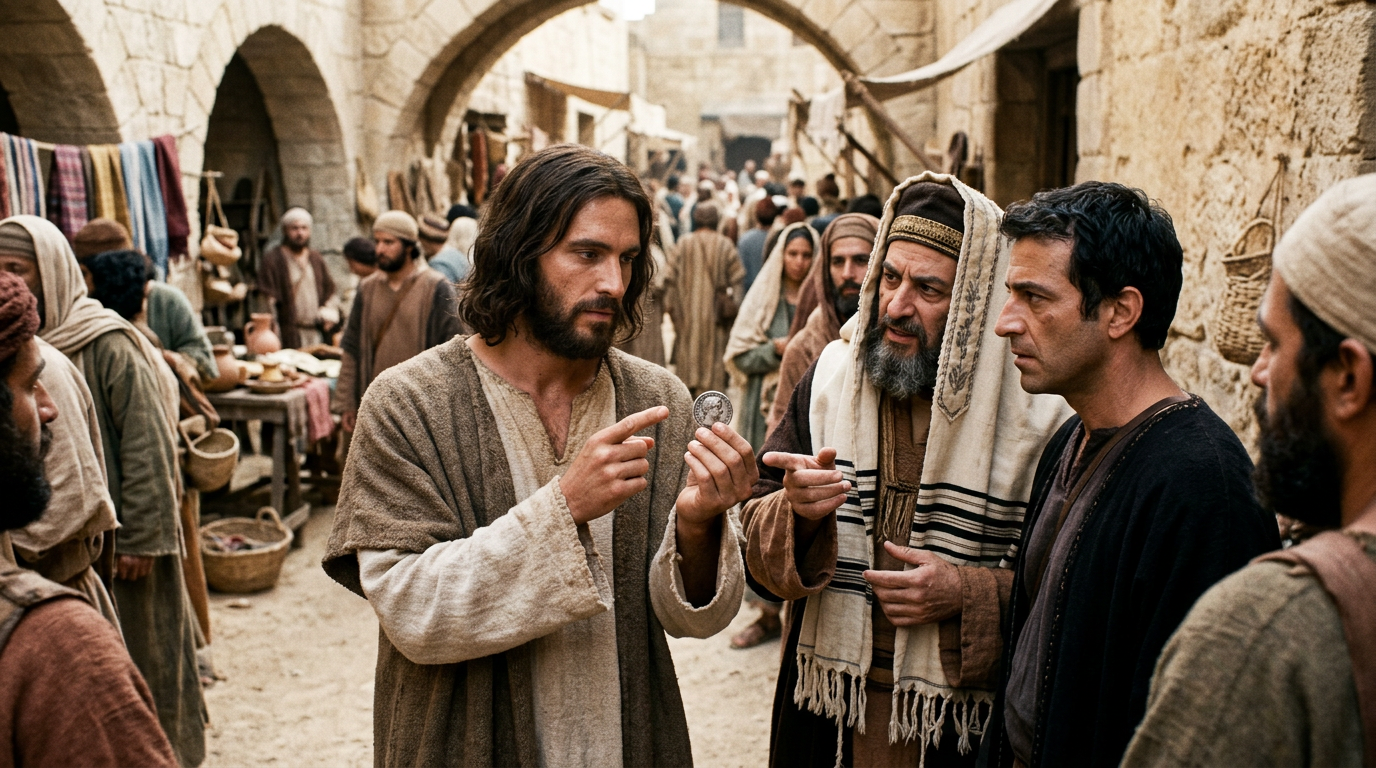
The Parable of the Tenants & Paying Taxes to Caesar
Greetings & Introduction
Good Monday evening, brothers and sisters. May the peace of the Lord Jesus Christ and His abundant blessings be with you as we study His Word together today.
Yesterday, we walked the road with Christ Jesus in Luke 19. We witnessed the festive atmosphere of the Triumphal Entry of a King give way to holy tears as Jesus wept over a broken, blind city. We felt the deep, parental ache of a Heavenly Father who, out of an overwhelming, unstoppable love, stepped into the ultimate heartbreak of Calvary so that the world might be saved. We saw Jesus claim absolute authority over creation on a humble colt, exposing the hollow spectacles of corrupt religious leadership and reclaiming His Temple as a house of prayer.
The story of Luke 19 reminds us that Jesus did not come to conform to our earthly expectations, nor to entertain us. He came to conquer our deepest problem: our sin.
And it is exactly here, in Luke 20, where that immense tension finally erupts. The chief priests and scribes will look Jesus in the eye and demand: “By what authority are you doing these things?” They will try to trap Him, test Him, and discredit Him because His truth threatens their earthly comfort and pride.
Before we begin, let us ask our Lord Jesus Christ to grant us the power of the Holy Spirit, so that we may receive His Word not just with our minds, but with our hearts and souls.
Let’s open our Bibles now and learn together what these elite leaders are plotting.
The Authority of Jesus Questioned
Luke 20: 1-8 (NIV) Scripture
One day, as Jesus was teaching the people in the temple courts and proclaiming the good news, the chief priests and the teachers of the law, together with the elders, came up to him. 2 “Tell us by what authority you are doing these things,” they said. “Who gave you this authority?”
3 He replied, “I will also ask you a question. Tell me: 4 John’s baptism—was it from heaven, or of human origin?”
5 They discussed it among themselves and said, “If we say, ‘From heaven,’ he will ask, ‘Why didn’t you believe him?’ 6 But if we say, ‘Of human origin,’ all the people will stone us, because they are persuaded that John was a prophet.”
7 So they answered, “We don’t know where it was from.”
8 Jesus said, “Neither will I tell you by what authority I am doing these things.”
The opening to these scriptures should put all of us on notice—especially church leaders. By questioning Jesus, these men are not seeking truth; they are passing judgment and looking for ways to discredit Him. They care more about protecting their own positions than submitting to God.
As I read this, two other letters from the Apostle Paul come to mind. First, I think of his letter to the Philippians, where Paul warns us not to rely on our own religious credentials or titles, but to have the same humble mind as Christ. Second, I think of 1 Corinthians, where Paul corrects the church because they were arguing, “I follow Paul,” or “I follow Apollos.” Just like the chief priests in Luke 20, the Corinthians were focused on human leadership, status, and authority.
When church leaders—then or now—focus on their own authority rather than Christ’s, we fall into the same trap as the chief priests. We start judging the Word of God rather than letting it judge us.
But look at how this encounter finishes. The very trap the elite set for Jesus becomes the trap that collapses on them. It is a comedy of errors, a Greek tragedy, or—for those of us who remember the classic cartoons—it’s pure Wile E. Coyote and the Road Runner! They painted a fake tunnel on the wall to trick Jesus, but He walks right through it, while they run headfirst into the bricks. They are left standing there, whispering frantically among themselves, completely outsmarted by their own scheme and forced to mutter, “We don’t know.”
When you see elite silence like that, it should change how we view spiritual authority today. The chief priests had all the degrees and credentials of their day, yet they missed God entirely because their hearts were full of pride. Meanwhile, someone who has truly answered the call of the Holy Spirit carries real, divine authority—whether they learned the scriptures at a prestigious institution or graduated from the school of hard knocks.
When we see people out on the streets preaching the Word, who are we to step into the shoes of the chief priests and judge them just because they might look different or lack formal titles?
The Gospel of Matthew reminds us so clearly that God looks directly at the heart. Jesus warned us that harboring hidden sin in our minds—whether it is lust, envy, or self-righteous judgment—is just as real as committing it outwardly. If we are sitting in the pews or standing in leadership, judging others in our minds, we are operating in the same spirit as these chief priests.
Let’s keep our hearts clean, our minds humble, and move forward into the next verses to see how Jesus addresses this head-on.
The Parable of the Tenants
Luke 20: 9-19 (NIV) Scripture
He went on to tell the people this parable: “A man planted a vineyard, rented it to some farmers, and went away for a long time. 10 At harvest time, he sent a servant to the tenants so they would give him some of the fruit of the vineyard. But the tenants beat him and sent him away empty-handed. 11 He sent another servant, but that one also beat and treated him shamefully and sent him away empty-handed. 12 He sent still a third, and they wounded him and threw him out.
13 “Then the owner of the vineyard said, ‘What shall I do? I will send my son, whom I love; perhaps they will respect him.’
14 “But when the tenants saw him, they talked the matter over. ‘This is the heir,’ they said. ‘Let’s kill him, and the inheritance will be ours.’ 15 So they threw him out of the vineyard and killed him.
“What then will the owner of the vineyard do to them? 16 He will come and kill those tenants and give the vineyard to others.”
When the people heard this, they said, “God forbid!”
17 Jesus looked directly at them and asked, “Then what is the meaning of that which is written:
“‘The stone the builders rejected
has become the cornerstone’[a]?
18 Everyone who falls on that stone will be broken to pieces; anyone on whom it falls will be crushed.
19 The teachers of the law and the chief priests looked for a way to arrest him immediately, because they knew he had spoken this parable against them. But they were afraid of the people.
Normally, we would start our study right at the beginning with verse 9. But tonight, I want us to look first at the very last sentence in this passage—verse 19. It says, “The teachers of the law and the chief priests looked for a way to arrest him immediately... But they were afraid of the people.”
Think about that. Their hidden motives and corrupted hearts had just been completely exposed to the world, and they were terrified. They weren’t experiencing godly sorrow or repentance; they were filled with rage because they were losing their grip on the crowds.
And why were they so angry? Because Jesus used this parable to trace the entire, tragic history of God’s relationship with Israel.
He reminds them that since the days of the prophets, God has established His vineyard and sent messenger after messenger to guide His people. Yet, time and time again, the leaders of Israel rejected them, beat them, and drove them away. Now, the ultimate moment has arrived. The very Son of God is standing right in their midst—the ultimate Heir—and instead of bowing to His divine authority, these elite leaders are already plotting to cast Him out and crucify Him.
They wanted the inheritance—the power, the praise, the control—without the King.
Paying Taxes to Caesar
Luke 20: 20-26 (NIV) Scripture:
Keeping a close watch on him, they sent spies who pretended to be sincere. They hoped to catch Jesus in something he said, so that they might hand him over to the power and authority of the governor. 21 So the spies questioned him: “Teacher, we know that you speak and teach what is right, and that you do not show partiality but teach the way of God in accordance with the truth. 22 Is it right for us to pay taxes to Caesar or not?”
23 He saw through their duplicity and said to them, 24 “Show me a denarius. Whose image and inscription are on it?”
“Caesar’s,” they replied.
25 He said to them, “Then give back to Caesar what is Caesar’s, and to God what is God’s.”
26 They were unable to trap him in what he had said there in public. And astonished by his answer, they became silent.
When the religious leaders find themselves completely stumped, they resort to guerrilla warfare. They send in undercover spies and political collaborators to trick Jesus into making a statement against the ruling authority of Rome. This wasn’t a harmless debate; they were trying to get Him executed for treason.
When I look at this passage, I can’t help but think about our modern world. Too often, we hear endless complaints about what the government is or isn’t doing. We see a political scene run by people who are entirely willing to pervert the name of Christ for their own earthly power. Yes, bad policies and broken governments affect our daily lives, but we have to remember that they are ultimately secular, temporary, and worldly. With Christ’s help, we will get through them.
The danger is that if we let political anxiety consume us, we can easily lose sight of the most precious gift God has given us: His grace through Christ Jesus.
Look at how Jesus draws the ultimate line in the sand. He doesn’t side with Rome, and He doesn’t side with the political rebels. He says: “Give back to Caesar what is Caesar’s, and to God what is God’s.”
With one sentence, Jesus establishes a profound separation between our faith—not a man-made religion, but a living faith—and worldly governments. Caesar’s face was stamped on that coin, so the coin belonged to him. But God’s image is stamped on your very soul. You belong to Him.
The spies were utterly astonished by this answer and fell silent.
For us as true believers in The Way, our marching orders are clear. We have to live our lives in this world without letting the world extinguish the light within us. Our job isn’t to fix every worldly empire; our job is to protect that inner light and allow our families, our friends, and our communities to see His glory shine directly through us.
Summary of Luke 20:1-26
Before we look ahead, let’s trace the pattern of what just unfolded in these first twenty-six verses. We have witnessed a calculated, multi-pronged assault on the authority of Jesus Christ, broken down into three clear movements:
- The Institutional Attack (Verses 1-8): The top tier of the religious establishment—the chief priests, scribes, and elders—demand to see Jesus’ credentials. Instead of playing their political game, Jesus exposes their cowardice by forcing them to choose between declaring John the Baptist a fraud or facing a riot from the people. They choose silence over truth.
- The Prophetic Warning (Verses 9-19): Jesus turns the tables through the Parable of the Tenants. He lays bare Israel’s history of rejecting God’s messengers and prophesies His own upcoming murder at their hands. He warns them that the stone they reject will ultimately crush their false security.
- The Political Trap (Verses 20-26): Undercover spies try to corner Jesus into choosing between treason against Rome and betrayal of the Jewish people over Roman taxes. Jesus bypasses the trap entirely by declaring that while Caesar can claim his temporary coins, God claims the human soul.
Conclusion & Bridge to Luke 20:27-47
What we see throughout these confrontations is a powerful, unshakeable truth: Jesus cannot be handled on human terms. The elite tried to trap Him with institutional power, historical guilt, and political leverage—and every single time, their traps collapsed on them.
But the religious leaders aren’t done yet. As we move into the final sections of Luke 20, the battleground shifts from politics to eternity. The Sadducees—the wealthy, aristocratic elites who mock the idea of an afterlife—step forward with a ridiculous, hypothetical riddle about a woman with seven dead husbands. They try to make the resurrection look foolish.
Once again, Jesus blows past their small-minded traps. He pulls back the curtain on eternity, declaring that our God is not a God of the dead, but of the living! He exposes the scribes who love their long robes and public honors while ruining the lives of the vulnerable. Jesus turns human hierarchy upside down.
Call to Action
Brothers and sisters, as we close our study tonight, the question the chief priests asked Jesus echoes down through the centuries to us: “By what authority do you do these things?”
The world demands that we submit to its political empires, its social standards, and its human credentials. But our call as followers of The Way is to declare that Jesus Christ holds absolute authority over our lives.
· Check your heart posture: Are we protecting our own comfort and pride like the tenants in the vineyard, or are we willingly yielding the fruit of our lives to the Owner?
· Guard your light: Stop letting the chaos of secular politics extinguish your peace. Give Caesar his temporary coins, but give God your eternal soul.
· Live as citizens of the Resurrection: Stop living for the temporary honors of this world. Live for the living God, showing His love, humility, and justice to your family and community this week.
Closing Prayer
Let’s pray.
Heavenly Father, Almighty God, we thank You for the absolute authority, sovereign wisdom, and perfect truth of Your Son, Jesus Christ. Forgive us for the times we have let the anxieties of this world, the noise of politics, or our own personal pride dim the light You have placed within us.
Holy Spirit, anchor our souls in Your grace. Help us to walk humbly this week, not seeking the praise of men or the security of earthly titles, but seeking only to reflect Your glory to a world in darkness. Protect our hearts, clean our minds, and give us the courage to boldly walk in The Way.
And now, as one family united in Christ, we pray the words He taught us:
The Lord’s Prayer
Our Father, who art in heaven, hallowed be thy name.
Thy kingdom come, thy will be done, on earth as it is in heaven.
Give us this day our daily bread,
and forgive us our trespasses, as we forgive those who trespass against us.
And lead us not into temptation, but deliver us from evil.
For thine is the kingdom, and the power, and the glory, forever and ever.
Amen.
In His Grace,
Tomas
© 2026 The-Way.blog Digital Publications. All Rights Reserved.
Appendix & Study Resources
I. Comprehensive Biblical References
· Luke 20:1-8 — The Confrontation over Jesus’ Authority.
· Luke 20:9-19 — The Parable of the Tenants (The Rejection of the Son).
· Luke 20:20-26 — The Question of Taxes to Caesar.
· Luke 20:27-40 — The Sadducees and the Resurrection Riddle.
· Luke 20:41-47 — The Davidic Sonship and Warning Against the Scribes.
II. Critical and Exegetical Footnotes
· The “Vineyard” Imagery: In Luke 20:9, Jesus explicitly draws from Isaiah 5:1-7 (The Song of the Vineyard), where Israel is identified as God’s vineyard. The original audience would have instantly recognized that Jesus was casting the religious leaders as corrupt caretakers destroying God’s sacred property.
· The Denarius Inscription: The coin shown to Jesus (Luke 20:24) was likely a silver denarius of Tiberius Caesar. It bore the image of the emperor with the inscription: “Tiberius Caesar, August Son of the Divine Augustus” (claiming divinity). Jesus’ response was a brilliant subversion: he essentially told them to return the blasphemous Roman idol to its owner, while keeping their holy devotion solely for God.
· The Reversal of Eschatological Status: In verses 34-36, Jesus introduces a massive paradigm shift. In the ancient world, status was defined by lineage, marriage, and institutional power. Jesus reveals that in the eschaton (the final, eternal state), these human power structures vanish. Those deemed “worthy” are equal to angels—reversing earthly hierarchies where the marginalized are elevated, and the self-righteous are brought low.
III. Canonical Cross-References
Luke 20 Passage
Matthew Parallel
Mark Parallel
Old Testament Foundation
Authority Questioned
Matt 21:23–27
Mark 11:27–33
Exodus 2:14 (Moses’ authority questioned)
Parable of Tenants
Matt 21:33–46
Mark 12:1–12
Isaiah 5:1–7, Psalm 118:22 (The rejected stone)
Taxes to Caesar
Matt 22:15–22
Mark 12:13–17
Genesis 1:27 (Humanity made in God’s image)
The Resurrection
Matt 22:23–33
Mark 12:18–27
Exodus 3:6 (”I am the God of Abraham...”)
Warning: Scribes
Matt 23:1–36
Mark 12:38–40
Ezekiel 34 (Woe to the false shepherds of Israel)
Digital Copyright Notice
Copyright © 2026. All Rights Reserved. This document is protected under international copyright and digital rights management laws.
- Fair Use Citation: Short quotations or excerpts used in blog reviews, theological essays, or academic papers must provide appropriate attribution referencing the author and title of this work.
- Permitted Use: Permission is granted to download, store, electronically view, and print physical copies of this text solely for personal use, private study, small group Bible discussions, or local church ministry settings.
Prohibited Use: No part of this digital publication may be reproduced, redistributed, resold, hosted on public servers, or transmitted in any form or by any means, including photocopying, digital file sharing, recording, or translation into other languages, for commercial purposes without the prior written permission of the copyright holder