
Luke 21: The Widow's Offering
From there, Jesus turns His gaze toward the temple itself. As we step into the rest of Luke 21, we see Him completely dismantle the illusion that “everything is normal.” He shatters the status quo and gives us an exact description of what to look for in the days to come
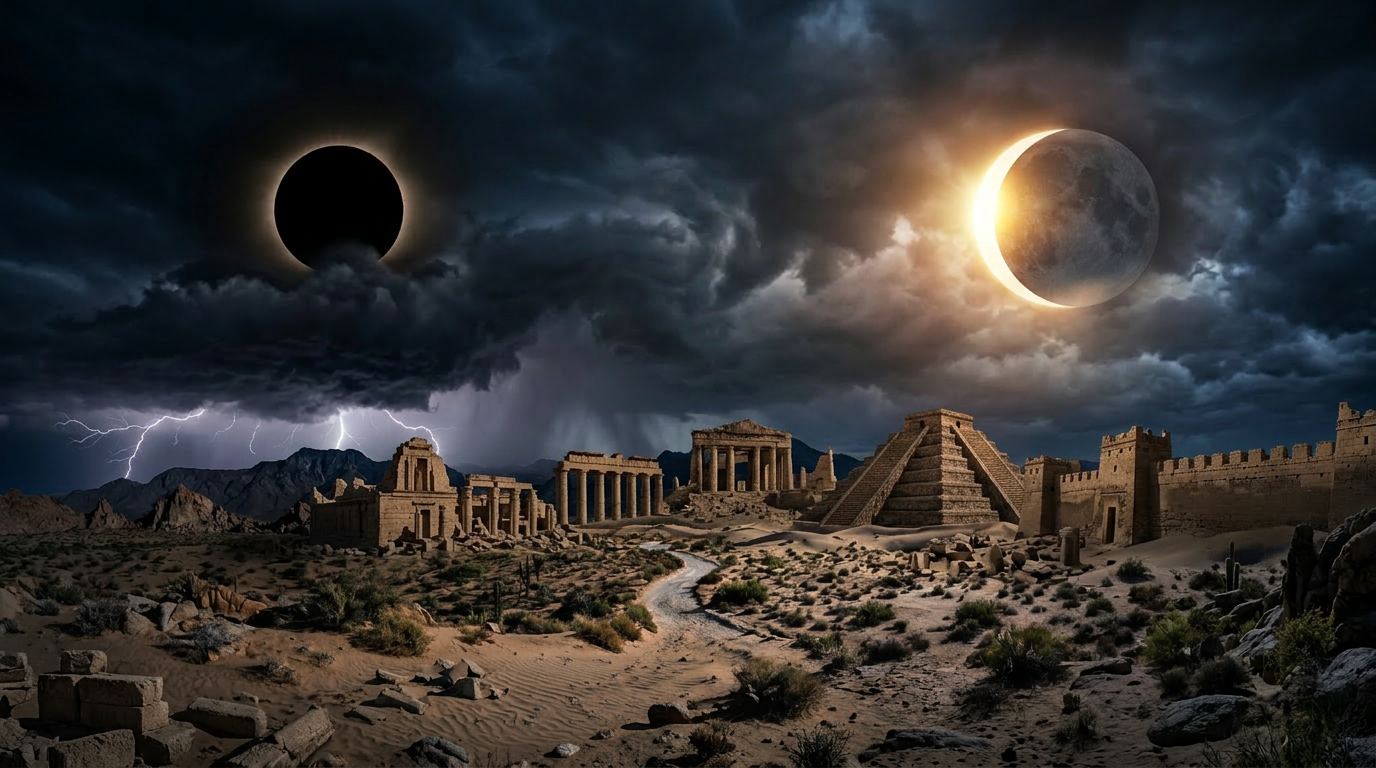
The Destruction of the Temple and Signs of the End Times
Greetings and Introduction
Good evening, brothers and sisters. May the peace of the Lord Jesus Christ and His abundant blessings be with you as we study His Word together today.
As we look back across the battlefield of Luke 20, a striking theme emerges: the reversal of eschatological status. The religious elites—the chief priests, scribes, and Sadducees—clung tightly to their earthly status, institutional wealth, and social prestige. They assumed their earthly position guaranteed them a front-row seat in the age to come. Yet, by trying to manipulate God on human terms, they completely blinded themselves to the Savior standing right in front of them.
Jesus utterly shatters their assumptions. He reveals that those who are exalted in this age will face the most severe judgment, while those who are deemed worthless by the world are the ones truly alive to God.
This severe warning against the teachers of the law serves as an intentional bridge to the opening verses of Luke 21. Jesus has just finished exposing the scribes who “devour widows’ houses” while parading around in expensive, flowing robes. Immediately after saying this, Jesus sits down by the temple treasury. He watches the wealthy elite tossing in large, showy donations, exposing their utter lack of true devotion—while a poor widow quietly gives everything she has.
From there, Jesus turns His gaze toward the temple itself. As we step into the rest of Luke 21, we see Him completely dismantle the illusion that “everything is normal.” He shatters the status quo and gives us an exact description of what to look for in the days to come.
Let us pray that the Lord Jesus Christ will open our eyes to see this passing world crumble, and grant us the power of the Holy Spirit to forgive those who sin against us and to love one another—so that we may receive His Word today, not just with our minds, but deeply within our hearts and souls.
The Widow’s Offering
Luke 21:1-4 (NIV)
As Jesus looked up, he saw the rich putting their gifts into the temple treasury. He also saw a poor widow put in two very small copper coins. “Truly I tell you,” He said, “this poor widow has put in more than all the others. All these people gave their gifts out of their wealth, but she, out of her poverty, put in all she had to live on.
Commentary
This scene perfectly mirrors what Jesus teaches in Matthew chapter 6. There, He warns us not to be like the hypocrites who love to pray on the street corners just to be seen by others. This warning doesn’t just apply to long-winded, performative prayers; it applies to any religious act done to prove we are better than everyone else. The religious elites were putting on a show, but God sees the heart.
We see this same truth illustrated in the story of the rich young ruler who asked how to inherit eternal life. As we read earlier, Jesus remarked that it is easier for a camel to go through the eye of a needle than for a rich man to enter the kingdom of God. Why? Because of his tight grip on worldly possessions.
The wealthy elite in the treasury were giving from their abundance, keeping their security firmly rooted in their riches. But in the final, beautiful moments of this short Scripture, Jesus exposes the true heart of devotion and faith. In this poor widow, we don’t see a performance—we see absolute surrender.
Brothers and sisters… are you ready to surrender all to Christ?
The Destruction of the Temple and Signs of the End Times
Luke 21:5-38 (NIV)
Some of his disciples were remarking about how the temple was adorned with beautiful stones and with gifts dedicated to God. But Jesus said, “As for what you see here, the time will come when not one stone will be left on another; every one of them will be thrown down.”
“Teacher,” they asked, “when will these things happen? And what will be the sign that they are about to take place?”
He replied: “Watch out that you are not deceived. For many will come in my name, claiming, ‘I am he,’ and ‘The time is near.’ Do not follow them. When you hear of wars and uprisings, do not be frightened. These things must happen first, but the end will not come right away.”
Then he said to them: “Nation will rise against nation, and kingdom against kingdom. There will be great earthquakes, famines and pestilences in various places, and fearful events and great signs from heaven.
“But before all this, they will seize you and persecute you. They will hand you over to synagogues and put you in prison, and you will be brought before kings and governors, and all on account of my name. And so you will bear testimony to me. But make up your mind not to worry beforehand about how you will defend yourselves. For I will give you words and wisdom that none of your adversaries will be able to resist or contradict. You will be betrayed even by parents, brothers and sisters, relatives and friends, and they will put some of you to death. Everyone will hate you because of me. But not a hair of your head will perish. Stand firm, and you will win life.
“When you see Jerusalem being surrounded by armies, you will know that its desolation is near. Then let those who are in Judea flee to the mountains, let those in the city get out, and let those in the country not enter the city. For this is the time of punishment in fulfillment of all that has been written. How dreadful it will be in those days for pregnant women and nursing mothers! There will be great distress in the land and wrath against these people. They will fall by the sword and will be taken as prisoners to all the nations. Jerusalem will be trampled on by the Gentiles until the times of the Gentiles are fulfilled.
“There will be signs in the sun, moon, and stars. On the earth, nations will be in anguish and perplexity at the roaring and tossing of the sea. People will faint from terror, apprehensive of what is coming on the world, for the heavenly bodies will be shaken. At that time, they will see the Son of Man coming in a cloud with power and great glory. When these things begin to take place, stand up and lift up your heads, because your redemption is drawing near.
He told them this parable: “Look at the fig tree and all the trees. When they sprout leaves, you can see for yourselves and know that summer is near. Even so, when you see these things happening, you know that the kingdom of God is near.
“Truly I tell you, this generation will certainly not pass away until all these things have happened. Heaven and earth will pass away, but my words will never pass away.
“Be careful, or your hearts will be weighed down with carousing, drunkenness, and the anxieties of life, and that day will close on you suddenly like a trap. For it will come on all those who live on the face of the whole earth. Be always on the watch, and pray that you may be able to escape all that is about to happen, and that you may be able to stand before the Son of Man.”
Each day, Jesus taught at the temple, and each evening he went out to spend the night on the Mount of Olives. All the people came early in the morning to hear him at the temple.
Commentary
Look at how Jesus flips the script here. This grand Temple structure was originally intended to be the dwelling place of God’s presence, modeled after the ancient house built for the Ark. But by the time Jesus stands in its courts, it has become a thorn in the side of the Almighty. It was no longer functioning as a house of prayer for all nations; instead, it had been co-opted by a corrupt religious elite. It was adorned with magnificent stones, yet spiritually built upon the exploitation and the very blood of the vulnerable people God called them to protect.
When Jesus proclaims that not one stone will be left upon another, He isn’t just predicting a military disaster; He is tearing down the old tradition of localized, brick-and-mortar worship. He is signaling a massive shift in how God relates to humanity.
This brings to mind the Gospel of John, chapter 4, where Jesus speaks with the Samaritan woman at the well. He tells her that a time is coming when true worshipers will not worship on a specific mountain or in a specific building but will worship the Father in spirit and in truth. Jesus is emphasizing that His holy temple will no longer be built of dead stones. Through the gift of the Holy Spirit, the true temple of the living God will be housed inside each and every one of us.
When the disciples heard Jesus predict the fall of the temple, they immediately asked: “Teacher, when will these things happen? And what will be the sign that they are about to take place?”
As we look closely at the warnings Christ gives in response, consider the current landscape of our world. Jesus masterfully frames the first great danger: deception. He warns that many will come in His name, claiming, “I am he,” and “The time is near.” They will be absolute deceivers of the Word, making false claims of divine authority.
This is exactly what the Apostle Paul had to fight against in his first letter to the Corinthians, when the church began to fracture into cliques, arguing over which human leader to follow. Paul had to scream in his letter: “Stop following men and follow the true light of Christ!”
Yet look around us today. With thousands of denominations and religions out there, each claiming to be the “one true church,” who are we supposed to believe? Tragically, so many of these institutions have perverted the very Person they claim to worship. Jesus looks down at us through the centuries and says: Open your eyes. Do not follow them. Do not look to the noisy, commercialized institutions of man. Look inside your heart and soul for the true, quiet, transforming Spirit of Christ.
After warning us about these spiritual deceptions, Jesus turns His attention directly to the structural anxieties of history—the very things that dominate our modern media feeds and evening news channels.
Luke 21:9-11 is a fascinating, urgent piece of prophecy that we simply cannot ignore. Think about what we are witnessing globally. We see geopolitical shockwaves, the instability of sovereign nations, and relentless conflict tearing through the Middle East. It is exactly what Jesus predicted: wars and rumors of wars. Nations have risen against nations, and kingdoms against kingdoms. We watch high-profile devastation alongside dozens of other brutal conflicts buried so deep in the news cycle that they barely register in the public consciousness.
And what about the rest of the prophecy? “There will be great earthquakes, famines and pestilences in various places…” Consider the environmental and physical shaking of our planet. Catastrophic earthquakes have shattered regions across the globe from Asia to South America. Our global weather patterns are changing so rapidly and violently that the world scrambles to find a purely human fix. But it forces the ultimate question: Will we place our trust in the hands of man, or in the hands of God?
Meanwhile, famines ravage distant lands—and if we open our eyes, we can see the starving and the desperate right here in our own communities, going completely unnoticed by a distracted world, a distracted nation, and even our own neighbors.
When we look back at Luke 21:12-18, Jesus says something that should make us pause. He warns His followers: “They will seize you and persecute you… You will be brought before kings and governors, and all on account of my name.”
Church, we are living in an era where the shadow of this prophecy is creeping into our daily lives. Our faith and our deeply held biblical beliefs are increasingly questioned, examined, and pushed to the margins. We see a culture and even governing bodies that attempt to dictate what is acceptable to believe.
Look at our schools and public institutions; our children are being taught what is right and wrong according to shifting cultural standards, while biblical truth is labeled as outdated or offensive. The pressure to conform—to bow down to the cultural standards of our day—is mounting every single hour.
It forces us to look in the mirror and answer one defining question: Are we going to bow down to the spirit of this shifting world, or walk in the true, unwavering Way of Jesus?
But notice what Jesus says next in verse 14: “Make up your mind not to worry beforehand how you will defend yourselves. For I will give you words and wisdom that none of your adversaries will be able to resist.” When the world demands that you compromise, when the culture pressures your children to bend, you do not need to fear. God does not call us to win political arguments in our own strength; He calls us to stand firm in His Spirit.
In Luke 21:20-24, we encounter a powerful, dual-layered prophecy. Throughout history, Jerusalem has been surrounded, besieged, and contested by her enemies—with various factions occupying her holy ground over the centuries. But Jesus looks past the immediate Roman destruction of AD 70 into the far horizon. He explicitly warns: “When you see Jerusalem being surrounded by armies, you will know that its desolation is near.”
Observe the global stage today. With each passing day, the geopolitical pieces continue to reset. We see the nations of the world encircling, obsessing over, and positioning their interests around that specific geographic focal point. What Jesus predicted thousands of years ago is manifesting in real-time. His warning to those who see this happening is urgent and absolute: Find your ultimate refuge not in political alliances or earthly strongholds, but in the shelter of the Almighty.
Yet, notice the profound heartbreak in Jesus’ voice as He looks at the human cost of these conflicts. In verse 23, He cries out: “How dreadful it will be in those days for pregnant women and nursing mothers! There will be great distress in the land…”
Brothers and sisters, this tragic reality plays out before our eyes constantly. When war tears through a region, it is the most vulnerable who pay the highest price. We see women and children caught in the crossfire of systemic conflict. It is already a monumental, self-sacrificing task to be a mother in a peaceful world. But to be a mother trying to protect, feed, and shield a helpless infant in a war-ravaged area? It is an unimaginable nightmare. Jesus recognized their specific sorrow thousands of years ago, reminding us that behind the grand scale of global prophecy are real, hurting human souls who need the mercy of God.
When we read Luke 21:25-28, it sends a genuine chill down the spine. Why? Because we hear the echoes of this exact text in the conversations of young adults and children today. So many of our youth look at the trajectory of our world and ask, “What is the point? Why plan for a future if the world is losing its stability, losing its life, and succumbing to chaos?” They feel completely lost, drowning in a sea of pervasive anxiety.
Jesus predicted this exact atmosphere. He said there would be “anguish and perplexity,” and that human hearts would literally fail them from fear as they watch what is coming upon the earth. The global stability we once took for granted is fracturing. The signs are plain, yet as a society, we often choose to look away because facing them is terrifying without Christ.
But listen closely, church—especially you who are young: Jesus did not give us this prophecy to trap us in fear. Look at verse 28. He says, “When these things begin to take place, stand up and lift up your heads, because your redemption is drawing near.” The world tells our children to bow their heads in despair and surrender. But Jesus tells His children to lift their heads in anticipation and hope! The shaking of this world is simply the announcement that our King is on His way.
To help us understand this, Jesus points us to creation. In verses 29 through 31, He tells a simple parable: “Look at the fig tree and all the trees. When they sprout leaves, you can see for yourselves and know that summer is near.”
It is telling that while the other Gospels focus only on the fig tree—which historically symbolizes Israel—Luke purposefully includes all the trees. Jesus is lifting our eyes to the bigger picture. He is using the natural change of seasons to show us that the spiritual seasons are changing, too. Just as you don’t need a scientist to tell you summer is coming when the leaves burst forth, you shouldn’t need a philosopher to tell you the Kingdom of God is at hand when the world begins to shake.
But then Jesus drops a phrase that has confused readers for centuries. In verse 32, He says, “This generation will certainly not pass away until all these things have happened.” What does He mean by “this generation”? As the original languages and biblical context show us, Jesus isn’t setting a strict, 30-year biological time limit for the end of the world. “This generation” often refers to a persistent spiritual condition—the same “unbelieving and perverse generation” that wandered in the wilderness. Jesus is warning us that a spirit of rebellion, skepticism, and hard-heartedness will continually oppose God’s truth, remaining active right up until the moment He returns.
This is why Jesus commands us in verse 34: “Be careful.” Church, this is the burning heart of the entire passage. Be careful, or your heart will be weighed down with carousing, drunkenness, and the anxieties of life, and that day will close on you suddenly like a trap.
Do not miss this: the return of Jesus will be a global, cosmic event witnessed by every single soul on the face of the earth. But for those who are asleep, preoccupied with the pleasures and worries of this passing world, His return will feel like a snare snapping shut. It is the exact same trap that the Pharisees, the Sadducees, and the religious elite fell into. They were so consumed with protecting their earthly status, their money, and their comfort that they missed the Savior standing right in front of them.
Luke ends this chapter by telling us that Jesus spent His days teaching in the temple and His nights resting on the Mount of Olives. Even with the weight of the cross resting heavily on His shoulders, He remained entirely focused on preparing His people.
But don’t miss the profound prophetic significance of where Jesus chose to rest. Every evening, He walked up the slopes of the Mount of Olives, looking directly across the Kidron Valley at the majestic Eastern Gate of Jerusalem. Scripture tells us that this is the very gate through which the Messiah will enter. Centuries after Jesus walked those paths, earthly rulers tried to alter the prophecy. They walled up the Eastern Gate with solid stone blocks and placed a cemetery right in front of it, believing they could physically block the Messiah from ever returning.
But hear me today, church: man-made walls cannot stop a cosmic King! The prophet Zechariah tells us that when Christ returns, His feet will stand once again on that very same Mount of Olives, and the mountain will split in two.
The world around us may be shaking, the headlines may be jarring, and the systems of man may be crumbling like dead stones. But we do not look at the world with dread. We look past the chaos, across the valley, straight toward the Eastern Gate. Our Savior, who spent His final earthly nights praying on that mountain, is the very same King who is coming back to break through the stone.
Lift up your heads, brothers and sisters, your redemption is drawing near!
Conclusion & Summary
Church, the message of Luke 21 is clear: everything we rely on in this passing world is shaking. The grand brick-and-mortar institutions, the corrupt systems that exploit the vulnerable, and the proud who trust in their own wealth are all crumbling like dead stones.
But amid the chaos, Jesus calls us to a different reality. He points us to the widow who surrendered everything, and He points us to the Mount of Olives, looking toward the Eastern Gate. He promises that while heaven and earth will pass away, His words will never fail. We do not look at the headlines with dread; we lift up our heads with anticipation because our King is on His way.
Bridge to Luke 22
As the cosmic warnings of Luke 21 fade, a dark, intimate shadow falls over the narrative. The public teaching in the temple courts abruptly ends, and the private conspiracy begins.
In the opening verses of Luke 22, we step into the upper room and the dark path toward Gethsemane. The spiritual battle shifts from global signs to personal betrayal. The religious elites, still desperate to protect their earthly status, finally find their inside man in Judas Iscariot. Yet, even as the traps are laid and the physical shadow of the cross looms large, Jesus prepares a table. He takes bread and wine, resetting the covenant and showing His disciples that the ultimate victory will not be won by a worldly army, but through the broken body and spilled blood of the Lamb.
Call to Action
- Examine Your Security: Are you holding tightly to worldly possessions and status like the religious elite, or are you living a life of absolute surrender like the poor widow? Identify one area of earthly security you need to release to God this week.
- Guard Against Deception: Do not let your heart be weighed down by the anxieties of life or the distracting noise of modern media. Commit to grounding your mind daily in the unchanging Word of Christ rather than the chaotic headlines of the world.
- Stand Alert and Active: Being watchful does not mean hiding in fear. It means living productively for the Kingdom—loving your neighbors, feeding the hungry in your community, and sharing the hope of Christ with a generation drowning in despair.
Closing Prayer
Heavenly Father, we thank You for Your living, breathing Word that cuts through the noise of our world. Forgive us for the times we have trusted in dead stones, political alliances, or fleeting wealth. Grant us the power of Your Holy Spirit to stand firm against deception and to love one another with pure hearts. We lift our eyes to You, trusting that no man-made wall can stop Your return. Keep us awake, keep us faithful, and let our lives be a testimony to Your grace until the day we stand before the Son of Man.
And now, as one body, we pray the words Your Son taught us:
Our Father, who art in heaven, hallowed be thy name. Thy kingdom come, thy will be done, on earth as it is in heaven. Give us this day our daily bread. And forgive us our trespasses, as we forgive those who trespass against us. And lead us not into temptation, but deliver us from evil. For thine is the kingdom, and the power, and the glory, forever and ever. Amen.
Grace and Peace Be with You Always
Tomas
© 2026 The-Way.blog Digital Publications. All Rights Reserved.
Appendix & Study Resources
I. Comprehensive Biblical References
- The Widow’s Offering: Luke 21:1–4; Mark 12:41–44
- The Olivet Discourse: Luke 21:5–36; Matthew 24:1–51; Mark 13:1–37
- Jesus’ Holy Week Ministry: Luke 21:37–38; Matthew 21:17; Mark 11:11–12, 19
II. Critical and Exegetical Footnotes
- The Two Copper Coins (v. 2): Greek lepta (plural of lepton), meaning “thin.” These were the smallest, lowest-value coins in circulation in Judea, worth a fraction of a day’s wage (less than 1% of a denarius). Her offering was financially negligible but logistically total.
- “This Generation” (v. 32): The Greek term genea can denote a biological generation, a race of people, or a specific type/character of people. In the broader context of Luke’s gospel, it serves a moral and spiritual function, describing the “wicked and adulterous” mindset that has consistently rejected God’s messengers throughout history (cf. Luke 9:41, 11:29).
- “Carousing” (v. 34): The Greek kraipalē refers specifically to the dizzying, nauseating hangover or headache left by overindulgence. Jesus uses it metaphorically, alongside “the anxieties of life,” to describe a heart that is spiritually numbed, sluggish, and weighed down by worldly saturation.
III. Canonical Cross-References
- The Reversal of Eschatological Status:
- 1 Samuel 2:7–8 – “The Lord sends poverty and wealth; he humbles and he exalts. He raises the poor from the dust…”
- Luke 1:52–53 (The Magnificat) – “He has brought down rulers from their thrones but has lifted up the humble. He has filled the hungry with good things but has sent the rich away empty.”
- Luke 14:11 – “For all those who exalt themselves will be humbled, and those who humble themselves will be exalted.”
- The Gathering of Armies & The Split Mountain:
- Zechariah 14:2–4 – “I will gather all the nations to Jerusalem to fight against it… On that day his feet will stand on the Mount of Olives, east of Jerusalem, and the Mount of Olives will be split in two…”
- Ezekiel 44:1–2 – “Then the man brought me back to the outer gate of the sanctuary, the one facing east, and it was shut. The Lord said to me, ‘This gate is to remain shut. It must not be opened; no one may enter through it. It must remain shut because the Lord, the God of Israel, has entered through it.’”
Digital Copyright Notice
Copyright © 2026. All Rights Reserved. This document is protected under international copyright and digital rights management laws.
- Fair Use Citation: Short quotations or excerpts used in blog reviews, theological essays, or academic papers must provide appropriate attribution referencing the author and title of this work.
- Permitted Use: Permission is granted to download, store, electronically view, and print physical copies of this text solely for personal use, private study, small group Bible discussions, or local church ministry settings.
- Prohibited Use: No part of this digital publication may be reproduced, redistributed, resold, hosted on public servers, or transmitted in any form or by any means, including photocopying, digital file sharing, recording, or translation into other languages, for commercial purposes without the prior written permission of the copyright holder.