
Luke 15: The Found: How God Rewrites Our Story
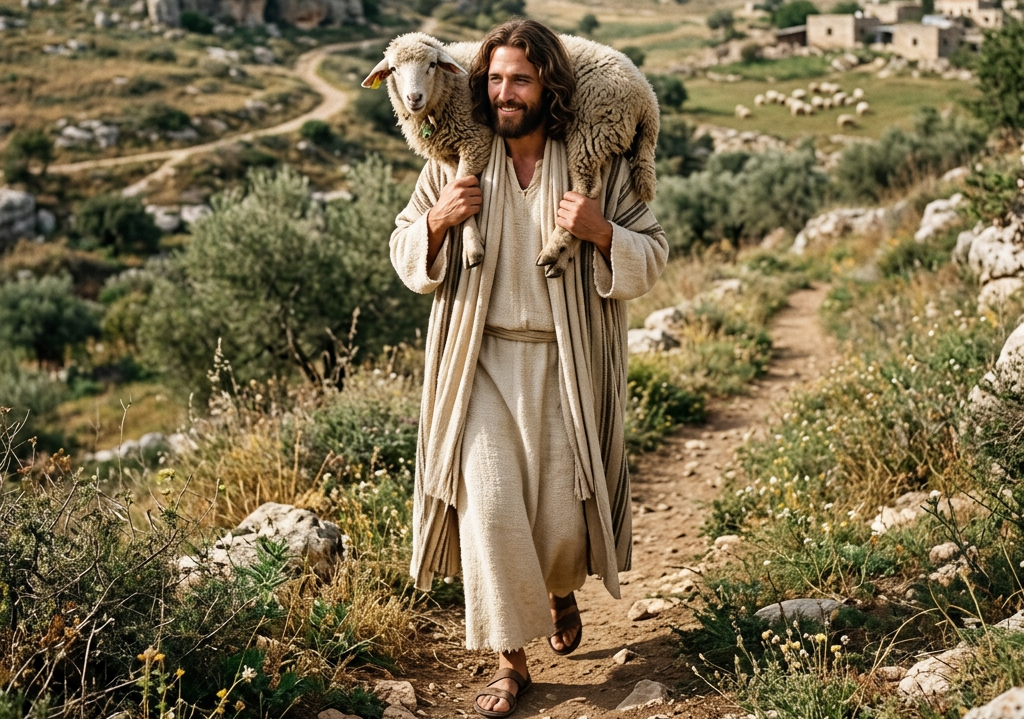
Celebration of God’s Relentless Love
Good afternoon and welcome back to The-Way.blog. It is a true blessing to have you all, my sisters and brothers, here reading and studying His Word today. Wherever you are tuning in from, take a deep breath and clear your mind as we begin our walk through Luke Chapter 15—otherwise known as the Parables of Joy—seeking to understand the truth, the light, and The Way in His relentless search for the lost.
As we dive into Scripture, let us remember to approach His Word with true humility, leaving all judgment to God’s perfect will. The very heart of God’s relentless love is exactly what we will discover today. First, we will see Jesus tell us about God’s love and mercy in His search for the Lost Sheep and the Lost Coin. Before we begin, let's ask our Lord Jesus Christ to grant us the power of the Holy Spirit, so that we may receive His Word not just with our minds, but with our hearts and souls.
The Context of the Grumbling
To truly understand the "Parables of Joy" in Luke 15, we have to look back at Luke 14 and the stark warning about salt losing its flavor when our faith is in decline. When we open Luke 15, we see a room divided. On one side, you have the "outsiders"—the tax collectors and sinners, the poor, the blind, and the lame—all drawing near to hear Jesus. On the other side stood the Pharisees and Scribes, the religious elite, muttering under their breath: “This man receives sinners and eats with them” (Luke 15:1-2).
Jesus noticed the grumbling. In response, He didn't give a lecture on the law; He told three stories that would change the way we see God forever. Seeking the lost is not just a New Testament whim, but the ultimate expression of God’s love as seen in His promises since the beginning. Today, we will be looking at the lost sheep and the lost coin.
“For God so loved the world, that he gave his only Son, that whoever believes in him should not perish but have eternal life. For God did not send his Son into the world to condemn the world, but so that the world might be saved through him.” — John 3:16-17
This famous passage perfectly mirrors the profound truth Jesus illustrates in Luke 15. It reveals a God who does not merely wait for the lost to find their way home, but a God who relentlessly pursues them. He counters the cold legalism of the religious leaders with a love that prioritizes salvation over condemnation.
Historical Setting
This "seaside" ministry shows the sheer scale of His reach, but Luke 15 feels more intimate. Most research suggests this took place in a village setting while Jesus was traveling toward Jerusalem. By eating with tax collectors, Jesus moved from the public shore to the private table, turning a simple meal into a battlefield for the soul. He used these everyday settings to reveal that whether on a crowded beach or at a controversial dinner table, God refuses to lose a single person to death, rejoicing instead in life with Him in heaven.
The Lost Sheep
Luke 15:1–7
Then all the tax collectors and the sinners drew near to Him to hear Him. And the Pharisees and scribes complained, saying, “This Man receives sinners and eats with them.” So He spoke this parable to them, saying:
“What man of you, having a hundred sheep, if he loses one of them, does not leave the ninety-nine in the wilderness, and go after the one which is lost until he finds it? And when he has found it, he lays it on his shoulders, rejoicing. And when he comes home, he calls together his friends and neighbors, saying to them, ‘Rejoice with me, for I have found my sheep which was lost!’ I say to you that likewise there will be more joy in heaven over one sinner who repents than over ninety-nine just persons who need no repentance."
The Risk of the “Open Country”
Jesus begins with a question that would have hit home for His listeners: “What man of you, having a hundred sheep, if he has lost one of them, does not leave the ninety-nine in the open country, and go after the one that is lost, until he finds it?” (Luke 15:4).
From a business standpoint, this looks like a reckless move. Leaving ninety-nine sheep in the “open country” exposes the bulk of the flock to predators and the elements. However, the historical context reveals a beautiful layer of communal trust. In the ancient world, shepherds rarely worked in isolation; they often watched over their animals in collective groups.
When Jesus pursues a wandering soul today, He isn’t abandoning the faithful. Instead, He trusts us—the disciples, the leaders, and the "ninety-nine" standing together—to look out for one another. Because the flock holds the line together, the Good Shepherd is free to do what only He can do: go into the darkest thickets to rescue the one who has lost their way. His love is so intensely focused that He ensures the community is secure just so He can give His undivided attention to the individual.
The Gentle Rescue
Once the Shepherd moves from the community of the 99 into the isolation of the wilderness, the tone shifts from risk to rescue. When He finally finds the sheep, He doesn’t scold it. He doesn’t drive it back with a staff.
“And when he has found it, he lays it on his shoulders, rejoicing.” — Luke 15:5
Think about the state of that sheep. It was likely frightened, exhausted, and perhaps injured. It couldn’t walk back even if it wanted to. This is the heart of the Gospel: Jesus takes the initiative. He finds us in our confusion and carries us home on His shoulders through His grace and forgiveness.
A Symphony of Grace
The parable ends not in a quiet return, but in a massive celebration. The shepherd calls his friends and neighbors together, saying, “Rejoice with me!” Jesus concludes with a powerful promise: There is more joy in heaven over one sinner who repents than over ninety-nine who think they have no need for it. While the Pharisees stood outside the circle of grace, judging the “impropriety” of Jesus’ guest list, Jesus was inviting them into a “grand symphony of grace.”
The Lost Coin
Luke 15:8–10
“Or what woman, having ten silver coins, if she loses one coin, does not light a lamp, sweep the house, and search carefully until she finds it? And when she has found it, she calls her friends and neighbors together, saying, ‘Rejoice with me, for I have found the piece which I lost!’ Likewise, I say to you, there is joy in the presence of the angels of God over one sinner who repents.”
The True Value of the Silver Piece
Jesus immediately pivots from a rugged, masculine wilderness to an intimate, domestic home. He asks about a woman who loses a silver coin, or a drachma. To the casual modern reader, losing a single coin sounds like an annoyance, but to a first-century peasant family, it was a crisis.
A drachma was worth a full day's wage for a laborer. In a subsistence economy, losing ten percent of your savings meant the difference between eating or going hungry. Furthermore, many biblical historians note that a married woman's ten silver coins were often woven into a traditional headdress worn on her wedding day. This was her dowry—a public symbol of her marital fidelity, her security, and her honor. To lose a coin wasn't just losing money; it was a threat to her family's safety and her personal standing in the community.
Piercing the Darkness
The way the woman goes about her search reveals so much about how God views us when we are disconnected from Him. First-century Galilean homes were notoriously dark. They were small stone structures with dirt floors, often covered in straw, with few windows to let in natural light. If a small silver coin slipped into the cracks of the floor or under the straw, it was effectively swallowed by darkness.
The woman doesn’t wait until morning, and she doesn't give up. She takes active, disruptive steps:
- She lights a lamp: She burns precious oil to pierce the gloom of the house.
- She sweeps the floor: She physically moves everything out of the way, listening intently for the distinct, sharp clink of silver against stone.
- She searches carefully: The Greek text implies a meticulous, relentless scrutiny. She doesn't stop “until she finds it.”
Unlike the sheep, which intentionally wandered out of bounds, the coin didn't do anything wrong to get lost. It simply slipped into the dark through circumstances or neglect. Yet, the search is the same. God doesn't judge how you became lost; He only cares about bringing you back into the light.
Domestic Joy, Heavenly Echoes
Just like the shepherd, the moment the woman finds what was lost, her private relief turns into a public celebration. She calls her friends and neighbors together to rejoice.
Think about the contrast Jesus is creating for the Pharisees. The religious elite were sitting in their clean, perfect circles, grumbling because Jesus was associating with the "dirt" of society. Meanwhile, Jesus shows a woman willing to get down on her hands and knees, sweeping through the dust and dirt of her floor, just to recover one valuable piece.
Jesus brings the truth home with a final exclamation: “There is joy in the presence of the angels of God over one sinner who repents.”
If the story of the Lost Sheep shows God searching the wild spaces for those who have visibly run away, the Lost Coin shows God searching the hidden, dark corners of the home for those who are overlooked, forgotten, or trapped in the dark. No matter where you are lost, the search is underway, and the lamp is lit.
Conclusion: Bridging to the Father's House
But Jesus wasn’t finished speaking to the crowd that day.
He had already illustrated a love that searches the dangerous thickets of the wild and the hidden spaces of the home. But what about the person who doesn’t just drift away or slip into the dark? What about the person who looks God right in the eye, demands their independence, and intentionally runs as far away as possible?
As the Pharisees and the outcasts stood side by side, listening intently, Jesus turned to them one last time to tell the most famous story ever recorded. He was about to move from the lost animal and the lost object to the deepest pain of all: a lost child.
Later, in about a day, we will look at the ultimate climax of Luke 15—the story of a broken home, a reckless inheritance, and a running Father who redefines forgiveness forever.
Until then, take comfort in knowing that the Good Shepherd is still watching over the flock, the lamp is still burning bright, and heaven is waiting to throw a party just for you. What a comforting feeling to know God is actively waiting for you and me!
God bless you, and we will see you next time on The-Way.blog.
A Closing Prayer
Heavenly Father, thank You for being a God who pursues us. Thank You that when we wander like the sheep, or feel lost in the dark like the coin, You do not give up on us. Wash away our doubts, soften our hearts where we have grown rigid like the Pharisees, and fill us with the joy of Your salvation. Help us to shine Your light to others this week, remembering that no one is beyond the reach of Your relentless love. In Jesus' mighty name, Amen.
Our Father, who art in heaven, hallowed be Thy name. Thy kingdom come, Thy will be done, on earth as it is in heaven. Give us this day our daily bread, and forgive us our trespasses, as we forgive those who trespass against us. And lead us not into temptation, but deliver us from evil. For Thine is the kingdom, and the power, and the glory, forever and ever. Amen.
In His Grace,
Tomas
© 2026 The-Way.blog Digital Publications. All Rights Reserved.
Appendix & Study Resources
I. Comprehensive Biblical References
To get the full picture of the narrative landscape surrounding Luke 15, read these surrounding chapters dynamically:
- The Prelude (Luke 14:25–35): The cost of discipleship, the counting of the cost, and the warning of the tasteless salt.
- The Trilogy of Grace (Luke 15:1–32): The Lost Sheep (vv. 1–7), The Lost Coin (vv. 8–10), and the Extended Parable of the Father and Two Sons (vv. 11–32).
- The Aftermath (Luke 16:1–15): The Parable of the Shrewd Manager and Jesus' direct confrontation with the Pharisees regarding money and the pride of the heart.
II. Critical and Exegetical Footnotes
- [1] Luke 15:1 ("Tax collectors and sinners"): In first-century Judea, tax collectors (telōnai) were not just unpopular civil servants; they were viewed as religious apostates and national traitors who extorted their own people for Roman profit. "Sinners" referred to those who willfully or systematically violated the behavioral and purity standards of the Mosaic Law.
- [2] Luke 15:2 ("Muttering/Grumbling"): The Greek word used here is diegongyzon, an intense form of grumbling. It deliberately echoes the Septuagint (Greek Old Testament) translation of the Israelites murmuring against Moses in the wilderness during the Exodus. The Pharisees are cast in the same rebellious role as ancient Israel.
- [3] Luke 15:4 ("Leave the ninety-nine"): In traditional Middle Eastern pastoral settings, leaving a flock in the "open country" (erēmos) did not imply reckless abandonment. It refers to standard communal grazing lands. Shepherds typically worked together in cooperative networks; a single shepherd would depart to hunt for a stray while his partners managed the unified flock.
- [4] Luke 15:5 ("Lays it on his shoulders"): An exhausted or terrified sheep will freeze, weigh down its legs, and refuse to move. The act of carrying the animal over the neck and shoulders was both a physical necessity and an intimate expression of pastoral care, sparing the vulnerable stray further trauma.
- [5] Luke 15:8 ("Ten silver coins"): A silver coin (drachmē) roughly equated to a daily wage. A collection of ten coins often represented a marginalized family’s emergency savings or, structurally, a component of a bride's dowry (semedi), meaning its loss carried severe domestic and social shame.
III. Canonical Cross-References
The imagery Jesus uses in Luke 15 is deeply rooted in the rich tapestry of the Old Testament. He is fulfilling an ancient profile of God's character:
- Ezekiel 34:11–16: The ultimate foundation for the Good Shepherd metaphor. Yahweh declares that He Himself will search for His scattered sheep, rescue them from the places they were scattered in the dark, and bind up the injured.
- Psalm 119:176: The classic individual confession: “I have strayed like a lost sheep. Seek your servant, for I have not forgotten your commands.”
- Isaiah 53:6: The great corporate reality of humanity: “We all, like sheep, have gone astray, each of us has turned to our own way...”
- Jeremiah 31:20: A powerful foreshadowing of the third parable: “Is not Ephraim my dear son, the child in whom I delight? Though I often speak against him, I still remember him. Therefore my heart yearns for him; I have great compassion for him,” declares the Lord.
IV. Theological Concept: The Reversal of Eschatological Status
One of the most revolutionary aspects of Jesus’ teaching in Luke 15 is what theologians call the reversal of eschatological status.
In the minds of the Pharisees and scribes, the final judgment (the eschaton) would rigidly confirm their current earthly standing: the clean, meticulously legalistic religious leaders would be welcomed into God’s presence, while the messy, compromised "sinners" would be cast out.
Jesus completely flips this expectation upside down. By actively welcoming outcasts to His table and declaring that heaven erupts in joy over a single broken person who turns back to God, Jesus reveals that:
- True righteousness is not found in sterile self-preservation, but in responding to the seeking love of God.
- Those who assume they are inside the circle of grace (the 99 who "need no repentance") can accidentally lock themselves out of the celebration because of their cold, unyielding hearts.
- Those labeled as permanently lost are the very focal point of God’s redemptive mission.
Through these parables, Jesus reminds the religious elite that the banquet table of God is filled not by the flawless, but by the found.
Digital Copyright Notice
Copyright © 2026. All Rights Reserved. This document is protected under international copyright and digital rights management laws. Fair Use Citation: Short quotations or excerpts used in blog reviews, theological essays, or academic papers must provide appropriate attribution referencing the author and title of this work. Permitted Use: Permission is granted to download, store, electronically view, and print physical copies of this text solely for personal use, private study, small group Bible discussions, or local church ministry settings. Prohibited Use: No part of this digital publication may be reproduced, redistributed, resold, hosted on public servers, or transmitted in any form or by any means, including photocopying, digital file sharing, recording, or translation into other languages, for commercial purposes without the prior written permission of the copyright holder