
Luke 22: Jesus on The Mount of Olives
Let’s turn our hearts now to Luke 22, stepping into one of the most sacred and heavy moments in the Gospels: Jesus on the Mount of Olives. As He faces the weight of the cross, He prays: “Father, if you are willing, take this cup from me; yet not my will, but yours be done.”
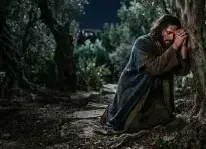
The Hidden Family of Holy Week: Who Was Really in the Garden?
Greetings
Good afternoon, and welcome, brothers and sisters! May the peace of our Lord Jesus Christ and His abundant blessings be with you as we study His Word together today.
Before we dive into today’s text, I want to share a quick update and a personal request. I have set up a few new ways for you to support this ministry. If The Way has been a blessing to you, I invite you to consider helping us grow by becoming a paid subscriber or simply by “buying me a coffee” through our support link. Your generosity not only helps us continue this daily journey with Christ, but it also directly supports my family as I dedicate time to this work. Thank you so much for your prayers, your presence, and your partnership.
Devotional Study
Let’s turn our hearts now to Luke 22, stepping into one of the most sacred and heavy moments in the Gospels: Jesus on the Mount of Olives.
As He faces the weight of the cross, He prays: “Father, if you are willing, take this cup from me; yet not my will, but yours be done.”
How many of us have felt overwhelming pressure at home or at work, facing agonizing choices where every option feels painful? Jesus knew the enormous weight and responsibility lying in the hours ahead. He knew what His mission required. Yet, because He was God in human form, He felt the full, crushing weight of that pressure bearing down on His shoulders.
In this moment, He shows us exactly what to do. When the pressures of life feel like too much to carry, Jesus models perfect surrender. He shows us that we can bring our realest, heaviest pain to the Father, trust His plan, and find the strength to stand.
Prayer
Lord Jesus, as we open Your Word today, we ask You to search our hearts. Cleanse us from any hidden compromise, any quiet pride, or any area where we are tempted to choose our own comfort over Your will. Help us, Lord, in the agony of the choices we face, giving us the courage to carry our cross daily. As we join You in the garden through this study, quiet our minds and open our ears to hear what Your Spirit is saying to us today. Amen.
An “Aha” Moment: Who Was Really in the Garden?
As I was praying through this text this morning, the Holy Spirit hit me with an “aha” moment that completely shifts how we visualize this dark night.
When we read that Jesus went to the Mount of Olives and “his disciples followed him,” conventional thinking automatically paints a picture of just Jesus and the twelve men. We do the same thing with the Last Supper. But if we dig into first-century culture and the wider context of the Gospels, a beautiful question emerges: Were the women there, too?
Let’s look at the evidence.
Unveiling the Invisible Family: The Women of Holy Week
To fully understand the weight of the Upper Room and the walk to Gethsemane, we have to pull back centuries of Western artistic tradition. Conventional religious art has conditioned us to view these final, critical hours as an exclusively male gathering. But when we look at the historical and scriptural blueprint, a far more beautiful, radical reality comes to light.
1. The Last Supper Was a Family Passover
The Last Supper wasn’t a closed-door corporate boardroom meeting for institutional leaders; it was a Passover Seder. According to biblical law and covenant tradition (Exodus 12), the Passover was strictly a family meal celebrated within a household community. To completely exclude women, children, and regular traveling companions from a Passover meal would have been an unthinkable anomaly in first-century Judaism.
Luke explicitly establishes earlier in his Gospel that a dedicated group of women had been bankrolling, serving, and traveling with Jesus’ ministry all the way from Galilee to Jerusalem:
“The Twelve were with him, and also some women… Mary (called Magdalene) … Joanna, the wife of Chuza, the manager of Herod’s household; Susanna; and many others. These women were helping to support them out of their own means.” — Luke 8:1–3
Because this traveling community functioned as Jesus’ earthly family, it is highly probable that the very women who funded the ministry and prepared the meals were right there in that large upstairs room (Luke 22:12), breaking bread alongside the men.
The Legal Nuance of the Text
You might wonder: Why, then, does Luke 22:14 state that “Jesus and his apostles reclined at the table”?
In ancient historical narratives, highlighting the “Twelve” or the “Apostles” serves a specific legal purpose: it establishes that the primary eyewitnesses and future leaders of the movement were present for the structural initiation of the New Covenant. Saying the Apostles were present does not mean only the Apostles were in the room. The camera zooms in on the Twelve for structural reasons, but the whole family was likely at the table.
2. The Walk to the Garden: The Hidden Pattern
After the meal, the narrative shifts to the Mount of Olives. Luke 22:39 notes that it was Jesus’ “custom” to go to the Mount of Olives during festival weeks—meaning this grove was their regular base camp. The entire entourage, including the women, would have walked out to the grove together.
While Jesus isolated Himself with His inner circle (Peter, James, and John) for His agonizing prayer, the larger community of His followers—the women who sustained Him—were waiting, watching, and weeping in the shadows nearby. Look at what the text reveals just a few hours later at the crucifixion:
“Many women were there, watching from a distance. They had followed Jesus from Galilee to care for his needs.” — Matthew 27:55
When the male disciples scattered in the panic of Gethsemane, the women didn’t run away. They followed Him all the way to the cross, stood by Him during the execution, and were the first to arrive at the tomb.
The “Better Faith” of the Passion Narrative
When you track the cross-references of Holy Week, the contrast between the behavior of the men and the behavior of the women in Luke 22–24 is staggering.
| The Action of the Men | The Action of the Women |
| Judas betrays Him for silver (Luke 22:4–5). | Mary of Bethany anoints Him with perfume worth a year’s wages (John 12:3). |
| The Disciples bicker over who is the greatest at the table (Luke 22:24). | The women prepare the spices and quietly serve His needs (Luke 23:55-56). |
| Peter denies Him three times in the courtyard out of fear (Luke 22:54–62). | The women stand openly at the cross, refusing to hide their allegiance (Luke 23:49). |
| The Men hide behind locked doors in terror (John 20:19). | The women are the first at the tomb in the dark to care for His body (Luke 24:1). |
When the masculine power structures of the day—the Roman Empire and the Temple elite—conspired to kill Jesus, and the male disciples fled to save their own skins, the women held the line.
Moral Clarity in the Midst of Crisis
History shows us that women possess a unique spiritual discernment that frequently helps men see clearly when panic sets in. A spectacular, often overlooked example of this occurs right in the middle of Jesus’s trial. In Matthew 27:19, while Pontius Pilate is sitting on the judge’s seat, his wife sends him an urgent warning:
“Don’t have anything to do with that innocent man, for I have suffered a great deal today in a dream because of him.”
Pilate was completely surrounded by male political advisors, religious elites, and a roaring crowd urging him toward state-sanctioned murder. Yet, the only voice of moral clarity, spiritual discernment, and logical warning in the entire Roman legal system that day came from a woman trying to help a powerful man think clearly before he destroyed himself.
The Ancient Blueprint of Protective Defiance
When we look at the macro-narrative of Scripture, this contrast is not an isolated incident; it is a breathtaking divine pattern. Throughout history, when the world’s masculine power structures lock shields to compromise truth and men freeze in fear, God uses a network of faithful women to outmaneuver the empire.
1. The Fall: The Silence of Adam
Conventional religious teaching often heaps all the blame for the Fall on Eve, but the Hebrew text reveals a damning detail about Adam:
“She also gave some to her husband, who was with her, and he ate it.” — Genesis 3:6
Adam wasn’t away on the other side of Eden. He was standing right there in total silence. Designed to be the protector and keeper of the Garden, he watched the deception happen, failed to speak up, and passively went along with it without asking a single question—a complete abdication of masculine spiritual responsibility.
2. The Old Testament: Saving the Line
Because of that initial fracture in Eden, the Old Testament repeatedly shows men getting blinded by power, ego, fear, or spiritual apathy, while women step in with sharp spiritual discernment to preserve the covenant line:
- Abigail (1 Samuel 25): Intercepted David with brilliant diplomacy, stopping him from shedding innocent blood when her hot-tempered husband Nabal acted foolishly.
- Deborah (Judges 4–5): Provided the courage and clarity the military leadership completely lacked when the male general, Barak, was too terrified to go to battle alone.
- Esther: Used flawless political strategy and risked her life to reverse a decree of total genocide signed by a manipulated king.
3. Gethsemane: History Repeats
The Legacy of the Women
The point about the women is incredibly powerful. In Eden, Eve was deceived, and Adam passively went along. But on the night of the arrest, and all the way to the cross, the roles completely invert.
While the hand-picked men—the brave leadership team—are sleeping, arguing about who is the greatest, cutting off ears in short-sighted panic, and eventually running away into the night, the women never waver.
From the weeping daughters of Jerusalem to Mary Magdalene and Mary, the mother of Jesus, standing at the foot of the cross, the women refuse to flee. They carry that fierce, resilient legacy of faith. It is as if, in the economy of God’s grace, the women who bore the heavy sorrow of the first fall are the very ones who refuse to abandon the source of their redemption in the second garden.
Where the Fall Began, Grace Appears
Your intuition is spot on: it makes absolute structural sense that our Grace came from the same environment where our brokenness started.
In Eden, man was tested in a perfect paradise and failed, plunging humanity into darkness. In Gethsemane, Jesus was tested in a dark, heavy “oil press” of suffering, surrounded by human failure and betrayal, and He won the victory of surrender.
You have hit on the poetic symmetry of God. He didn’t just fix the problem from a distance; He went back to the scene of the crime—a garden—to undo the knot.
The Parallel Conspiracies: Exodus vs. Calvary
The connection between the Old Covenant’s delivery and the New Covenant’s completion is perfectly mirrored throughout history. God consistently uses the same blueprint to smash the illusions of human control:
| Theme | Exodus: The First Deliverer | Calvary: The Ultimate Rescue |
| Defying the Death Decree | Pharaoh orders the execution of Hebrew boys (Exodus 1). The midwives Shiphrah and Puah quietly rebel and lie to Pharaoh’s face to keep the babies alive. | Pilate and the Sanhedrin execute a death decree to erase Jesus’ movement. The state wants Him completely eliminated. |
| The Protective Mothers | Jochebed refuses to accept the empire’s decree. She hides Moses, builds a mini-ark, and trusts his life to the Nile. | Mary, the mother of Jesus, stands directly at the foot of the cross (John 19:25). Just as she stood by a wooden manger, she refuses to abandon Him to the Roman darkness. |
| The Watching Companions | Miriam, Moses’s sister, stands at a distance by the reeds of the Nile, keeping careful guard over the basket (Exodus 2:4). | The Galilean women stand at a distance, keeping visual guard over the broken body of the Deliverer (Luke 23:49). |
| Infiltrating the Stronghold | Pharaoh’s daughter steps into the water, breaks her father’s law, and pulls the baby into the heart of the palace where death cannot touch him. | Mary Magdalene, Joanna, and Mary, the mother of James, infiltrate the tomb while it is still dark, bypassing the Roman seal (Luke 24:1-10). |
The Structural Takeaway
In Exodus, God didn’t use an army to save the baby who would deliver Israel from physical slavery; He used a conspiracy of midwives, a brave mother, a watchful sister, and a merciful princess.
Centuries later, when the ultimate Deliverer arrives to rescue humanity from spiritual bondage, the male disciples scatter into the streets of Jerusalem. But the spiritual daughters of Jochebed and Miriam show up at the hill of Calvary. They form a wall of fierce devotion around the cross, executing an ancient, divinely orchestrated pattern of protective defiance.
By bringing this truth to light, we aren’t changing Scripture; we are unveiling it. We are pulling back the heavy layers of institutional tradition to show the text exactly as it was written.
Jesus consistently bypassed cultural taboos to elevate women as true theological partners, confidants, and guardians of the kingdom narrative. The table was bigger than we were taught. The family was complete. This truth doesn’t diminish men; it convicts them to wake up, while justly honoring the women who have historically kept the lamp burning when history was at its darkest.
Foundational Scripture: Luke 22:39–46 (NIV)
³⁹ Jesus went out as usual to the Mount of Olives, and his disciples followed him. ⁴⁰ On reaching the place, he said to them, “Pray that you will not fall into temptation.”
⁴¹ He withdrew about a stone’s throw beyond them, knelt down and prayed, ⁴² “Father, if you are willing, take this cup from me; yet not my will, but yours be done.” ⁴³ An angel from heaven appeared to him and strengthened him. ⁴⁴ And being in anguish, he prayed more earnestly, and his sweat was like drops of blood falling to the ground.
⁴⁵ When he rose from prayer and went back to the disciples, he found them asleep, exhausted from sorrow. ⁴⁶ “Why are you sleeping?” he asked them. “Get up and pray so that you will not fall into temptation.”
The Synoptic View: The Vertical Wrestle
When we look at the macro-narrative of Holy Week across Matthew, Mark, and Luke (the Synoptic Gospels), they focus intensely on the raw, human agony on the Mount of Olives. Matthew and Mark explicitly record that Jesus went away to pray three distinct times, returning each time only to find His disciples sleeping. In those three movements, His focus is intensely internal and vertical: wrestling with the “cup” of suffering and bringing His human will into perfect alignment with the Father’s.
But Luke’s account provides distinct details that the others skip over—details that underscore both the terrifying pressure of the moment and the profound frailty of human leadership.
A Physician’s Perspective on the Agony
As a physician, Luke notices things other writers miss. He is the only one who records this chilling, visceral detail:
“And being in anguish, he prayed more earnestly, and his sweat was like drops of blood falling to the ground.” — Luke 22:44
From a medical standpoint, what Jesus experienced is a rare, documented physiological phenomenon known as hematidrosis. Under conditions of extreme, unimaginable psychological stress or terror, the tiny subcutaneous capillaries surrounding the sweat glands can actually rupture under intense pressure. The blood then mixes with the sweat and exudes fluid, pouring from the skin in large droplets.
Luke isn’t using poetic exaggeration here; he is recording a clinical reality. Jesus wasn’t just facing the mental anticipation of a painful physical execution; the sheer spiritual and emotional weight of bearing the brokenness of the world was literally bursting His capillaries from the inside out.
Topography as Prophecy: Walking Through the Valley of the Shadow
When we read the Gospel accounts of the night Jesus was arrested, it is easy to view the descriptions as mere background settings. But when you overlay the geography of Jerusalem with the text, the physical landscape ceases to be just a backdrop. It becomes a living canvas, a physical, step-by-step prophecy of Christ’s death, burial, and resurrection.
Grounded in History: The Reality of the Garden
Before diving into the rich symbolism of that night, we must anchor ourselves in a gritty, real-world truth: this event actually happened. In biblical research, historians look for specific markers of authenticity, and the account of the Mount of Olives carries two undeniable historical anchors:
- The Weight of Multiple Attestation: Every single Gospel writer—Matthew, Mark, Luke, and John—records this specific night before the crucifixion. Though they wrote for completely different audiences and focused on different details, they all point to this single, unforgettable geographical coordinate.
- The Criterion of Embarrassment: In the ancient world, if you were inventing a myth about a divine hero, you would never write a scene in which your hero falls to the ground in bone-deep agony, sweating blood, begging for an alternative to his mission. Nor would you show that his hand-picked inner circle repeatedly fell asleep on the job. You only include details that make your leaders look this vulnerable if they actually happened.
Two Sides of the Same Coin: Harmonizing the Gospels
Because this event is a historical reality, the differences between the Gospel accounts do not contradict one another; they complement one another to give us a complete picture.
The Synoptic Gospels focus heavily on the internal, human battle. Luke, writing with a medical mind, brings out the visceral physical toll of the agony and the angel sent to comfort Him. Matthew and Mark show us the repetitive, agonizing nature of Jesus going off to pray alone three separate times. They show us the suffering Son of Man, wrestling his human will into total submission to the Father (“Not my will, but yours”).
John’s Gospel handles the night quite differently. John completely omits the scene of agony in the dirt. Instead, he pulls back the curtain on the cross’s eternal purpose, revealing the sovereign Son of God. Right before they leave for the garden, John records one massive, continuous prayer in John 17—often called the High Priestly Prayer. Here, we see the heart of the ultimate Mediator as it protects the vulnerable.
Where the Synoptics show us the battle of the will, John shows us the heart of the Priest.
The Enacted Prophecy of the Paschal Mystery
The journey from the Upper Room to the Mount of Olives physically mirrored the three days of Christ’s death, rest, and rising:
[ THE UPPER ROOM & JERUSALEM STREETS ]
The height of fellowship. Jesus speaks the final discourses
and prays the High Priestly Prayer on level ground. (John 15–17)
│
▼
[ THE DESCENT INTO THE KIDRON VALLEY ]
The group leaves the city gates, descending into the dark,
steep ravine. This represents death and the descent into the grave. (John 18:1)
│
▼
[ THE VALLEY FLOOR ]
The lowest point of the journey. A place of deep shadows, isolation,
and absolute darkness outside the city walls—symbolic of the tomb.
│
▼
[ THE ASCENT TO GETHSEMANE ]
They climb the hillside of the Mount of Olives. The act of rising out
of the depths foreshadows the victory of the resurrection. (Luke 22)
Walking Through the Shadow
As Jesus stepped out of the eastern gate of Jerusalem into the dead of night and began this descent, a famous line from the scriptures inevitably comes to mind:
“Even though I walk through the valley of the shadow of death, I will fear no evil, for you are with me.” — Psalm 23:4
When King David penned those words, he likely had this exact landscape in mind. The Hebrew phrase for “shadow of death” (tzalmavet) literally means deep darkness or a place of extreme shadow. Steep, rocky ravines like the Kidron Valley—full of flash-flood dangers, caves, and thieves waiting in the dark—were the literal embodiment of a valley of deep darkness.
Furthermore, during Passover, the blood and runoff from the thousands of temple sacrifices drained directly eastward, into the Kidron basin. As Jesus descended into the blackness of the ravine, he was physically crossing a stream marked by the blood of sacrifices. He didn’t just read the Psalms; He literally walked through them. He entered the ultimate “shadow of death”—the betrayal, the cross, and the grave—knowing that the Father was with Him, and that an ascent was waiting on the other side of the hill.
The Symmetrical Movements of Prayer
Once they climbed out of the depths of the Kidron and entered the lower slopes of the Mount of Olives, they arrived at the olive grove. John simply calls it a garden, but Matthew and Mark give it its historic name: Gethsemane, which means “oil press.” It is beautiful to notice how the threefold structure of prayer follows Jesus through the entire night, shifting from the city walls to the olive roots.
Before crossing the valley, John 17 records Jesus praying on level ground, dividing his focus into three distinct movements of intercession:
- 限制 For Himself (John 17:1-5): He prays to be glorified so that the Father may be glorified, recognizing that the hour has finally come.
- For the Disciples (John 17:6-19): He turns his heart to the men standing right there in the dark with Him, praying for their protection, their unity, and their sanctification as they are left behind in a hostile world.
- For the People (John 17:20-26): He stretches his vision across time, explicitly praying for us—the future believers who would come to the light through the disciples’ message.
Then, after crossing the valley and entering the heavy weight of the “oil press” of Gethsemane, the Synoptics show Him retreating into the shadows to pray another three distinct times. This time, the focus turns entirely vertical. Three times He begs for the cup to pass; three times He submits his will to the Father.
Moving Into the Light
From the level ground of the city, down into the blood-stained depths of the ravine, and up onto the heavy press of the mountain, Christ walked the path of our redemption before the first nail was ever driven. He traveled into the deepest shadows of human agony and separation so that we would never have to walk through our dark valleys alone. By stepping into the darkness of the Kidron, He paved the way for every believer to climb the mountain on the other side and enter the light permanently.
Conclusion: The Unbroken Pattern of Grace
In the crushing dark of Gethsemane, the ancient fractures of humanity are laid bare. Where Adam stood in passive silence, Christ steps forward in active submission. Where the disciples sleep in spiritual apathy, the Savior watches in agony. This is where the Great Reversal begins: the Sovereign Son of God allows Himself to be pressed under the weight of our brokenness so that the oil of divine grace can flow freely.
The Bridge: From the Press to the Betrayal (Luke 22:47-71)
As Jesus rises from His third prayer, the silence of the olive grove is shattered by the clanging of swords and the glow of torches. The transition from the hidden agony of verses 39–46 to the public betrayal in verses 47–71 moves us directly from the battle of the will to the execution of the sacrifice. Judas arrives with a kiss of betrayal, the disciples strike out in short-sighted, reactionary violence, and the masculine power structures of religious and imperial ego lock shields to arrest the Light of the World. Yet, even as they lead Him away to the high priest’s house, Jesus remains the only truly sovereign figure in the narrative—dismantling the empire not with an army, but with silent, resolute endurance.
Call to Action: Stepping into the Light
We are all prone to the sleep of the disciples—freezing in fear when the darkness presses in, or striking out in short-sighted, worldly anger. This week, let us reject passive compliance.
- Watch and Pray: Identify the areas in your life where spiritual apathy has caused you to fall asleep. Wake up to the spiritual reality around you.
- Stand in Defiance of the Shadows: Mimic the resilient faith of the women who refused to leave the Savior’s side. When the world compromises truth, stand firmly at the foot of the cross.
- Surrender Your Will: Lay down your own short-sighted swords. Step out of the dark ravines of isolation and walk boldly into the light of Christ’s redemptive purpose.
Closing Prayer
Heavenly Father, we thank You for the poetic symmetry of Your grace. Thank You for going back to the garden to undo the knot of our rebellion. Holy Spirit, stir our hearts today; shake us from our spiritual apathy and give us the fierce, resilient faith to stand by our Savior when the shadows close in. Protect us from passive silence and embolden us to live as children of the Light. We commit our words, our writing, and our lives into Your hands.
And now, we pray together the words our Lord taught us:
Our Father, who art in heaven,
hallowed be thy name;
thy kingdom come;
thy will be done;
on earth as it is in heaven.
Give us this day our daily bread.
And forgive us our trespasses,
as we forgive those who trespass against us.
And lead us not into temptation;
but deliver us from evil.
For thine is the kingdom,
the power, and the glory,
for ever and ever.
Amen.
Grace and Peace Be with You Always
Tomas
© 2026 The-Way.blog Digital Publications. All Rights Reserved
Appendix: Exegetical & Canonical Resources
I. Comprehensive Biblical References
- The Agony in the Garden (Synoptic Parallel): Matthew 26:36–46; Mark 14:32–42.
- The High Priestly Intercession (John’s Parallel Setting): John 17:1–26.
- The Physical Transition: John 18:1–2.
- The Betrayal and Arrest: Luke 22:47–53; Matthew 26:47–56; Mark 14:43–52.
II. Critical and Exegetical Footnotes
- Luke 22:43-44 (The Textual Variant): The verses describing the comforting angel and Jesus’s sweat becoming “like great drops of blood” are absent from some of the earliest and most important ancient manuscripts (such as Papyrus 75, Codex Sinaiticus original hand, and Codex Vaticanus). Because of this, some modern translations bracket these verses. However, their inclusion in other vital, early witnesses (such as the corrected hand of Codex Sinaiticus, Codex Bezae, Codex Regius, and the vast majority of early Church Father citations) highlights their profound theological resonance. They capture the visceral, historical reality of Christ’s extreme human distress—a physical condition known medically as hematidrosis (sweating blood under intense stress).
- The Meaning of Gethsemane: Derived from the Aramaic Gat Šmānê (גת שמני), which translates literally to “oil press.” This refers to the heavy stone basin used to crush olives under immense weight to extract pure oil. It serves as a precise, raw linguistic metaphor for the spiritual crushing Christ experienced in the garden as He bore the heavy weight of human sin.
III. Canonical Cross-References
- The Valley of Shadows: Psalm 23:4 (“Even though I walk through the valley of the shadow of death…”).
- The Sacrifice Drain: Leviticus 4:7 (“…and all the rest of the bull’s blood he shall pour out at the base of the altar…”—connecting to the sacrificial runoff that historically drained into the Kidron Valley basin).
- The Silence of Adam: Genesis 3:6 (“…she also gave some to her husband, who was with her, and he ate it.”).
- The Prophetic Ascent: Zechariah 14:4 (“On that day his feet shall stand on the Mount of Olives…”).
IV. The Reversal of Eschatological Status
In the narrative theology of Luke, Gethsemane serves as the pivot point for the reversal of eschatological status. Those who hold earthly power—the chief priests, captains of the temple, and elders (Luke 22:52)—step into absolute spiritual darkness (“this is your hour, and the power of darkness”). Conversely, those who are structurally vulnerable or humanly broken are elevated. Christ, by descending into the lowest geographic and spiritual depth (the Kidron and the dirt of the press), achieves the ultimate cosmic elevation. By submitting to structural defeat under the empire, he secures an eternal eschatological kingdom, demonstrating that true spiritual authority is born of total surrender to the Father.
Digital Copyright Notice
Copyright © 2026. All Rights Reserved. This document is protected under international copyright and digital rights management laws.
- Fair Use Citation: Short quotations or excerpts used in blog reviews, theological essays, or academic papers must provide appropriate attribution referencing the author and title of this work.
- Permitted Use: Permission is granted to download, store, electronically view, and print physical copies of this text solely for personal use, private study, small group Bible discussions, or local church ministry settings.
- Prohibited Use: No part of this digital publication may be reproduced, redistributed, resold, hosted on public servers, or transmitted in any form or by any means, including photocopying, digital file sharing, recording, or translation into other languages, for commercial purposes without the prior written permission of the copyright holder.