
Luke 22: The Guards Mock Jesus
In this passage, we see Jesus as the ultimate prophet who is rejected, mocked, and beaten by His own people. This painful moment directly fulfills what Jesus predicted earlier in Luke 18:32–33, and it mirrors how the Old Testament describes the treatment of God’s true messengers.
The Trial Before the Council of Elders
Greetings and Introduction
Good afternoon, and welcome, brothers and sisters! May the peace of our Lord Jesus Christ and His abundant blessings be with you as we study His Word together today.
Before we dive into today’s text, I want to share a quick update on a few new ways you can support this ministry. If The Way has been a blessing to you, I invite you to leave a comment and consider helping us grow by becoming a paid subscriber, or simply by “buying me a coffee” through our support links:
Your generosity not only helps us continue this daily journey with Christ but also directly supports my family and enables us to help other families in need. I dedicate this time entirely to His work—Glory to God. Thank you so much for your prayers, your presence, and your partnership.
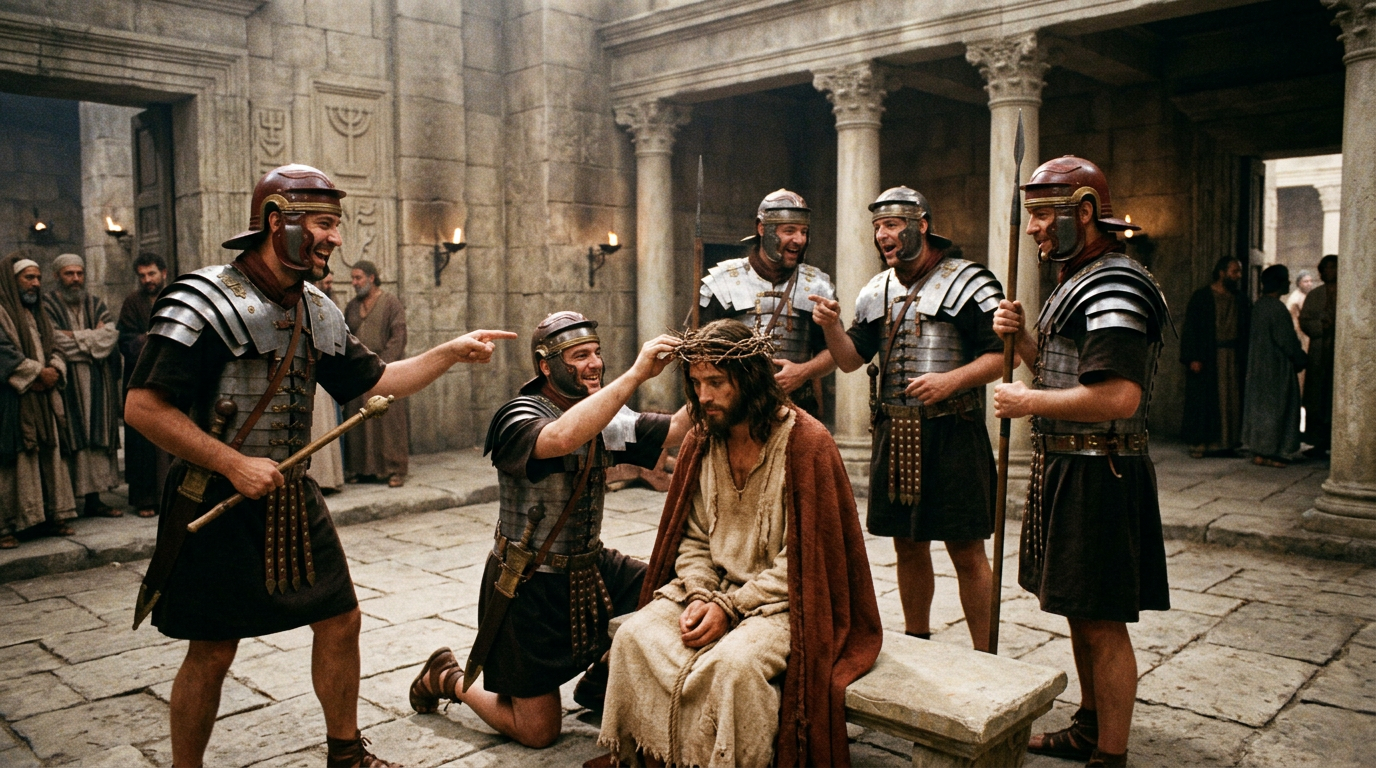
The Guards Mock Jesus Luke 22:63-65 (NIV)
63 The men who were guarding Jesus began mocking and beating him. 64 They blindfolded him and demanded, “Prophesy! Who hit you?” 65 And they said many other insulting things to him.
Commentary
In this passage, we see Jesus as the ultimate prophet who is rejected, mocked, and beaten by His own people. This painful moment directly fulfills what Jesus predicted earlier in Luke 18:32–33, and it mirrors how the Old Testament describes the treatment of God’s true messengers.
Let’s explore Isaiah 50:6:
“I offered my back to those who beat me, my cheeks to those who pulled out my beard; I did not hide my face from mocking and spitting.”
This is the most direct parallel in the prophetic books. The guards’ actions—humiliating and striking a blindfolded captive—are the literal realization of the Suffering Servant who refuses to hide His face from spit and blows.
When we look at these guards, we are forced to look at the darker side of human nature. We see the timeless human tendency to abuse power and target the vulnerable. We see it historically, and we see it today in those who are shamed, targeted, or marginalized for no reason other than the color of their skin.
But the conviction goes even deeper. Consider Psalm 22:6-7:
“But I am a worm and not a man, scorned by everyone, despised by the people. All who see me mock me; they hurl insults, shaking their heads.”
The striking of the defenseless “ruler of Israel” perfectly foreshadows the guards beating the Messiah while mocking His identity. But this text ultimately holds up a mirror to us. Every time we turn away from God, every time we choose sin or harbor hateful thoughts, we place ourselves among the mockers. When our own brokenness is exposed, we often lash out. This passage reminds us that Christ bore the weight of our insults, our systems of prejudice, and our personal sins, trading His righteousness for our shame. I should know, for I am guilty as well. Thanks be to God for Jesus Christ and his Grace
Luke 22:66-71 (NIV)
66 At daybreak the council of the elders of the people, both the chief priests and the teachers of the law, met together, and Jesus was led before them. 67 “If you are the Messiah,” they said, “tell us.”
Jesus answered, “If I tell you, you will not believe me, 68 and if I asked you, you would not answer. 69 But from now on, the Son of Man will be seated at the right hand of the mighty God.”
70 They all asked, “Are you then the Son of God?”
He replied, “You say that I am.”
71 Then they said, “Why do we need any more testimony? We have heard it from his own lips.”
Commentary: The Divine Reversal
When the council demands to know if He is the Christ, Jesus refuses to play into their earthly trap. Instead, He completely redirects the conversation, pointing them toward ancient, cosmic prophecy.
Look at how He synthesizes two massive Old Testament passages in verse 69:
First, He claims Daniel 7:13-14 (The Son of Man):
“In my vision at night I looked, and there before me was one like a son of man, coming with the clouds of heaven… He was given authority, glory, and sovereign power; all nations and peoples of every language worshiped him.”
By claiming the title “Son of Man,” Jesus is telling the high court that though He is currently standing before them in chains, the roles will soon reverse. He is the divine figure who will receive an eternal kingdom from the Ancient of Days.
Second, He anchors this in Psalm 110:1 (The Seated King):
“The Lord says to my lord: ‘Sit at my right hand until I make your enemies a footstool for your feet.’”
When Jesus specifies that the Son of Man will be “seated at the right hand of the mighty God,” He is weaving Daniel 7 and Psalm 110:1 into a single, undeniable claim. The Sanhedrin instantly grasps the gravity of this double claim to divinity and cosmic kingship. It’s exactly why they gasp and ask, “Are you then the Son of God?” (v. 70).
The Great Paradox
This creates a staggering contrast in the text. Earlier in the chapter, we see the physical, earthly reality of the Messiah—fulfilling Micah 5:1, where the ruler of Israel is struck on the cheek with a rod, and Isaiah 50, where He is beaten and spat on. In that room, He looks like less than a man.
Yet, beneath that broken, bloodied exterior lies the ultimate spiritual reality of Daniel 7 and Psalm 110. He is the exalted, divine King who will one day judge the very men currently interrogating Him.
What a sobering reminder for us today. The world often judges by outward appearances, power, and status, just as the Sanhedrin did. But Christ shows us that true authority is found in submission to the Father’s will. He allowed Himself to be struck so that we could be set free.
Thanks be to God for Jesus Christ, our Seated King, and His amazing grace!
Conclusion: The Ultimate Exchange
The trial before the Sanhedrin exposes the deepest irony of human history: the judges of Israel are blind to the true Judge of the world. In this small, tense room, the ultimate exchange took place. Christ allowed Himself to be bound, blindfolded, and beaten so that our spiritual blindness could be cured. He traded His perfect righteousness for our deep shame.
As the sun rises on the morning of His trial, the scene changes but the stakes remain the same. The religious leaders have reached their verdict, but they lack the authority to execute Him.
Bridge to Luke 23: The King on Trial
This moves us directly into the courts of secular power in Luke 23. The Sanhedrin marches Jesus from their council chamber straight to Pontius Pilate, the Roman governor, and later to Herod Antipas. The charge shifts instantly from religious “blasphemy” to political treason—claiming to be a rival king to Caesar.
As you read ahead into chapter 23, watch how Jesus interacts with the authorities of this world. He stands silent before His accusers, subverting earthly power not with armies, but with truth. The same Seated King who claimed the cosmic authority of Daniel 7 will soon wear a crown of thorns on an earthly cross.
Call to Action
Brothers and sisters, this text demands a response. We cannot remain neutral spectators in the courtyard.
- Examine Your Heart: Let the mirror of Psalm 22 expose any hidden resentment, pride, or moments where we push Christ away to preserve our own comfort. Turn back to Him in repentance.
- Submit to the Seated King: Stop trying to fight your own battles using the world’s tactics of power and control. Trust that the Father’s will is perfect, just as Jesus did.
- Share the Gospel: Someone in your life right now is carrying the crushing weight of their own shame and brokenness. Tell them about the King who stood in their place.
Closing Prayer
Heavenly Father,
We are humbled by the immense grace of Your Son, Jesus Christ. Thank You that when we were lost in our brokenness and guilt, He willingly offered His back to the smiters and His face to the mocking. Forgive us for the times our actions and choices have placed us among those who reject His authority. Fix our eyes on Jesus, our Seated King, who rules at Your right hand. Grant us the courage to stand firm in our faith this week, relying completely on His strength and submission.
In Jesus’ mighty name we pray, Amen.
The Lord’s Prayer
Our Father, who art in heaven, hallowed be thy name. Thy kingdom come, thy will be done, on earth as it is in heaven. Give us this day our daily bread, and forgive us our debts, as we forgive our debtors. And lead us not into temptation, but deliver us from evil. For thine is the kingdom, and the power, and the glory, forever. Amen.
Grace and Peace Be with You Always
Tomas
© 2026 The-Way.blog Digital Publications. All Rights Reserved
Study Appendices
I. Comprehensive Biblical References
- Luke 22:63–65: Fulfills the pattern of prophetic rejection (Luke 11:49–51) and Jesus’ own Passion predictions (Luke 9:22, Luke 18:31–33).
- Isaiah 50:6: Part of the third “Servant Song” in Isaiah, depicting the absolute submission of the righteous Servant to physical degradation.
- Psalm 22:6–7: A classic individual lament psalm detailing the intense psychological and social isolation of the righteous sufferer.
- Micah 5:1: A prophetic text detailing the humiliation of Israel’s royal leadership before the arrival of the eternal Ruler from Bethlehem (Micah 5:2).
- Daniel 7:13–14: The central apocalyptic vision of the “Son of Man” receiving an everlasting, universal kingdom from the Ancient of Days.
- Psalm 110:1: The most frequently quoted Old Testament verse in the New Testament, establishing the Messiah’s supreme kingly and priestly authority at the right hand of God.
II. Critical and Exegetical Footnotes
- The Guarding Mockery (v. 63): The Greek verb enepaizon (“mocked”) carries the connotation of playing a cruel game or treating someone like a child’s toy. The physical abuse was not merely disciplinary; it was performative sport.
- The Theological Blindfold (v. 64): In the ancient Near East, blindfolding a prisoner stripped them of situational awareness, amplifying fear. By demanding a “prophecy,” the guards mocked Jesus’ prophetic reputation based on popular messianic expectations that the Messiah would discern secrets without sight.
- The Sanhedrin Assembly (v. 66): Luke uses the specific term presbyterion (“council of elders”) to denote the formal gathering of the high court. Conducting a capital trial at “daybreak” was an attempt to project an aura of legal legitimacy, as nocturnal trials were technically invalid under traditional Jewish jurisprudence.
- The Conditional Response (v. 67-68): Jesus’ statement “If I tell you, you will not believe” highlights the bad-faith nature of the interrogation. The Greek construction shows that the council’s mind was already made up; the questions were designed exclusively for self-incrimination.
III. Canonical Cross-References
| Luke Passage | Matthew Parallel | Mark Parallel | John Parallel |
| Guards Mocking (22:63-65) | Matt 26:67–68 | Mark 14:65 | John 18:22–23 |
| Sanhedrin Trial (22:66-71) | Matt 26:59–66 | Mark 14:55–64 | John 18:19–24 |
IV. The Reversal of Eschatological Status
The core theological pivot of Luke 22:69 hinges on a complete reversal of cosmic status, blending historical humiliation with future glory.
Earthly Reality: Jesus in Chains before the Sanhedrin (Target of Human Judgment)
The Cosmic Shift
Eschatological Reality: The Son of Man Seated at the Right Hand (Universal Cosmic Judge)
By explicitly synthesizing the enthronement language of Psalm 110:1 with the cloud-riding authority of Daniel 7:13, Jesus redefines the terms of the trial. The Sanhedrin assumes they are evaluating a vulnerable heretic. Jesus corrects their framework: His current binding is merely the catalyst for His imminent exaltation. From “now on” (apo tou nyn), the old order is shattered, and the mockers will ultimately answer to the Mocked.
Digital Copyright Notice
Copyright © 2026. All Rights Reserved. This document is protected under international copyright and digital rights management laws.
- Fair Use Citation: Short quotations or excerpts used in blog reviews, theological essays, or academic papers must provide appropriate attribution referencing the author and title of this work.
- Permitted Use: Permission is granted to download, store, electronically view, and print physical copies of this text solely for personal use, private study, small group Bible discussions, or local church ministry settings.
- Prohibited Use: No part of this digital publication may be reproduced, redistributed, resold, hosted on public servers, or transmitted in any form or by any means, including photocopying, digital file sharing, recording, or translation into other languages, for commercial purposes without the prior written permission of the copyright holder.