
The Gospel of John Chapter 10:19-30 (NKJV)
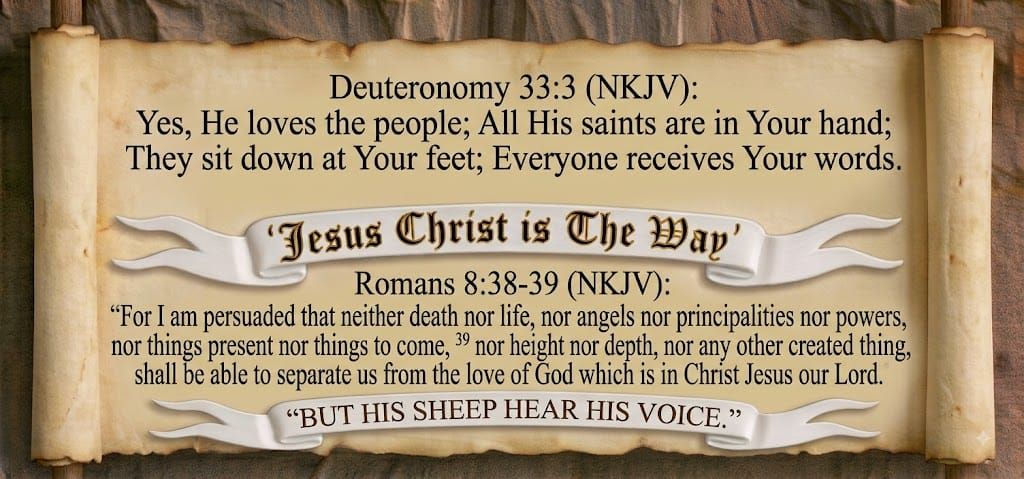
The Security of the Sheep
Welcome to The-Way Ministry
Partner Acknowledgment
Good afternoon. Before we dive into God’s Word today, we want to express our deep gratitude to our supporting ministry partners:
- Luminous Church — San Antonio, TX
- Sowers Church of Christ — San Antonio, TX
- Christian Community Church of Ministry — Bangladesh
- Victory Group Bible Study
Thank you for standing faithfully alongside us as we proclaim the grace, truth, and light of Jesus Christ.
Introduction
The narrative in John 10 shifts from the Good Shepherd’s character to the flock’s eternal assurance. In John 10:19–30, we explore the division Christ’s words created among His hearers, the distinction between true faith and hardened unbelief, and the unshakeable promise that no power in heaven or on earth can snatch a believer out of the Father’s hand.
In this passage, Christ unfolds the heart of God’s redemptive plan: the true Gate that provides our entry point to safety, the Guardian who knows His sheep by name, and the Loving Savior whose grace extends beyond borders—inviting both Jew and Gentile into one unified flock. Above all, He reveals the depth of His unconditional love for us.
In today’s message, we will examine three key movements in this passage and their broader biblical connections:
- The Division and Demanded Plainness (John 10:19–24)
- The Distinction of the Shepherd’s Sheep (John 10:25–27)
- Double Security and Divine Oneness (John 10:28–30)
Scripture Reading John 10:19-30 (NKJV)
19 Therefore, there was a division again among the Jews because of these sayings. 20 And many of them said, “He has a demon and is mad. Why do you listen to Him?”
21 Others said, “These are not the words of one who has a demon. Can a demon open the eyes of the blind?”
The Shepherd Knows His Sheep
22 Now it was the Feast of Dedication in Jerusalem, and it was winter. 23 And Jesus walked in the temple, in Solomon’s porch. 24 Then the Jews surrounded Him and said to Him, “How long do You keep us in doubt? If You are the Christ, tell us plainly.”
25 Jesus answered them, “I told you, and you do not believe. The works that I do in My Father’s name, they bear witness to Me. 26, But you do not believe, because you are not of My sheep, as I said to you. 27 My sheep hear My voice, and I know them, and they follow Me. 28 And I give them eternal life, and they shall never perish; neither shall anyone snatch them out of My hand. 29 My Father, who has given them to Me, is greater than all; and no one is able to snatch them out of My Father’s hand. 30 I and My Father are one.”
Section I: The Division and Demanded Plainness (John 10:19–24)
1. The Sword of Christ’s Words (John 10:19–21)
“Therefore, there was a division again among the Jews because of these sayings. And many of them said, ‘He has a demon and is mad. Why do you listen to Him?’ Others said, ‘These are not the words of one who has a demon. Can a demon open the eyes of the blind?” (vv. 19–21)
Whenever Jesus speaks truth, neutral ground disappears. The Greek word used here for division is schisma, from which we get our English word schism. It describes a sharp, jagged tear in fabric. Christ’s declaration that He has the authority to lay down His life and take it up again immediately tears the crowd in two.
One group responds with open hostility and slander, dismissing Him as demon-possessed and insane. The other group is forced to wrestle with evidence they cannot deny: the recent healing of the man born blind (John 9). A demon brings destruction and darkness, but Jesus brings light and restoration.
The Prophetic Anchor: Isaiah 8:14–15
This division is not an accident; it is the fulfillment of Old Testament prophecy. Centuries earlier, the prophet Isaiah declared:
“He will be as a sanctuary, but a stone of stumbling and a rock of offense to both the houses of Israel, as a trap and a snare to the inhabitants of Jerusalem. And many among them shall stumble; they shall fall and be broken, be bound and be taken.” — Isaiah 8:14–15
Jesus Christ is the ultimate dividing line of human history. To those who yield to Him, He is a sanctuary—a place of absolute safety and peace. But to those who resist His authority, He becomes a stone of stumbling. The offense of the gospel is not that Christ’s words are unclear, but that His lordship demands the total surrender of our pride.