
The Gospel of John Chapter 2
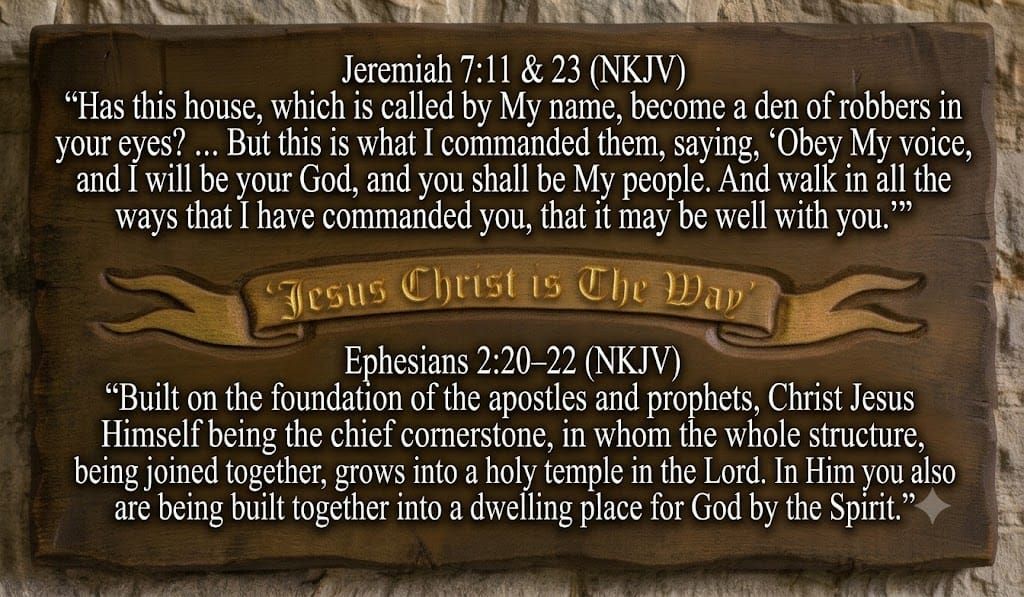
Water Turned to Wine, Jesus Cleanses the Temple, and the Discerner of Hearts
Welcome to The-Way Ministry!
Good afternoon, brothers and sisters. May the peace of our Lord Jesus Christ and His abundant blessings rest upon you today.
As we begin our spiritual journey into Chapter 2, let us take time to reflect on its message. While Luke often focuses on the choices before us, John reveals Christ’s deep love and mercy for us by looking directly into our hearts. As we read today’s text, let us enter into a time of quiet reflection and prayer.
The Architecture of John 2
Most readers view the Wedding at Cana and the Cleansing of the Temple as two completely separate stories—one a joyful miracle at a private party, the other a fiery confrontation in a public courtyard.
Yet John intentionally placed these two events back-to-back at the very launch of Jesus’ ministry.
The Central Thesis: The Wedding at Cana shows Jesus filling what was empty, while the Cleansing of the Temple shows Him clearing out what was corrupt. Together, they form two sides of a single, radical announcement: The old institutional way of reaching God is over.
Part 1: Water Turned to Wine
Scripture Reading: John 2: 1-12 (NKJV)
1 On the third day there was a wedding in Cana of Galilee, and the mother of Jesus was there. 2 Now both Jesus and His disciples were invited to the wedding. 3 And when they ran out of wine, the mother of Jesus said to Him, “They have no wine.”
4 Jesus said to her, “Woman, what does your concern have to do with Me? My hour has not yet come.”
5 His mother said to the servants, “Whatever He says to you, do it.”
6 Now there were set there six waterpots of stone, according to the manner of purification of the Jews, containing twenty or thirty gallons apiece. 7 Jesus said to them, “Fill the waterpots with water.” And they filled them up to the brim. 8 And He said to them, “Draw some out now, and take it to the master of the feast.” And they took it.
9 When the master of the feast had tasted the water that was made wine, and did not know where it came from (but the servants who had drawn the water knew), the master of the feast called the bridegroom. 10 And he said to him, “Every man at the beginning sets out the good wine, and when the guests have well drunk, then the inferior. You have kept the good wine until now!”
11 This beginning of signs Jesus did in Cana of Galilee, and manifested His glory; and His disciples believed in Him.
12 After this, He went down to Capernaum, He, His mother, His brothers, and His disciples; and they did not stay there many days.
Key Observations
- The “Third Day”: John specifically notes that this occurred on the third day, directly foreshadowing the resurrection of Jesus Christ.
- The True Bridegroom: Jesus is present at a wedding with His disciples. At the time of His death, both He and His disciples will be present once again. But here, Jesus is revealed as the true Bridegroom. When He tells His mother, “My hour has not yet come,” He is pointing forward to His ultimate hour: His death and resurrection.
- Private Grace vs. Public Display: The wedding is an intimate, private setting, whereas the crucifixion would be a public display, yet both reveal a private grace bestowed upon those who believe.
- The Setting: A private, domestic celebration where the wine runs out, symbolizing a religious system that had run dry of true joy and life.
- The Six Stone Jars:
- The Symbolism of Six: Represents human effort, striving, and incomplete ritual performance.
- The Material of Stone: Used specifically for ceremonial washings (katharismos) under the Law.
- The Transformation: Jesus fills the jars to the brim with the finest wine, replacing stale, ritualistic routine with the rich, living wine of grace.
- The Core Action: Jesus transforms the ordinary domestic space and brings complete fulfillment to our daily labors.
Deepening the Message
1. The Work of the Six Days
In Genesis, God created the world in six days, completing His labor before resting on the seventh. Throughout Scripture, six represents the measure of human effort, work, and physical creation—the period of labor before reaching divine rest and completeness (seven).
By choosing six stone jars, Jesus used the very symbol of human work:
- The Six Jars of Labor: Under the Old Covenant, people spent their days working, striving, and performing ceremonial washings to make themselves presentable or clean before God.
- The Incompleteness: Six falls short of seven (the number of divine perfection and Sabbath rest). On their own, those six jars could never bring spiritual fullness or ultimate rest—they just kept running empty.
2. The Seventh Day & The Eighth Day of Grace
When Jesus stepped in and filled those six jars with wine, He brought human labor to its ultimate fulfillment:
- Fulfilling the Labor: He took the six jars of human effort and filled them to the brim with grace (John 1:16).
- The New Creation: Early Christian writers often spoke of Christ’s work launching a “new creation.” If six days represent the work of the old creation, Christ’s miracle brings Sabbath rest and points toward the resurrection—what early believers called the “Eighth Day” of eternal life and joy.
3. From Ordinary Days to Kingdom Joy
Connecting the six jars to our daily lives frames the miracle this way:
Our ordinary days of routine, labor, and trying to handle life in our own strength are like water sitting in stone jars. But when Christ enters our daily lives, He transforms our routine labor into the rich wine of His presence and joy. Jesus isn’t just concerned with what happens on a sacred day of rest—He comes to transform every single day of our week from stale routine into something extraordinary.
Replacing the Old System
The detail that links the wedding at Cana to the clearing of the temple lies in John 2:6: “Now there were set there six stone water jars, according to the manner of purification of the Jews…”
These jars were not meant for drinking water; they held water used for ceremonial washing (katharismos) required under the law. Notice two crucial details:
- The jars were empty or low: The old ceremonial system had run dry. It could offer ritual cleanliness, but it couldn’t bring genuine joy, life, or spiritual fulfillment.
- The material was stone: According to rabbinic tradition, stone jars did not absorb ritual impurity like clay pots. They represented the rigid, unyielding external law.
When Jesus fills those ceremonial jars with the absolute best wine, He isn’t just saving a host from social embarrassment. He is symbolically declaring: The old system of external ritual washing is over. He replaces the stale water of religious routine with the rich, living wine of grace.
The Two Halves of John 2: A Single Message
| Feature | The Wedding at Cana (John 2:1–12) | The Temple Cleansing (John 2:13–25) |
| Setting | A joyful, private celebration (Domestic) | A tense, public institution (Religious) |
| The Problem | The wine ran out (System ran dry) | The courts were corrupted (System commercialized) |
| The Action | Transforms ceremonial water into rich wine | Drives out commercial trade and announces a new temple |
| The Message | Internal transformation and joy | Removal of external corruption and false security |
In the first half of the chapter, Jesus transforms an ordinary, domestic space into a place of divine abundance. In the second half, He confronts an institutional space that had turned spiritually barren.
“Saving the Best for Last”
The master of the feast exclaims to the bridegroom: “Every man at the beginning sets out the good wine… but you have kept the good wine until now!” (John 2:10).
This is the ultimate summary of what Christ came to do. Humanity spent centuries trying to find life through institutional rules, ceremonial washings, and legalistic duty. But in the fullness of time, God revealed His ultimate plan through Christ—the “best wine”—offering direct relationship over rigid ritual.
The Bridge for Your Journey:
If the Temple Cleansing shows Jesus clearing out what was corrupt, the Wedding at Cana shows Jesus filling what was empty. You cannot truly understand why He flipped the tables in Jerusalem until you see what He was offering to put in their place!
Questions for Thought
- Jesus cares about every single day of your week, not just the hours you spend in church on a day of rest. So why carry the burden of religious performance?
- Ask yourself: when you pray, do you bring a sincere heart that cares deeply for your soul and your loved ones, or are you focused on outward appearances and the opinions of others?
- Never forget that the old system of ritualistic washing is gone. Jesus has replaced the stale water of mere routine with the vibrant, living wine of His grace—poured out freely for you at the Cross.
Jesus Cleanses the Temple
Scripture Reading: John 2: 13-22 (NKJV)
13 Now the Passover of the Jews was at hand, and Jesus went up to Jerusalem. 14 And He found in the temple those who sold oxen and sheep and doves, and the money changers doing business. 15 When He had made a whip of cords, He drove them all out of the temple, with the sheep and the oxen, and poured out the changers’ money and overturned the tables. 16 And He said to those who sold doves, “Take these things away! Do not make My Father’s house a house of merchandise!” 17 Then His disciples remembered that it was written, “Zeal for Your house has eaten Me up.”
18 So the Jews answered and said to Him, “What sign do You show to us, since You do these things?” 19 Jesus answered and said to them, “Destroy this temple, and in three days I will raise it up.” 20 Then the Jews said, “It has taken forty-six years to build this temple, and will You raise it up in three days?” 21 But He was speaking of the temple of His body. 22 Therefore, when He had risen from the dead, His disciples remembered that He had said this to them; and they believed the Scripture and the word which Jesus had said.
1. The Direct Greek Breakdown
To understand the weight of Christ’s confrontation, we have to look closely at the language John used:
- μὴ ποιεῖτε (mē poieite) — “Stop making” / “Do not turn”
Uses a present imperative verb paired with a negative particle. In Greek grammar, this construction literally means “Stop an action that is already in progress.” Jesus wasn’t issuing a preventative warning; He was ordering an immediate halt to what was actively happening around Him.
- τὸν οἶκον (ton oikon) — “the house”
Refers directly to the sacred Temple complex in Jerusalem.
- τοῦ πατρός μου (tou patros mou) — “of my Father”
Expresses personal, intimate ownership. Jesus directly links His identity to God and asserts divine authority over the Temple space.
- οἶκον (oikon) — “a house [of]”
Repeated deliberately alongside ton oikon for literary emphasis and wordplay, starkly contrasting the intended purpose of the space with its current state.
- ἐμπορίου (emporiou) — “of commerce” / “wholesale trade”
The root of the English word emporium. It specifically denotes large-scale commercial traffic, wholesale trade, and profit-driven business, framing the market activity as an exploitation of sacred space.
A Precise Modern Translation:
“Take these things out of here! Stop turning my Father’s house into a wholesale market!” (or “a commercial center” / “a place of business”)
2. Why the Original Meaning Gets Lost
Translating oikon emporiou as “house of merchandise” misses three crucial historical and linguistic layers:
- A. An Active Command Against Exploitation: The Greek mē poieite isn’t a general rule for the future (“Don’t ever do this”); it is a direct order to cease what was currently happening. Jesus walked into an ongoing, bustling enterprise and demanded an immediate halt.
- B. “Emporion” Means Commercialized Trade, Not Just Selling: The word emporion implies heavy commercial traffic, financial gain, and international trade. The issue wasn’t simply that worshipers were buying a dove for a sacrifice—sacrificial animals were necessary for distant travelers. The issue was that the Outer Court (the Court of the Gentiles) had been turned into a monopolized, profit-driven financial exchange. Money changers charged exorbitant fees to exchange Roman coins for Temple shekels, and inspectors rejected animals from outside, so travelers were forced to buy pre-approved, marked-up Temple livestock.
- C. Stealing Space Meant for the Nations: By taking over the Court of the Gentiles—the only place in the Temple where non-Jewish seekers were permitted to pray—the religious leadership prioritized lucrative business transactions over sacred access for outsiders.
3. How Modern Translations Render It
Modern translations attempt to recover this active, heavy sense of commercialization:
- NASB / CSB: “Stop making My Father’s house a place of business!”
- NIV / NLT: “Stop turning my Father’s house into a market!”
- ESV: “Do not make my Father’s house a house of trade.”
- Amplified: “Make not My Father’s house a house of merchandise (a marketplace, a sales shop)!”
The Takeaway: The verse is not merely a ban on selling items at church; it is a rebuke against turning a sacred space of prayer and access to God into an enterprise driven by commercial profit, convenience, and financial advantage.
4. Harmonizing the Gospels: “House of Trade” vs. “Den of Thieves”
While John uses “house of merchandise,” the phrase “den of thieves” (or “den of robbers”) appears in Matthew 21:13, Mark 11:17, and Luke 19:46: “My house shall be called a house of prayer, but you have made it a den of thieves.”
Why are they different? Most Bible scholars point to two key reasons:
- Two Different Passages (or Focuses): John’s Gospel records the event at the beginning of Jesus’ public ministry, focusing on how commercial activity (oikon emporiou) had desecrated a holy space. The Synoptic Gospels record an event at the end of His ministry (during Holy Week), where greed had escalated into outright extortion.
- The Greek Meaning of “Den of Thieves”: The phrase is σπήλαιον λῃστῶν (spēlaion lēstōn). A spēlaion is a cave or hideout, and lēstōn refers to violent robbers or extortionists.
Quoting Jeremiah 7:11, Jesus was pointing out that a “den of robbers” isn’t where bandits steal—it’s the safe house where they retreat to hide after committing their crimes. Corrupt leaders were robbing people outside through unfair practices, then running into the Temple pretending to be religious and holy.
Whether viewed as two separate moments or one event recounted in thematic style, the core message remains identical: God’s presence is not a business, and holy ground is not a hideout for corrupt hearts.
5. From the Physical Temple to the Individual Soul
Your understanding of the Temple expands when viewed through the rest of the New Testament. As Paul writes in 1 Corinthians 6:19: “Do you not know that your body is the temple of the Holy Spirit who is in you?”
When Jesus cleared the stone-and-mortar Temple in Jerusalem, He was acting out a prophetic vision. The physical Temple had three main zones, mirroring the human heart:
- The Outer Court (Court of the Gentiles): The place meant for open access, public testimony, and welcoming seekers. When commercialism, noise, and self-interest clutter this court, outsiders are blocked from meeting God.
- The Holy Place: The area of daily devotion, prayer, and light.
- The Holy of Holies: The innermost room where God’s presence rested—the deepest seat of the soul.
The Modern Parallel: Entertainment & Institutions
This historical event fits the modern landscape of spectacle-driven auditoriums and consumer Christianity:
- For Church Leadership: When institutional growth, revenue, and entertainment become the primary metrics of success, the church shifts from a house of prayer to a consumer experience. Leaders become “managers of a brand” rather than shepherds of souls.
- For the Individual: When worship becomes about what I get out of the production, faith shifts from honoring Christ to consuming a product.
6. The Historical Echo: From Indulgences to Modern Consumerism
When Martin Luther posted his 95 Theses in 1517, his chief target was the sale of indulgences—promising people that paying money to the church could buy spiritual favors or shorten a dead relative’s time in purgatory. The famous tagline attributed to the monk Johann Tetzel was: “As soon as the coin in the coffer rings, the soul from purgatory springs.”
Today, 2,000 years of historical warnings are often ignored, and similar playbooks re-emerge:
- It Distorts the Nature of God: God is recast as a heavenly vendor. Instead of a Father who offers salvation freely through Christ, God becomes a system you manipulate with cash or “seed money.”
- It Mocks Judgment and Grace: Attempting to buy off divine favor with human currency treats the cross as insufficient (1 Peter 1:18–19).
- Entertainment as a Shield: High-production-value entertainment can serve as a distraction, masking profound spiritual emptiness with emotional highs and polished aesthetics.
The Historical Lesson: Every generation faces the temptation to turn the radical, self-sacrificing way of Jesus into an institution that serves itself. Luther was trying to call the church back to its foundation—the same call needed whenever institutional growth eclipses the simple, Christ-centered gospel.
7. Reclaiming True Faith: The Interior Sanctuary
If the commercialized temple represents what must be cleared out, where do we go to build what is true? The answer lies in returning to the personal, interior nature of devotion.
- Faith Begins in Private (Matthew 6): In the Sermon on the Mount, Jesus emphasized secret devotion: “Pray to your Father who is in secret…” If a person’s faith only exists when sitting in a pew surrounded by music and crowds, it’s not a living relationship—it’s a performance. The private closet is where the foundation is poured.
- The Home as the First Church: Long before cathedrals or mega-campuses existed, the church met in homes (Deuteronomy 6:7, Romans 16:5). When a family lives out the Fruit of the Spirit, it produces an organic light. People searching for salvation are drawn to genuine peace, not polished productions.
- “Where Two or Three Are Gathered” (Matthew 18:20): Jesus never tied His presence to a building or a stage: “For where two or three gather in my name, there am I with them.” Whether two friends over coffee, a family at the dinner table, or believers praying on a weekday—that is the gathering of the body.
- Rest vs. Routine: As Jesus noted, “The Sabbath was made for man, not man for the Sabbath” (Mark 2:27). If organized services leave someone feeling drained, guilted, or entertained rather than spiritually rested and centered in Christ, they have lost their original purpose.
Part 3: Discerner of Hearts
Scripture Reading: John 2: 23-25 (NKJV)
23 Now when He was in Jerusalem at the Passover, during the feast, many believed in His name when they saw the signs which He did. 24 But Jesus did not commit Himself to them, because He knew all men, 25 and had no need that anyone should testify of man, for He knew what was in man.
Past the Spectacle to the Human Heart
The second chapter of John concludes on a quiet, penetrating note about the omniscient nature of Christ.
Notice the striking linguistic detail in the Greek text: In verse 23, John writes that many “believed” (episteusan) in His name when they saw the signs. But in verse 24, John writes that Jesus did not “commit” (episteuen) Himself to them.
It is the exact same Greek root word. John is telling us: They believed in Him, but He did not “believe” in them—because He saw straight into their hearts.
- Past the Spectacle: Jesus did not entrust Himself to the crowds who were merely enthralled by the miracles, the excitement, and the show.
- The Inner Condition: He looked past public claims, religious performances, and high-production displays straight into the hidden motivations of the human soul.
- The Personal Reflection: Christ doesn’t look for institutional membership or outward routine—He looks for genuine, quiet, unfeigned faith in the secret chambers of the heart.
Summary & Conclusion
Chapter 2 of John is a double invitation to step away from dry routines and break free from corrupt, transactional religious systems.
- In Cana, Jesus showed us that He comes to fill the dry, empty waterpots of our six-day labor with the rich, overflowing wine of His grace.
- In Jerusalem, He showed us that He comes to clear away the commercial noise, the financial barriers, and the institutional clutter that block true access to God.
- At the Feast, He reveals Himself as the Discerner of Hearts—the One who cannot be fooled by outward appearances or public applause.
True faith doesn’t require a physical fortress, an expensive auditorium, or a polished production. It begins in the quiet room of your soul when you allow Christ to clear out the clutter and fill your life with His grace.
Final Reflection Question:
Are you still trying to fill your life with the stale water of religious performance, or are you ready to let Christ flip the tables in your heart and give you the best wine?
Conclusion & Transition: Crossing the Threshold into Chapter 3
As we step away from Jerusalem’s courtyard and leave behind the empty stone waterpots of Cana, Chapter 2 leaves us standing at a profound spiritual crossroad.
Jesus has flipped the tables of institutional performance, driven out commercialized worship, and revealed Himself as the Discerner of Hearts. But the narrative of John does not leave us in the courtyard. In the very next verse—John 3:1—a man comes out of the darkness of that same religious system to speak with Jesus in secret. His name is Nicodemus, a Pharisee, a ruler of the Jews, and a man whose heart was stirred by the very tables Jesus flipped.
In Chapter 3, Jesus takes the lessons of John 2 and applies them directly to the individual soul: “Unless one is born again, he cannot see the kingdom of God.”
Join us in our next study as we step out of the night and cross the threshold into Chapter 3 to discover what it truly means to be born of the Spirit.
Call to Action & Partnership
If this study has blessed you, cleared away religious noise, or encouraged your personal walk with Christ, we invite you to stand with us in this work. The-Way Ministry exists to deliver unvarnished, Christ-centered scriptural truth directly to individuals and families, free from institutional clutter or commercial barriers.
- Share the Light: Forward this study to a friend, family member, or believer who is seeking deeper, heart-centered truth.
- Subscribe & Partner: Join our readership on Substack to receive future verse-by-verse studies delivered directly to your inbox.
- Keep in Touch: Share your reflections, prayer requests, or thoughts with us as we walk this narrow path together.
Closing Prayer
Father in Heaven, clear the outer courts of our hearts today. Forgive us for where we have allowed routine, performance, or worldliness to clutter our worship. Fill us with the rich wine of Your grace, anchor our homes in Your truth, and grant us the peace that comes from a genuine, quiet relationship with Your Son, Jesus Christ. In His holy name we pray,
The Lord’s Prayer
Our Father, who art in heaven,
hallowed be Thy name.
Thy kingdom come,
Thy will be done,
on earth as it is in heaven.
Give us this day our daily bread,
and forgive us our trespasses,
as we forgive those who trespass against us.
And lead us not into temptation,
but deliver us from evil.
For Thine is the kingdom, and the power, and the glory, forever and ever.
Amen.
Blessings in Christ’s Grace and Truth,
Tomas
The-Way Ministry
Standing on Truth, Walking the Narrow Way
Copyright © 2026 The-Way Digital Publications, All Rights Reserved
Technical Study Annex & Exegetical Appendix
I. Comprehensive Biblical References
- Genesis 1:31–2:3 — The six days of creation labor followed by the seventh day of Sabbath rest.
- Jeremiah 7:11 — “Has this house, which is called by my name, become a den of robbers in your eyes?” — Source quotation for the Synoptic temple cleansing.
- Psalm 69:9 — “Zeal for Your house has eaten me up…” — Messianic psalm quoted by the disciples in John 2:17.
- Matthew 6:5–6 — Private devotion in the secret closet vs. public religious performance.
- Matthew 18:20 — The true church defined: “For where two or three gather in my name, there am I with them.”
- Matthew 21:12–13 / Mark 11:15–17 / Luke 19:45–46 — The Synoptic accounts of the Temple Cleansing using spēlaion lēstōn (“den of thieves”).
- John 2:1–25 — The Wedding at Cana, the Cleansing of the Temple, and Christ as the Discerner of Hearts.
- John 3:1–21 — The conversation with Nicodemus regarding spiritual rebirth (ānothen).
- 1 Corinthians 6:19 — The transition of the sanctuary: “Your body is the temple of the Holy Spirit who is in you.”
- 1 Peter 1:18–19 — Redemption secured by the precious blood of Christ, not silver, gold, or human currency.
II. Critical and Exegetical Footnotes
1. μὴ ποιεῖτε (mē poieite)
Grammatically structured as a present imperative verb with the negative particle
. In Koine Greek, this construction specifically commands the cessation of an action currently in progress (“Stop doing what you are already doing”), rather than a general prohibition against future action.
2. ἐμπορίου (emporiou)
Genitive singular noun derived from emporos (a merchant or wholesale traveler). It denotes large-scale market traffic and wholesale commerce, as opposed to localized retail (kapēleia).
3. σπήλαιον λῃστῶν (spēlaion lēstōn)
Spēlaion signifies a cave, den, or natural stronghold. Lēstēs denotes an extortionist, bandit, or violent insurrectionist (distinct from kleptēs, a stealth thief). A “den of robbers” represents the hideout where extortionists seek refuge after committing acts of injustice outside.
4. καθαρισμός (katharismos)
Refers to ceremonial or ritual purification prescribed by rabbinic tradition under the Mosaic code. Stone vessels (lithinos) were explicitly favored in contemporary rabbinic law because stone was believed to be immune to absorbing Levitical uncleanness.
5. ἐπίστευσαν (episteusan) vs. ἐπίστευεν (episteuen)
John 2:23 uses episteusan (aorist active, “they believed”), while 2:24 uses episteuen (imperfect active, “Jesus was not committing/entrusting”). The identical root highlights that superficial intellectual or sign-based belief does not equate to covenantal entrustment by Christ.
III. Canonical Cross-References: The Reversal of Status
1. The Sanctuary Shift
- Old Covenant: Herod’s Physical Temple (Where the Court of the Gentiles was crowded out by commerce).
- New Covenant: The Body of Christ (The indwelling temple of every believer).
2. The Cleansing Shift
- Old Covenant: Stone Jars of Ceremonial Purification (External, repetitive washings under the Law).
- New Covenant: The Living Wine of Grace (Internal regeneration through the Holy Spirit).
3. The Access Shift
- Old Covenant: Institutional Gatekeeping (Monetized, high-barrier access managed by corrupt systems).
- New Covenant: “Where Two or Three Are Gathered” (Direct, unhindered access to God through Christ).
Digital Copyright Notice
Copyright © 2026. All Rights Reserved.
This document is protected under international copyright and digital rights management laws.
- Fair Use Citation: Short quotations or excerpts used in blog reviews, theological essays, or academic papers must provide appropriate attribution referencing the author (Tomas) and the title of this work (The-Way Digital Publications).
- Permitted Use: Permission is granted to download, store, electronically view, and print physical copies of this text solely for personal use, private study, small group Bible discussions, or local church ministry settings.
- Prohibited Use: No part of this digital publication may be reproduced, redistributed, resold, hosted on public servers, or transmitted in any form or by any means, including photocopying, digital file sharing, recording, or translation into other languages, for commercial purposes without the prior written permission of the copyright holder.