
The Gospel of John Chapter 5 (II)
Performing medical care on the Sabbath was restricted to immediate, life-threatening emergencies (Pikuach Nefesh). For chronic, non-fatal conditions, standard care was forbidden because preparing remedies or treating non-emergencies constituted unlawful labor.
Honor the Father and the Son
Welcome & Introduction
Good morning, brothers and sisters, and welcome back to The-Way Ministry! May the grace of our Lord Jesus Christ, the love of God the Father, and the communion of the Holy Spirit be with you all as we gather for our study in John Chapter 5: Honor the Father and the Son.
Following the incredible encounters in previous chapters—from the Samaritan woman at the well to miracles of healing—John 5 brings us to a major turning point. After healing a man at the Pool of Bethesda on the Sabbath, Jesus makes a profound declaration: “My Father is working until now, and I am working” (John 5:17). The religious leaders didn’t merely take offense at a Sabbath rule—they sought to kill Him because He was explicitly making Himself equal with God.
How do we respond when someone claims absolute authority? In John 5, Jesus makes a claim so shocking that His listeners wanted to execute Him on the spot. Jesus has just healed a paralyzed man at the Pool of Bethesda on the Sabbath. The religious leaders focus on rule-breaking. Jesus is not merely a moral teacher or prophet—He works in perfect unity with God the Father, holds divine authority over life and judgment, and deserves the exact same honor as God.
Scripture Reading John 5: 16-23 (NKJV)
16 For this reason, the Jews persecuted Jesus, [d]and sought to kill Him, because He had done these things on the Sabbath. 17 But Jesus answered them, “My Father has been working until now, and I have been working.”
18 Therefore the Jews sought all the more to kill Him, because He not only broke the Sabbath, but also said that God was His Father, making Himself equal with God. 19 Then Jesus answered and said to them, “Most assuredly, I say to you, the Son can do nothing of Himself, but what He sees the Father do; for whatever He does, the Son also does in like manner. 20 For the Father loves the Son and shows Him all things that He Himself does; and He will show Him greater works than these, that you may marvel. 21 For as the Father raises the dead and gives life to them, even so the Son gives life to whom He will. 22 For the Father judges no one, but has committed all judgment to the Son, 23 that all should honor the Son just as they honor the Father. He who does not honor the Son does not honor the Father who sent Him.
- Carrying/Transferring Domains (Hotza’ah): Carrying an object from a private space into a public area or transporting a burden across a public square (anchored in passages like Jeremiah 17:21).
- Healing/Medical Care: Performing medical care on the Sabbath was restricted to immediate, life-threatening emergencies (Pikuach Nefesh). For chronic, non-fatal conditions, standard care was forbidden because preparing remedies or treating non-emergencies constituted unlawful labor.
Section I. The Work of the Son (vv. 16–18)
Why Bethesda Triggered Conflict
The miracle at the Pool of Bethesda represented a double violation in the eyes of the Jerusalem authorities:
- Issue A: A Non-Life-Threatening Healing: The man at Bethesda had been paralyzed for 38 years (John 5:5). Because his condition was chronic rather than an immediate emergency, the authorities insisted the healing should have waited until sunset after the Sabbath ended.
- Issue B: Carrying the Mat (Hotza’ah): Jesus didn’t just heal the man; He commanded him: “Rise, take up your bed and walk” (John 5:8). When the leaders saw him carrying his sleeping pallet through Jerusalem, they confronted him immediately (v. 10). Jesus deliberately commanded an action that publicly exposed their human traditions.
The Deeper Theological Clash
The physical miracle triggered the confrontation, but the argument quickly shifted to ultimate authority:
- Law vs. Restoration: For the authorities, maintaining rigid Sabbath boundaries was the ultimate sign of loyalty to God. For Jesus, the Sabbath was designed to extend God’s restorative mercy—making a broken person whole was the true fulfillment of Sabbath rest.
- Divine Authority (v. 17): When confronted, Jesus did not debate scribal loopholes. Instead, He made a bold divine claim:
“My Father has been working until now, and I have been working.”
Jewish theology recognized that God continues to sustain life, grant birth, and hold judgment on the Sabbath (otherwise creation would collapse). By claiming the right to work on the Sabbath alongside His Father, Jesus was claiming divine authority, leading directly to their plot to execute Him (v. 18).
Section II. The Unity of Father and Son (vv. 19–20)
“Most assuredly, I say to you, the Son can do nothing of Himself, but what He sees the Father do; for whatever He does, the Son also does in like manner. For the Father loves the Son, and shows Him all things that He Himself does…” (John 5:19–20a)
Key Theological Principles
- Inseparable Operation: The Son does not act independently or in opposition to the Father. Their will, power, nature, and work exist in unbroken alignment. What the Father wills, the Son executes.
- Driven by Divine Love: The relationship between Father and Son is anchored in dynamic, perfect love and full transparency: “The Father loves the Son and shows Him all that He Himself is doing.”
- Nature Precedes Action: In human families, children naturally reflect their parents’ likeness, mannerisms, and genetics. In an infinitely perfect and eternal sense, Jesus acts like the Father because He shares the Father’s exact divine essence. He cannot act contrary to the Father any more than light can generate darkness.
Pastoral Application & Reflection
- Seeing the Heart of God: When you observe Jesus—His compassion for the suffering, His authority over sin, His restoration of the broken—you are seeing the exact character and heart of God the Father. Jesus is not a softer version of God; He is the perfect manifestation of the Father’s love in action.
- Living Out Our Adopted Identity: As believers adopted into God’s family, we have had our spiritual nature renewed in Christ. Living in the Father’s love enables us to walk in alignment with Him and reflect the Son’s obedience in our daily lives.
Section III. The Authority of the Son (vv. 21–22)
“For as the Father raises the dead and gives life to them, even so the Son gives life to whom He will. For the Father judges no one, but has committed all judgment to the Son…” (John 5:21–22)
Jesus now moves from His perfect alignment with the Father to two explicit tasks entrusted to Him—tasks that Jewish theology strictly reserved for God alone.
1. Power Over Life (v. 21)
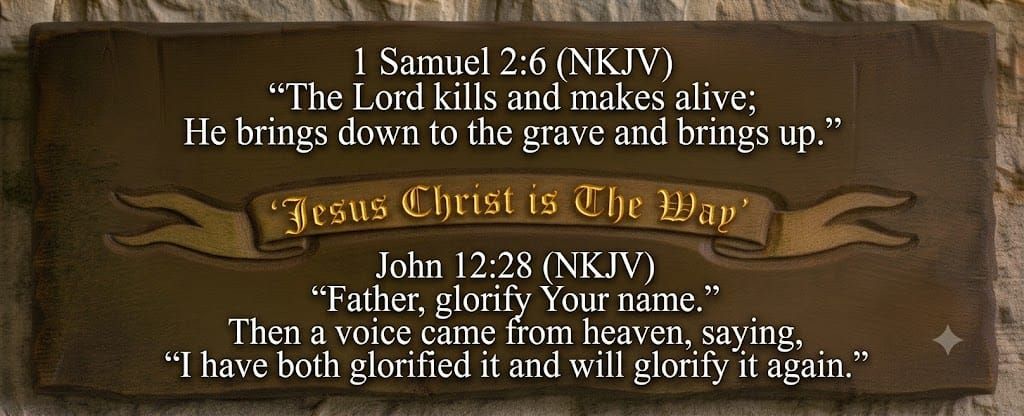
In Old Testament thought, God alone holds the key to life and death: “The Lord kills and makes alive; He brings down to the grave and brings up” (1 Samuel 2:6). With the exception of the Sadducees (who denied the resurrection), Second Temple Judaism firmly believed that resurrection power belonged exclusively to the Father.
When Jesus claims that the Son gives life “to whom He will,” He claims a divine prerogative:
- Present Reality: It refers to the gift of spiritual, abundant life granted to believers right now (John 10:10).
- Future Promise: It points forward to the literal physical resurrection at the end of the age.
2. Entrusted with Final Judgment (v. 22)
Not only is Jesus the source of life, but the Father has also handed over all judgment to Him. Jesus becomes the ultimate measure of humanity’s destiny:
- Those who trust in the Son enter into life immediately.
- Those who reject the Light are already under judgment.
Application: Jesus holds our eternal destiny in His hands. He is neither a passive bystander nor merely a historic prophet—He is both the Giver of life and the ultimate Judge before whom every human heart will stand.
Section IV. The Goal: Equal Honor for the Son (v. 23)
“…that all should honor the Son just as they honor the Father. He who does not honor the Son does not honor the Father who sent Him.” (John 5:23)
The Climax of the Argument
Why did the Father delegate resurrection power and cosmic judgment to the Son? Verse 23 provides the ultimate purpose: so that human hearts would revere and worship Jesus with the exact same honor reserved for God the Father.
In Isaiah 42:8, God declares: “I am the Lord, that is My name; and My glory I will not give to another.” Yet here, Jesus claims that failing to glorify the Son is direct dishonor to the Father. To glorify the Son is to glorify the Father (John 12:28; Philippians 2:9–11).
The Sovereign Warning & Its Implications
- You cannot separate God from Jesus: It is impossible to claim a relationship with God the Father while bypassing, reducing, or rejecting Jesus Christ.
- Exclusivity of Divine Worship: Any worldview or philosophy that attempts to praise “God” while stripping Jesus of His deity dishonors both.
Lord, Liar, or Lunatic?
By demanding the exact same honor as Almighty God, Jesus leaves no ground for neutral sentiment. C.S. Lewis famously observed that a man who said the things Jesus said could not merely be a “great moral teacher.” He would either be:
- A Liar — deliberately deceiving the world,
- A Lunatic — wildly self-deceived on the level of a madman, or
- Lord — precisely who He claimed to be.
Since Jesus claims full equality with the Father in nature, power, judgment, and honor, calling Him simply a “good teacher” or “a great prophet” is both logically inconsistent and scripturally impossible. He is nothing less than God Himself, worthy of our highest worship and complete devotion.
Questions for Private Meditation & Points of Reflection
- Examining Our Image of God: Do you ever view God the Father as strict or demanding, while viewing Jesus as compassionate and forgiving? How does Jesus’ statement in John 5:19—that He does only what He sees the Father doing—reshape your understanding of the Father’s heart toward you?
- Evaluating Where We Place Authority: The religious leaders let human traditions and rules overshadow God’s desire for healing and restoration. Are there “religious fences” or cultural habits in your own life that prevent you from extending mercy or experiencing Christ’s freedom?
- Reflecting on Equal Honor: Jesus demands the exact same honor, reverence, and allegiance as God the Father. In your daily life—your worship, decisions, and priorities—are you giving Jesus the devotion due only to God, or treating Him merely as a helpful guide?
- Receiving Life Today: Jesus claims the authority to give life to whomever He wills—both spiritual vitality now and resurrection life in the future. In what area of your life (your spiritual walk, peace of mind, or relationships) do you need to yield control and invite His life-giving power today?
Conclusion & Transition: Crossing the Threshold into John 5:24–30
The Choice Before Us
As we conclude this portion of John 5, the tension could not be higher. Jesus has left no middle ground. He does not allow us to reduce Him to a mere moral philosopher, a well-meaning social reformer, or a secondary prophet. By claiming the power to raise the dead, the authority to execute divine judgment, and the right to receive the same honor as God the Father, Jesus places us before a decisive choice: we will either reject Him as an impostor or fall before Him in complete worship as Lord.
When we honor the Son, we enter into the very life and purpose of the Father. To know Jesus is to know God; to see Jesus in action is to see the heart of the Father reaching into a broken world to restore, heal, and redeem.
Transition: Crossing the Threshold (John 5:24–30)
This brings us to one of the most breathtaking turning points in the Gospel of John. Having declared His divine authority, Jesus now reveals how that authority directly impacts our present reality and eternal destiny.
In verses 24 through 30, Jesus moves from defending His identity to offering an astonishing invitation. He crosses the threshold from argument to assurance, announcing that the moment of decision is not somewhere off in the distant future—it is now:
“Most assuredly, I say to you, he who hears My word and believes in Him who sent Me has everlasting life, and shall not come into judgment, but has passed from death into life.” (John 5:24)
As we turn to our next study in John 5:24–30, we will explore:
- Present Possession of Eternal Life: How salvation is not merely a future promise, but a reality experienced today.
- Passing From Death to Life: What it means to step out of spiritual condemnation and into unbreakable communion with God.
- The Two Resurrections: How the voice of the Son of God awakens dead souls today and will one day raise all bodies from the grave for final evaluation.
Join Call to Action & Partnership
If this study in John Chapter 5 has encouraged, grounded, or challenged your faith, we invite you to stand with us in proclaiming the uncompromised Word of God.
- Share the Word: Forward this study to a friend, family member, or small group leader who wants to grow deeper in Scripture.
- Partner in Ministry: Support The-Way Ministry as we equip believers with rich exegetical teaching and faithful biblical exposition. Keep this ministry in your prayers as we continue to stand on Truth and walk the narrow way together.
Let us stand together on the unwavering truth of God’s Word and walk the narrow path side-by-side. Your prayers, engagement, and support allow us to continue producing deep, scripture-focused teaching for all who are seeking Him.
Thank you for your prayers, your presence, and your partnership in the Gospel!
- Join The Way Substack (Free or Paid Subscription)
- Support via The Way Blog (One-Time Gift)
Closing Prayer
Heavenly Father, we thank You for revealing Your heart, Your love, and Your ultimate authority through Your Son, Jesus Christ. Grant us the grace to honor Him in all that we say and do, and give us the courage to walk faithfully in His truth every day. Amen.
The Lord’s Prayer
Our Father in heaven,
Hallowed be Your name.
Your kingdom come.
Your will be done
On earth as it is in heaven.
Give us this day our daily bread.
And forgive us our debts,
As we forgive our debtors.
And do not lead us into temptation,
But deliver us from the evil one.
For Yours is the kingdom and the power and the glory forever. Amen.
Blessings in Christ’s Grace and Truth,
Tomas
The-Way Ministry
Standing on Truth, Walking the Narrow Way
Copyright © 2026 The-Way Digital Publications, All Rights Reserved.Technical Study Annex & Exegetical AppendixI. Comprehensive Biblical ReferencesExodus 20:8–11 – The Sabbath commandment within the Decalogue.1 Samuel 2:6 – Yahweh’s sovereign prerogative over life, death, and resurrection.Jeremiah 17:21 – Prohibition against bearing burdens or carrying items through gates on the Sabbath.Isaiah 42:8; 48:11 – God’s declaration that He will not yield His glory or honor to another.John 5:1–15 – The healing at the Pool of Bethesda on the Sabbath.John 5:16–23 – The Son’s divine unity, authority, and equal honor with the Father.John 10:10 – Christ as the giver of abundant, present spiritual life.John 12:28 – The Father glorified through the glorification of the Son.Philippians 2:9–11 – Exaltation of Christ to the glory of God the Father.II. Critical and Exegetical Footnotes1. John 5:16 — “persecuted Jesus, and sought to kill Him”The Greek imperfect verb ediōkon (“were persecuting/pursuing”) indicates the onset of a sustained, ongoing campaign of opposition by the Jerusalem religious authorities—triggered directly by Sabbath infractions.2. John 5:17 — “My Father has been working until now, and I have been working”Jesus specifically uses patēr mou (“my Father”) rather than patēr hēmōn (“our Father”), asserting a unique, unshared Sonship. His defense relies on the accepted Second Temple premise that God continuously maintains creation (creatio continua) and executes judgment on the Sabbath; by applying this uninterrupted divine work to Himself, Jesus claims equal divine prerogative.3. John 5:18 — “making Himself equal with God”The Greek phrase ison heauton poiōn tō theō reflects the religious authorities’ immediate realization: Jesus was not claiming mere delegated or prophet-like authority, but personal, ontological equality (isos) with Yahweh.4. John 5:19 — “the Son can do nothing of Himself”This statement (ou dynatai ho huios poiein aph’ heautou ouden) does not imply functional weakness or moral inferiority. Rather, it denotes the absolute harmony and unbroken unity of the Trinity (inseparable operation). The Son cannot act independently because His essence, power, and will are eternally one with the Father.5. John 5:23 — “honor the Son just as they honor the Father”The comparative conjunction kathōs (“just as” / “to the exact same degree”) establishes that the honor (timē) due to the Son is identical in weight, substance, and glory to the honor due to God the Father, demanding worship that belongs solely to God.III. Canonical Cross-References: The Reversal of Eschatological StatusThe Present Realization of Life (John 5:21 $\rightarrow$ Ephesians 2:4–5): Divine resurrection power is not strictly an end-times physical event; it operates in the present age by transferring dead sinners into spiritual life.The Delegation of Cosmic Judgment (John 5:22 $\rightarrow$ Acts 17:31): Paul’s sermon at the Areopagus directly mirrors John 5:22, confirming that God has appointed a fixed day to judge the world through the Man He ordained.Equal Divine Honor (John 5:23 $\rightarrow$ Revelation 5:13): John’s vision in the Apocalypse culminates in every creature offering identical praise, honor, and glory “to Him who sits on the throne and to the Lamb forever and ever.”Digital Copyright NoticeCopyright © 2026. All Rights Reserved.
This document is protected under international copyright and digital rights management laws.Fair Use Citation: Short quotations or excerpts used in blog reviews, theological essays, or academic papers must provide appropriate attribution referencing the author (Tomas) and title of this work (The-Way Digital Publications).Permitted Use: Permission is granted to download, store, electronically view, and print physical copies of this text solely for personal use, private study, small group Bible discussions, or local church ministry settings.Prohibited Use: No part of this digital publication may be reproduced, redistributed, resold, hosted on public servers, or transmitted in any form or by any means, including photocopying, digital file sharing, recording, or translation into other languages, for commercial purposes without the prior written permission of the copyright holder.