
The Gospel of Luke Review: Chapters 11-12
Jesus connects our present, earthly lives with our eternal, heavenly futures. He challenges us to look past the immediate discomfort of rejection and focus on the ultimate reality: our alignment with Him.
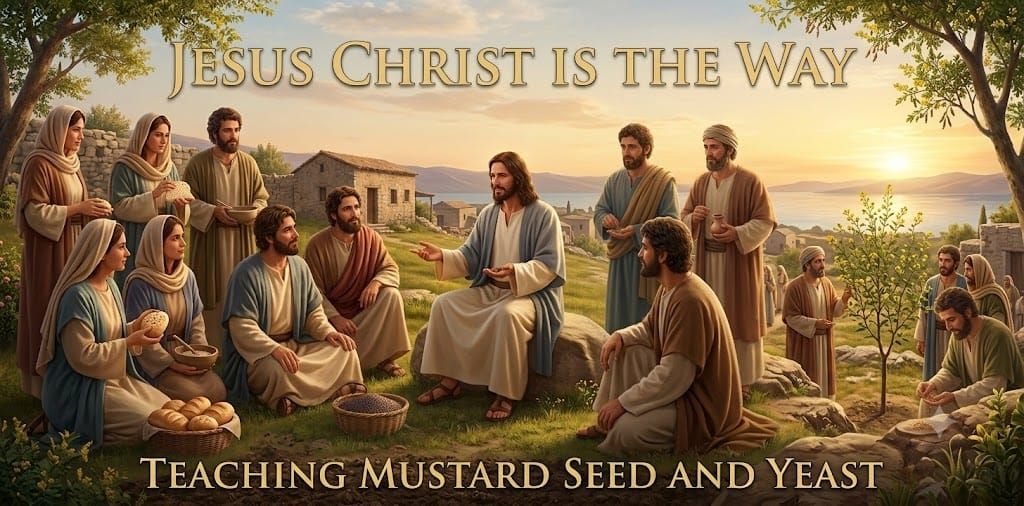
Teaching on the Road
Welcome to The-Way Ministry
Good afternoon, and welcome, brothers and sisters! May the peace of our Lord Jesus Christ and His abundant blessings be with you as we study His Word together today.
Before we dive into today’s text, I want to share a quick update on how you can support this ministry. If The Way has been a blessing to your walk, I invite you to consider helping us grow by becoming a paid subscriber or simply by “buying me a coffee” through our support links:
Your generosity directly helps us continue this daily journey with Christ, and it supports my family as I dedicate time to this work. Thank you so much for your prayers, your presence, and your partnership.
When we peel back the layers of translation and look at centuries of traditional formatting, we finally meet the real people behind the pages. The raw, unfiltered humanity of Peter, James, John, and Paul reminds us that they weren’t just characters in an ancient book. They were people just like us, navigating faith in real-time. That is the moment the Bible truly wakes up. It ceases to be a distant historical archive and becomes a living mirror, reflecting our own hearts right back at us.
Chapter 11: Prayer, Spiritual Warfare, and Inward Purity
The Lord’s Prayer & Persistence
When the disciples ask Jesus to teach them how to pray, He responds with a model prayer centered on God’s glory, daily provision, forgiveness, and deliverance. It shows that God hears bold, untiring prayers; Jesus follows this model with the story of a friend knocking at midnight.
Luke 11:1–8 (NIV)
“Lord, teach us to pray, just as John taught his disciples.”
He said to them, “When you pray, say:
‘Father, hallowed be your name, your kingdom come. Give us each day our daily bread. Forgive us our sins, for we also forgive everyone who sins against us. And lead us not into temptation.’”
Then Jesus said to them, “Suppose you have a friend, and you go to him at midnight and say, ‘Friend, lend me three loaves of bread… I tell you, even though he will not get up and give you the bread because of friendship, yet because of your shameless audacity, he will surely get up and give you as much as you need.”
Walking in Daily Dependence
Because Luke’s Gospel focuses heavily on an immediate reliance on the Holy Spirit (which Jesus emphasizes in the subsequent verses, 9–13), this shorter version of the prayer highlights a daily, walking dependence. It is a prayer for God to guide our steps dynamically and shield us from overwhelming trials.
When we look closely at verses 2–4, this daily dependence emphasizes three key pillars:
- The Character of God: “Father, hallowed be your name, your kingdom come.” This immediately grounds our prayers in who God is, reminding us of His holiness and His covenant promises.
- Daily Spiritual Nourishment: By asking for our “daily bread,” we are not just asking for physical food, but for our spirits to be continuously nourished and sustained by the Holy Spirit.
- The Condition of Grace: We experience God’s forgiveness in real-time only as we actively extend that same forgiveness to others. Sustained by this daily exchange of grace, we are empowered to recognize and avoid the enemy’s traps.
When Jesus drives out a demon that had caused muteness, the crowd is immediately split. While many marvel, others accuse Him of working by the power of Beelzebul (Satan). Jesus quickly exposes the logical bankruptcy of their argument: a kingdom divided against itself cannot stand. If Satan is casting out Satan, his reign is already over.
Jesus closes this discourse by drawing a sharp line between three groups: the scoffers who actively reject the truth, the superficial crowds who treat His miracles like a spectacular sideshow, and the religious legalists who use outward devotion to maintain control.
When a woman in the crowd cries out to bless the mother who gave Him birth, Jesus gently reframes her focus:
“Blessed rather are those who hear the word of God and obey it.” — Luke 11:28
True blessing bypasses religious systems and social status entirely. It belongs to the everyday believer who hears the Word of God with an honest heart and walks it out in daily obedience.
Ancient Echoes in a Modern World
As we close this section of Luke 11:14–28, we have to confront a harsh modern reality. We live in a world where mentioning the name of Jesus is frequently met with a sneer, a rolled eye, or an intellectual scoff. Tragically, the corruption isn’t just on the outside; even some self-proclaimed Christian leaders routinely twist the Word of God out of context for personal gain. Amidst this compromise, only a remnant of Christ-centered ministries remains steadfast in the True Way.
Yet, a closer look at Luke’s Gospel reveals that the modern skeptic’s voice and the corrupt leader’s manipulation are merely old echoes of ancient fears.
If you doubt this, pick up a Bible—whether a physical book or on your phone—and read His Word for yourself. As you read, ask yourself: How am I interpreting this? Are we looking for truth, or are we looking for leverage?
The spiritual resistance we see today is rooted in a very old fear: the fear of losing control over the masses.
- Manipulative Legalism: We see this fear clearly when modern leaders legalistically wrench Old Testament scriptures out of context, demanding a strict ten-percent tithe specifically to fund elaborate building projects.
- Merchandising Grace: We see it when they replicate the exact errors of the pre-Reformation church—demanding money or special contributions to pray for the souls of the departed, a purely human invention that has absolutely no biblical basis for entering heaven.
Could these individuals be the very scoffers warned about in 2 Peter 3:3–4? In many cases, they cherry-pick verses to suit their own agendas while completely missing the heart of the Gospel.
Luke confronts us here with a definitive, personal choice: will we accept the truth revealed to us by the Holy Spirit, or will we buy into the world’s twisted, religious counterfeits? Choose this day to reject the systems of control, and follow the genuine Truth, the Light, and the Way of Christ Jesus.
We live in a world that constantly demands “proof” before it will believe, yet signs of God’s faithfulness are already folded into the fabric of our daily lives. Just as the rainbow in Genesis stands as a permanent monument to God’s covenant with Noah, His handiwork is all around us. Yet, like the crowds in Luke’s Gospel, humanity still demands more.
When the crowds press in asking for a spectacular display, Jesus delivers a sobering diagnosis:
“This is a wicked generation. It asks for a sign, but none will be given it except the sign of Jonah.” — Luke 11:29
To understand what Jesus means, we have to look closely at Jonah’s journey and how it mirrors His own mission:
- The Plea for Mercy: When the storm raged around Jonah, the pagan sailors cried out, “We pray, O Lord, please do not let us perish for this man’s life, and do not charge us with innocent blood...” (Jonah 1:14). This cry beautifully mirrors Calvary, where the repentant thief recognized Jesus’ innocence amidst the spiritual storm, pleading, “Lord, remember me when You come into Your kingdom” (Luke 23:42).
- Three Days and Three Nights: While modern readers sometimes get tripped up by the timeline (Friday crucifixion to Sunday resurrection covers three days but only two literal nights), first-century Jewish audiences understood this as a common idiom. Under “inclusive counting,” any part of a day-and-night cycle is counted as the whole. Just as Jonah was hidden in the depths of the sea and returned to preach repentance, Jesus entered the depths of death and rose victorious on the third day—becoming the ultimate living proof.
To drive this point home, Jesus compares His listeners to two historical figures who recognized God’s truth with far less evidence:
- The Queen of the South (Sheba): She traveled to the ends of the earth just to hear the wisdom of Solomon (Luke 11:31). Her pursuit condemns our complacency. She crossed deserts to hear a flawed king, while we allow Bibles to gather dust on our shelves, ignoring the One who is infinitely greater than Solomon.
The Men of Nineveh: These pagan citizens repented at the grumbling, reluctant warnings of Jonah (Luke 11:32). Yet, when confronted with the flawless love and ultimate resurrection of Jesus Christ, His own people hesitated.
The Lamp of the Body
This brings Jesus to His second, deeply convicting point about our spiritual focus and the danger of living in the shadows of compromise.
“The lamp of the body is the eye. Therefore, when your eye is good, your whole body also is full of light. But when your eye is bad, your body also is full of darkness.” — Luke 11:34
What we feast our eyes upon ultimately dictates the state of our souls.
- The Healthy Eye: When our focus is single-mindedly fixed on Christ, His light floods our entire perspective, leaving no room for darkness.
- The Bad Eye: When our focus shifts to worldly approval, fear, or spiritual compromise, darkness creeps in, suffocating our witness.
A hidden faith is a compromised faith. Just as Paul had to publicly call out Peter in Galatians 2:11–14 for compromising his witness under social pressure, Jesus calls us out of the shadows today. We cannot safely “pocket” God’s grace while hiding our lamps under a clay jar to keep from standing out.
The stakes are high. Jesus warns us that whoever acknowledges Him before others will be acknowledged before the Father, but those who shrink back out of fear or compromise will find themselves in outer darkness (Luke 12:8–9).
The signs have been given, the Light has been lit, and the choice is entirely ours. Let us stop staring at empty skies waiting for signs, uncover our lamps, and boldly live a life that glorifies the Father for all to see.
Woes to the Pharisees
Dining with a Pharisee, Jesus does not perform the ritual handwashing before eating. When his host is shocked, Jesus delivers a stinging rebuke: they clean the outside of the cup, but the inside is full of greed and wickedness. He pronounces six “woes” on them for neglecting justice and the love of God.
Executive Summary: From Ritual to Reality
The post explores Jesus’s sharp, revolutionary critique of the religious elite in Luke 11. It highlights how easily religious leaders and everyday believers fall into the trap of outward performance (cleaning the outside of the cup) while harboring internal decay (leaving the inside dirty).
Ultimately, it serves as an urgent wake-up call for modern church leaders and believers to abandon legalistic gatekeeping, embrace raw authenticity, and prioritize mercy and justice over religious optics.
The Core Conflict: Outside vs. Inside
The tension begins when a Pharisee is shocked that Jesus skips the traditional, non-biblical ritual of ceremonial hand-washing (Luke 11:38). Jesus uses this moment to expose a massive theological flaw: the Pharisee was evaluating the Holy God by human standards.
Jesus contrasts two opposing worldviews:
- The Pharisee’s Focus: A flawless public reputation, rigid adherence to minor rules, and clean cups.
- Jesus’s Focus: Exposing internal greed, wickedness, and a dead, unrenewed heart.
The Six “Woes” Grouped into Three Spiritual Traps
Instead of a line-by-line reading, the blog groups Jesus’s six grief-filled warnings (”woes”) into three distinct traps that still plague modern ministry:
1. Major-League Rules, Minor-League Hearts
- The Tithe Trap: Focusing obsessively on the minutiae of giving and rules (like tithing garden herbs) while completely neglecting justice, mercy, and the love of God.
- Living for Applause: Using religion as a stage for social status, long-winded prayers, and demanding the “last word” to satisfy spiritual pride.
- Unmarked Graves: Appearing holy on the surface but harboring hidden internal decay. Like stepping on an unmarked grave, leaders with hidden hypocrisy silently defile and damage the congregations they lead.
2. Weaponizing Faith and Power
- Crushing Burdens: Creating exhausting, legalistic checklists for believers to follow, while offering zero practical help, empathy, or grace when those people are drowning in real-world struggles.
- Killing the Living Prophets: Honoring dead historical heroes of the faith (who can no longer challenge current sins) while actively canceling, silencing, or ejecting modern whistleblowers who call out current corruption.
3. Gatekeeping the Kingdom
- Stealing the Key to Knowledge: Making Scripture and the relationship with God so overly complicated, academic, or institutionalized that ordinary people feel inadequate to seek God on their own.
The Takeaway & Weekly Challenge
True spiritual cleanliness does not come from flawless ritual performance, but from a transformed, generous heart. The blog challenges readers, especially leaders, to do an immediate “heart-check” this week:
- Confess the hidden things: Bring bitterness, pride, and compromise into the light.
- Put people over protocols: Intentionally lift a finger to help bear someone else’s heavy real-world burdens.
Prioritize mercy: Let love for justice and devotion to God outpace the desire for human applause.
Chapter 12: Integrity, Trust, and Readiness
Warning Against Hypocrisy
Jesus turns his attention to his disciples, warning them against the “yeast” (the corrupting influence) of the Pharisees and teaching them how to handle material possessions.
As an overwhelming, chaotic crowd presses in so tightly that people are literally trampling one another, Jesus does not play to the gallery. Instead, He turns His attention first to His disciples with a sharp, immediate warning:
“Beware of the leaven of the Pharisees, which is hypocrisy. For there is nothing covered that will not be revealed, nor hidden that will not be known.” — Luke 12:1–2
This massive, highly charged atmosphere created a unique pressure for the disciples—the temptation to perform, to wear a mask, and to please the crowd.
We see this same trap in modern ministries today. Whether a church is small and desperately trying to grow, or large and striving to maintain its numbers, the pressure to “put on a show” quietly breeds compromise.
Jesus uses the imagery of leaven to show how hypocrisy works. Just as a tiny pinch of yeast silently spreads through a giant batch of dough, a small amount of religious posturing can quietly infect an entire community from the inside out.
But Jesus reminds us that spiritual performance is entirely pointless. What we whisper in the dark will be shouted from the rooftops. At the final judgment, every mask will be stripped away, and our stewardship will be laid bare before the Creator. What the world cannot see, God sees perfectly. Our greatest need is not a polished reputation, but a deep, authentic faith in Jesus Christ, whose grace rescues us from perishing and anchors us in true, eternal life.
Jesus Teaches the Fear of God
Jesus transitions seamlessly from warning about hypocritical religious elites to addressing a much more visceral, physical danger: persecution. Yet, notice the profound tenderness in His voice as He addresses His followers:
“And I say to you, My friends, do not be afraid of those who kill the body, and after that have no more that they can do.” — Luke 12:4
He calls them “My friends.” He acknowledges their danger but puts it into eternal perspective. Human persecutors can destroy physical life, but their reach stops there. Only God holds sovereign authority over both mortal life and eternity.
To turn this heavy warning into a source of deep comfort, Jesus points to the most mundane elements of creation:
- The Sparrows: “Are not five sparrows sold for two copper coins? And not one of them is forgotten before God” (Luke 12:6). These tiny birds were worth next to nothing—a mere fraction of a laborer’s daily wage—yet the Creator of the universe intimately tracks every single one of them.
- The Hairs of Your Head: “But the very hairs of your head are all numbered” (Luke 12:7). In the Old Testament, phrases like “not a hair of his head will fall to the ground” were used to illustrate God’s absolute, protective sovereignty.
If God intimately tracks details as fragile as sparrows and as fleeting as the hairs on your head, how much more will He sustain you in your trials? You are of far more value to Him than many sparrows. When we truly grasp how deeply we are loved and protected by the Father, the fear of man loses its grip on us.
Confessing Christ Before Men
This profound assurance of God’s love gives us the courage to stand tall. Once we stop fearing the opinions of men, we are ready for Jesus’ next boundary-drawing command:
“Also, I say to you, whoever confesses Me before men, him the Son of Man also will confess before the angels of God. But he who denies Me before men will be denied before the angels of God.” — Luke 12:8–9
Jesus connects our present, earthly lives with our eternal, heavenly futures. He challenges us to look past the immediate discomfort of rejection and focus on the ultimate reality: our alignment with Him.
Understanding the Unforgivable Sin
In the midst of this, Jesus draws a sobering line: “Anyone who speaks a word against the Son of Man, it will be forgiven him; but to him who blasphemes against the Holy Spirit, it will not be forgiven” (Luke 12:10).
By looking at parallel passages (like Mark 3:22–30), we see that blasphemy against the Holy Spirit is not a one-time, accidental slip of the tongue. Rather, it is a persistent, calculated, and stubborn decision to attribute the clear, saving work of the Holy Spirit to Satan. It is the ongoing, final refusal to accept the very forgiveness God freely offers in Christ. To face the final judgment apart from Christ, completely outside of His presence, is the most tragic reality imaginable. This is why sharing the Gospel is not a casual suggestion—it is an urgent rescue mission.
Comfort in the Face of Opposition
Thankfully, Jesus does not leave us to defend ourselves or rely on our own eloquence.
“Now, when they bring you to the synagogues and magistrates and authorities, do not worry about how or what you should answer, or what you should say. For the Holy Spirit will teach you in that very hour what you ought to say.” — Luke 12:11–12
When we face opposition, we can rest in the promise that the Holy Spirit will provide the exact words we need. By properly fearing God, we find we have absolutely nothing to fear from people.
Today, we will inevitably encounter people who roll their eyes, misunderstand our motives, or show open hostility to our faith. Sharing Jesus means risking social rejection. But when we weigh the brief discomfort of a sneer against the eternal weight of a life lived apart from God, love compels us to step out of the shadows and boldly share His grace anyway.
The Parable of the Rich Fool
When a man in the crowd asks Jesus to settle a family inheritance dispute, Jesus warns against greed. He tells of a rich man who had such a massive harvest that he tore down his barns to build bigger ones so he could retire early. That very night, God demanded his life.
A Sudden Reality Check
The passage begins with a man completely distracted by an earthly inheritance, attempting to use Jesus to settle a family financial dispute. Jesus immediately shifts the focus from the man’s wallet to his heart, issuing a stern warning:
“Take heed and beware of covetousness, for one’s life does not consist in the abundance of the things he possesses.” — Luke 12:15
To drive this point home, Jesus tells the story of a successful farmer whose land produced a bumper crop. The man’s immediate reaction isn’t gratitude or generosity, it’s greed. He decides to tear down his perfectly good barns to build bigger ones, telling himself, “Soul, you have many goods laid up for many years; take your ease; eat, drink, and be merry.”
But God says to him: “Fool! This night your soul will be required of you; then whose will those things be which you have provided?” (Luke 12:20).
The tragedy of the Rich Fool isn’t his success; it’s his blindness to eternity. He spent his entire life preparing for a long retirement he would never see, and zero time preparing for the soul evaluation he would face that very night.
Examining Our Own “Barns”
This parable forces us into an uncomfortable “aha moment” of our own. It demands that we look at our lives and ask: Who am I trying to please?
We live in a culture that insists more is always better. We stack our closets with clothes, shoes, and gadgets we rarely use, yet we continue to accumulate. Like the rich man, we fall into the trap of hoarding material things that are destined to wither and fade away.
But there is an even deeper layer to this trap. Just as we hoard physical possessions, how often do we hoard our faith?
How often do we keep the life-saving truth of the Gospel locked away, safe and secure, rather than sharing its riches with a world that is spiritually starving?
Ultimately, Jesus leaves us with a piercing metric to evaluate our lives: Are we spending our short time on earth laying up temporary treasures for ourselves, or are we striving to be rich toward God?
Watchfulness and Readiness
Jesus uses the imagery of alert servants waiting for their master to return from a wedding banquet (Luke 12:35–40). He paints a picture of a household where the servants have their loins girded and their lamps burning—completely dressed and ready for action.
The sting in this teaching is the element of surprise. The Master isn’t calling ahead; He will return unexpectedly, like a thief in the night.
Almost everyone gets tripped up here, thinking “readiness” means hiding away and staring at the sky. But Jesus reframes readiness as active stewardship. It’s not about passive waiting; it’s about being found doing the Master’s work of love, mercy, and truth when He walks through the door.
The Who, What, Where, and When of Christ’s Call
Over the last several sections of Luke 12, we’ve watched Jesus build a bridge for our faith. He has systematically guided us from unmasking hypocrisy and understanding the true fear of God, to rejecting worry, dodging the trap of materialism, and living as watchful servants.
Now, Jesus hands us the why and the how. He presents us with an urgent choice: will we recognize the signs of the times, or will we walk blindly into the coming storm?
Christ Brings Division
“I came to send fire on the earth, and how I wish it were already kindled! But I have a baptism to be baptized with, and how distressed I am till it is accomplished! Do you suppose that I came to give peace on earth? I tell you, not at all, but rather division.” — Luke 12:49–51
We often want a comfortable, low-stakes faith, but Jesus shatters that illusion. The “fire” He speaks of—reinforced by Peter’s warning of final judgment (2 Peter 3:10–12)—represents both purification and division. But notice His next words: “I have a baptism to be baptized with.” Before the fire of judgment can fall, Jesus must first face the baptism of the cross, enduring suffering and death on our behalf.
While Matthew’s Gospel warns us of this division (Matthew 10:34–36), Luke highlights just how deeply the split cuts—right through our most intimate earthly relationships: father against son, mother against daughter.
It is a painful, heartbreaking reality. Choosing to follow the Truth inevitably draws a line, separating us even from those we love most.
Discern the Time
Jesus then turns to the crowds to deliver a stinging critique of their spiritual blindness:
“Whenever you see a cloud rising out of the west, immediately you say, ‘A shower is coming’; and so it is... Hypocrites! You can discern the face of the sky and of the earth, but how is it you do not discern this time?” — Luke 12:54–56
In the ancient world, reading about the weather was a vital survival skill. Shepherds and farmers knew how to watch the horizon, feel the shifting winds, and predict a storm or a heatwave.
The irony is sharp: these people could navigate the complexities of the physical world with ease, yet they were completely blind to the spiritual atmosphere. They could predict a shower, but they couldn’t see that the Son of God was standing right in front of them.
Make Peace with Your Adversary
Jesus immediately pivots from the physical sky to our personal relationships, giving us the ultimate practical test of spiritual discernment:
“When you go with your adversary to the magistrate, make every effort along the way to settle with him, lest he drag you to the judge... I tell you, you shall not depart from there till you have paid the very last mite.” — Luke 12:58–59
Jesus uses a legal metaphor to show that time is running out. Just as the dead calm before a tornado tells you to take cover immediately, recognizing the spiritual times we live in should put an absolute urgency in our souls to make things right. If we see the division in the world and know that judgment is real, how can we justify holding onto bitterness?
The warning is clear and heavy: if we do not learn to forgive, we risk walking into eternity holding onto poison. We cannot afford to stand before the Judge with a heart full of malice. Today, let’s choose to make peace “along the way,” extending the same radical grace we have so beautifully received from Christ.
Connecting the Pieces of Luke 12
As we look back at the grand design of this chapter, we can see the magnificent bridge Jesus has built for our daily walk:
- The Guardrails of Faith: Unmasking hypocrisy, fearing God alone, and boldly confessing Him before a watching world (vv. 1–12).
- The Guard Against Greed: Seeing through the illusion of materialism and the tragedy of the Rich Fool (vv. 13–21).
- The Shift to Eternal Focus: Exchanging daily anxiety for a trust in the Father’s provision, living as watchful, expectant servants (vv. 22–48).
- The Urgent Call to Action: Discerning the spiritual climate, facing the reality of division, and settling our debts of unforgiveness before the storm hits (vv. 49–59).
The message of Luke 12 is unmistakable: clear your mind, watch the skies, guard your heart against greed, and live with an urgent, forgiving love.
Bringing It All Together: The Ultimate Road Map of Chapters 11 & 12
When we step back and look at Chapters 11 and 12 together, we can see that Jesus is building a cohesive, revolutionary road map for our daily walk. He isn’t just giving us a random assortment of moral teaching; He is systematically tearing down our protective, religious walls to expose our true spiritual foundations.
If we boil these two dense chapters down to their absolute core, three life-altering lessons emerge for our lives today:
1. Inward Reality is the Only Reality That Matters
From the “dirty cups” of Chapter 11 to the “yeast of hypocrisy” in Chapter 12, Jesus’s message is loud and clear: God does not grade on a curve of public reputation.
We can look flawlessly put together on Sunday morning—praying the right prayers, keeping the minor rules, and maintaining a sparkling exterior—while harboring a cold, bitter, and greedy heart. But spiritual performance is a dead end. What we whisper in the dark will be shouted from the rooftops. True spiritual life starts from the inside out when we let the light of Christ flood our eyes and expose the hidden things.
2. We Must Trade Our “Barns” for the Kingdom
The “Rich Fool” of Chapter 12 made the fatal mistake of thinking his life consisted in the abundance of his possessions. He spent his time preparing for a comfortable, earthly retirement while completely ignoring his soul.
Jesus challenges us to do a hard pivot: exchange daily, suffocating anxiety about what we will eat or wear for a radical, childlike trust in the Father. If He feeds the ravens and numbers the very hairs on our heads, He will sustain us. When we stop hoarding our physical treasures—and our spiritual faith—we finally become rich toward God.
3. Grace Has a Clock, and the Time to Act is Now
Jesus does not preach a passive, “wait-and-see” faith. He calls us to be watchful servants who live with our loins girded and our lamps burning.
The division is real, and the storm is on the horizon. If we can read the physical weather forecast, we must learn to read the spiritual climate. Holding onto bitterness, hiding our lamps under clay jars, or waiting for a “better time” to get right with God is a dangerous gamble. We are called to make peace “along the way,” extending radical grace and boldly confessing His name before a watching world today.
The Final Takeaway:
Chapters 11 and 12 are a direct invitation to stop playing church and start living the Way. Uncover your lamp, clean the inside of your cup, and live with the urgent, expectant joy of a servant who knows their Master is just around the corner.
Bridging the Travel Narrative to the Empty Tomb: Luke 13–14 to Luke 24
As we transition from the stark inward warnings of Chapters 11 and 12, Jesus’s face remains set firmly toward Jerusalem (Luke 9:51). The teachings on the road in Chapters 13 and 14 act as the essential crucible for what is to come. Here, Jesus defines the exact nature of the Kingdom: it is a place of radical reversals, narrow doors, and unexpected banquet guests.
These intense roadway confrontations are not a detour. They are the direct pathway to Luke 24, the ultimate destination where the traveling Savior meets His downcast disciples on another road (the Road to Emmaus), opening their eyes to the reality of the empty tomb. The cross and the resurrection are the final, historic demonstrations of the ultimate spiritual reversal Jesus preached along the way.
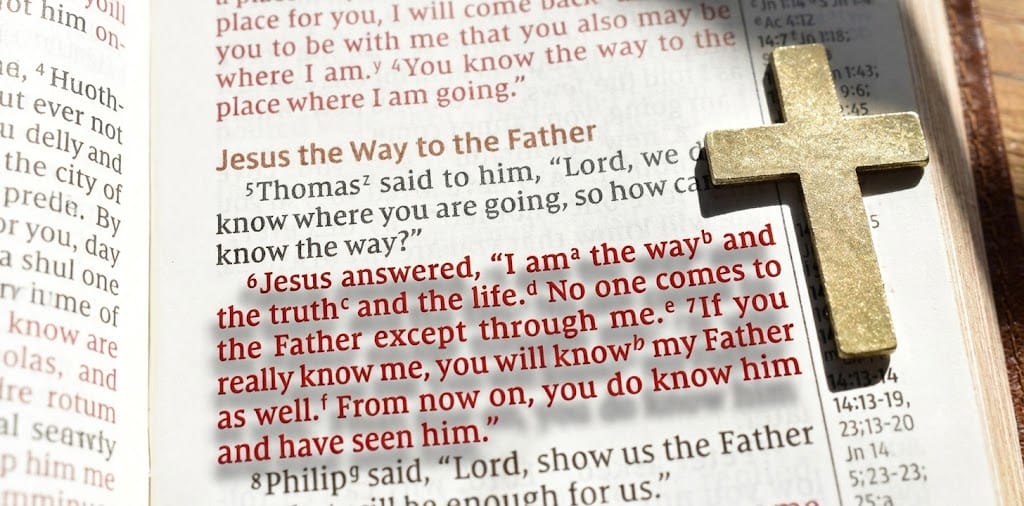
Call to Action: Walk the Narrow Way
The teachings of Luke 13 and 14 demand more than passive agreement—they require a decisive shift in our daily steps.
- Repent Boldly (Luke 13:1-5): Stop looking at the trials of others as a measure of their standing with God. Acknowledge your own need for a daily, life-altering turn back to the Father.
- Push Through the Narrow Door (Luke 13:24): Drop the heavy baggage of self-preservation, pride, and social compromise. Strive to enter the relationship He offers, rather than settling for mere religious familiarity.
- Seek the Lowest Seat (Luke 14:7-11): Actively reject the modern scramble for status, applause, and digital leverage. Intentionally elevate others, understanding that in God’s economy, humility is the only path to true honor.
- Invite the Outcast (Luke 14:12-14): Open your life, your table, and your resources to those who cannot pay you back. True kingdom hospitality mirrors the grace of the Master, who invited us when we were spiritually poor, crippled, lame, and blind.
Closing Prayer
Heavenly Father, Giver of life and sovereign Lord of the harvest,
We confess that our eyes are too often fixed on our own small “barns” and the temporary kingdoms of this world. Forgive us for the times we have prioritized outward religious performance over a raw, authentic, and transformed heart.
We pray that You would dig around the compacted soil of our souls. Give us the courage to walk through the narrow door of discipleship, to seek the lowest place, and to extend Your radical grace to a hurting world. Open our eyes to see Jesus in our daily travels, just as the disciples saw Him on the road to Emmaus. May our hearts burn within us as we read Your Word, and may our lives reflect the glorious truth of the resurrection.
We join our voices together as one family, praying the very words our Lord taught us:
The Lord’s Prayer
Our Father, who art in heaven,
hallowed be Thy name.
Thy kingdom come,
Thy will be done on earth as it is in heaven.
Give us this day our daily bread,
and forgive us our trespasses,
as we forgive those who trespass against us.
And lead us not into temptation,
but deliver us from evil.
For Thine is the kingdom, and the power,
and the glory, forever and ever.
Amen.
Grace and Peace Be with You Always,
Tomas © 2026 The-Way.blog Digital Publications. All Rights Reserved.
Appendix: Study Guide & Exegetical Resources
I. Comprehensive Biblical References
Passage
Core Theological Theme
Key Historical/Cultural Context
Luke 13:1–5
Repentance and the Fallacy of Karma
Galileans slain by Pilate; the collapse of the Tower of Siloam.
Luke 13:10–17
Sabbath Rest vs. Sabbath Rigidity
Healing of the bent-over woman; defense using Rabbinic Qal Vahomer logic.
Luke 13:22–30
The Narrow Door and Exclusion
The eschatological banquet; exclusion of the self-righteous.
Luke 14:7–11
The Reversal of Status (Humility)
Table etiquette at the Pharisee’s feast; teaching on honor and shame.
Luke 14:15–24
The Parable of the Great Banquet
Excuses of the elite; the calling of the marginalized from the streets.
Luke 24:13–35
The Emmaus Road Revelation
The resurrected Messiah explaining the Scriptures to traveling disciples.
II. Critical and Exegetical Footnotes
- Luke 13:15 (Hypocrites / Greek: ὑποκριταί): The term originally referred to stage actors wearing masks. Jesus uses it to describe those who care deeply about the physical comfort of their livestock on the Sabbath but are completely blind to the agonizing spiritual captivity of a fellow human being.
- Luke 13:24 (Strive / Greek: ἀγωνίζεσθε): The verb agonizesthe (from which we get “agonize”) is an athletic and military term implying intense, concentrated effort. Jesus is not teaching that we earn our salvation through works, but rather that entering the Kingdom requires a wholehearted, focused commitment that rejects half-hearted, superficial interest.
- Luke 14:12 (Recompense / Greek: ἀνταπόδομα): In first-century Greco-Roman society, the social fabric was held together by a rigid patronage system of mutual reciprocity—you only invited those who could elevate your social status or invite you in return. Jesus radically shatters this system by demanding hospitality that expects absolutely no earthly return.
III. Canonical Cross-References: The Reversal of Eschatological Status
The theme of the reversal of eschatological status (where the proud are cast down and the humble are exalted) is a central theological thread running from the beginning of Luke’s Gospel straight into eternity:
- The Magnificat (Luke 1:52–53): “He has brought down rulers from their thrones but has lifted up the humble. He has filled the hungry with good things but has sent the rich away empty.”
- The Beatitudes and Woes (Luke 6:20, 24): “Blessed are you who are poor, for yours is the kingdom of God... But woe to you who are rich, for you have already received your comfort.
- The Great Banquet Invitees (Luke 14:21 / Luke 24:47): The calling of the “poor, crippled, blind, and lame” in Chapter 14 directly prefigures the global commission in Luke 24, where repentance and forgiveness are preached to “all nations, beginning at Jerusalem.”
The First and the Last (Matthew 19:30 / Mark 10:31): Synoptic harmony highlighting that those who hold the highest status in the present age are frequently positioned last in the age to come.
Digital Copyright Notice
Copyright © 2026. All Rights Reserved. This document is protected under international copyright and digital rights management laws.
- Fair Use Citation: Short quotations or excerpts used in blog reviews, theological essays, or academic papers must provide appropriate attribution referencing the author and title of this work.
- Permitted Use: Permission is granted to download, store, electronically view, and print physical copies of this text solely for personal use, private study, small group Bible discussions, or local church ministry settings.
Prohibited Use: No part of this digital publication may be reproduced, redistributed, resold, hosted on public servers, or transmitted in any form or by any means, including photocopying, digital file sharing, recording, or translation into other languages, for commercial purposes without the prior written permission of the copyright holder.