
The Gospel of Luke Review Chapters 18 & 19
But the King replies with an unyielding spiritual principle: To everyone who has, more will be given; but from the one who has nothing, even what he has will be taken away.
The Persistent Widow and The Rich Ruler Zacchaeus the Tax Collector and Jesus Comes to Jerusalem as King.
Welcome to The-Way Ministry
Good afternoon, and welcome, brothers and sisters! May the peace of our Lord Jesus Christ and His abundant blessings be with you as we study His Word together today.
Before we open up today’s text, I want to invite you to lock arms with us as a regular partner in this ministry. This daily journey through the Word is a labor of love, and it directly sustains my family as I dedicate my time to writing and teaching. If The Way has been a breath of fresh air for your walk with Christ, would you consider subscribing?
You can join our community completely free to receive these devotionals, or choose a paid subscription to help us fund and expand this work. If you’d rather just throw a one-time blessing into the pot, you can also “buy me a coffee” below. Every single bit of your partnership matters.
- [Join The Way Substack (Free or Paid Subscription)]
- [Support via The Way Blog (One-Time Gift)]
Thank you so much for your prayers, your presence, and your financial partnership. It means the world to us.
Cracking the Stained Glass
For centuries, we’ve trapped Peter, James, John, and Paul in theological amber. We look at them through a stained-glass lens, treating them as flawless icons rather than flesh-and-blood people. But the moment you strip away the rigid formatting and the heavy polish of translation, the varnish begins to chip.
What emerges from the dust is beautifully, remarkably raw:
- Messy Humanity: These weren’t pristine saints; they were men who argued, doubted, stumbled, and figured out their faith on the fly.
- Unscripted Lives: They weren’t actors playing out a grand historical drama. They were navigating a messy, unpredictable reality in real time.
This is the exact moment the text shifts and a deeper truth shines through. The Bible ceases to be a museum exhibit filled with ancient artifacts. Instead, it transforms into a living mirror. When we finally meet the real people behind the pages, the text wakes up, it stops telling us what they did, and starts showing us exactly who we are.
Luke 18: Posturing the Heart for the Kingdom
Luke 18 takes us deeper into how we ought to live while we wait for the coming Kingdom. If the end is sudden and individual judgment is certain, how do we posture our hearts? Jesus answers this by shifting our focus to prayer, humility, and absolute dependence through three distinct movements:
1. The Parable of the Persistent Widow
Jesus tells us to “always pray and not give up.” “Always” indicates an action happening on every occasion—continually and forever. God is asking us never to stop pursuing Him in prayer, resting in the assurance that He has not given up on us.
In the story, the judge “neither feared God nor cared what people thought.” Mosaic law strictly required judges to be fair, just, and incorruptible (Lev 19:15; Deut 16:18). This judge personifies systemic lawlessness. Because men exclusively controlled judicial settings in the ancient Near East, widows were incredibly vulnerable to exploitation, which is why God’s law explicitly commanded that they be fiercely protected (Ex 22:22).
When the judge complains, “Because this widow keeps bothering me...” he highlights her only weapon: relentless persistence. Jesus beautifully moves the focus from the widow’s stubbornness to the character of God’s justice. God will bring about swift justice for His chosen ones who cry out to Him.
2. The Pharisee and the Tax Collector
This movement gives us a vivid, flesh-and-blood picture of religious hypocrisy, directly echoing the warnings of Matthew 6:1-2.
- The Pharisee’s Self-Sustaining Pride: His prayer essentially boils down to: “I thank you, God, that I am so great!” He lists his religious resume—fasting and tithing beyond what the law required. He doesn’t look to God for grace; he looks to God for applause.
- The Tax Collector’s Broken Contrition: Conversely, the tax collector stands at a distance, refusing to even lift his eyes to heaven. He beats his chest in raw grief, offering no resume, only a plea: “God, have mercy on me, a sinner.”
Jesus closes the scene with a profound paradox: Those who exalt themselves will be humbled, while the humble will be lifted. What matters to God is a heart that recognizes its own spiritual poverty.
3. The Little Children and Jesus
We often sing sweet Sunday school songs about this, but Jesus is using children as a profound theological tool.
- The Reality of Innocence: The Kingdom belongs to “such as these,” resting safely in His grace before they can even parse concepts of sin.
- The Canopy of Family Faith: When a household stands on faith, it serves as a spiritual canopy—protecting our children and pointing them toward the Lord until they are mature enough to choose Him personally.
Absolute Dependence: A toddler doesn’t try to buy their dinner or earn their keep; they simply trust their parents for everything. We bring absolutely nothing to the table except our complete need for a Father.
The Heart Probe: The Rich Ruler
When a wealthy young ruler claims he has perfectly obeyed the commandments since his youth, Jesus issues a radical charge: Walk away from your wealth, give it to the poor, and follow Me.
This wasn’t about earning salvation through works; it was a direct probe of the heart. The man’s reaction is instant sadness. Possessions, comfort, and status had become his anchors, blinding him to what was truly important. It is a frightening reminder of how naturally any of us can choose earth over heaven when our temporary comfort is threatened.
Blindness and True Sight
Immediately following this, Jesus predicts His death to the disciples, but they suffer from a temporary spiritual blindness. They want a crown without a cross, failing to realize that Jesus’ impending sacrifice is the very mechanism required to buy human salvation.
But then, Jesus meets a blind beggar on the road to Jericho (Bartimaeus). When Jesus grants his request—“Receive your sight; your faith has healed you”—a total transformation takes place.
Psalm 131
Lord, my heart is not haughty, nor my eyes lofty.
Neither do I concern myself with great matters, nor with things too profound for me.
Surely, I have calmed and quieted my soul, like a weaned child with his mother;
Like a weaned child is my soul within me.
O Israel, hope in the Lord from this time forth and forever.
From Reflection to Proclamation: The Great Reversal
Luke 18 leaves us at a profound crossroads ruled by a divine paradox: those who claim to see are spiritually blind, and those who have everything leave empty-handed—while the blind see and the destitute are enriched.
The Character Response to the King
The Rich Ruler. His hands were too full of earth to receive heaven. Because his wealth was his ultimate anchor, he walked away sorrowfully.
The Inner Circle. They remained in close proximity to Jesus but were blinded by cultural ambition. They desperately wanted the glory of a crown without the sacrifice of the Cross.
The Blind Beggar. He had nothing—no status, no sight, no money. Yet, because his hands were entirely empty, they were perfectly positioned to receive the mercy of God. True wealth isn’t what is in your bank account; it is knowing your absolute need for Jesus. True sight isn’t about what your physical eyes can see; it is the faith that recognizes Christ as the Savior and follows Him down the road.
Note: In our next devotional, we will bridge this directly into Luke 19, where we see these themes play out perfectly in the home of another wealthy man—Zacchaeus—and on the road to Jerusalem for the Triumphal Entry. Stay tuned!
Reflection Question
Which of the three characters in Luke 18 best reflects the current state of your heart? Are your hands too full of earthly security, or are they empty and ready to receive His mercy? Let me know your thoughts in the comments below!
Which of the three characters in Luke 18 best reflects the current state of your heart? Are your hands too full of earthly security, or are they empty and ready to receive His mercy? Let me know your thoughts in the comments below!
As parents and believers, we are called to be lights and beacons for our children, family, and friends, guiding them home, not firemen trying to put out their joy, or rigid rulers who lack empathy for the people.
When we give them the room to choose God out of genuine joy, rather than rules and coercion, we see the same transformation that Zacchaeus experienced. With that spirit of stewardship over what has been entrusted to us, let us open our hearts to the text itself and see how Jesus models this exact grace in Jericho
Verse 10 encapsulates the entire mission of Christ: “For the Son of Man came to seek and to save the lost.” This connects beautifully back to the parables of the lost sheep, the lost coin, and the prodigal son in Luke 15. Jesus takes the initiative. He seeks us out when we are hiding in the branches, trying to maintain our distance.
As parents, leaders, and believers, our task is simply to show the heart of Jesus to the world. When we mirror His empathy, listen with open ears, and offer truth wrapped in relationship rather than rigid coercion, we create the space for true, life-altering salvation to enter the house.
With that spirit of stewardship—how we guard, guide, and nurture what God has entrusted to us—let’s move forward now into the next part of Luke 19 and examine the Parable of the Ten Minas.
The Heart of the Matter: Where Are You Investing?
Church, this is the question that should make us all pause tonight: What have you done with the talents and resources that God has given you?
When Christ returns, what will He find us doing? How will you answer the King? The truth at the heart of the Parable of the Ten Minas is about to leave some of us exposed.
Look at the contrast in the parable. The first two servants took what was entrusted to them, stepped out in faith, and multiplied their portions. But the third servant hid his away in a cloth. Let’s bring this home, away from strictly financial terminology:
- Have we invested God’s grace in our children, our families, and our friends?
- Or have we been frozen by fear—scared of what the world might think, anxious about making a mistake, or hiding behind rigid legalism instead of sharing the vibrant joy of the King?
A Word to Parents: Your children are the ultimate “mina” entrusted to your stewardship. Don’t wrap their lives in a shroud of fear, over-control, and legalism simply because you view God as a “hard man.” Invest in them with love, grace, patience, and open ears!
A Stark Warning (vv. 24–27)
To the servant who did nothing, the king commands that his portion be taken away and given to the one who has ten. The crowd objects: “Sir, he already has ten!”
But the King replies with an unyielding spiritual principle: To everyone who has, more will be given; but from the one who has nothing, even what he has will be taken away.
And for those citizens who outright rejected his kingship? A terrifying judgment awaits them. They are cast out completely, condemned for refusing to submit to the grace and authority of the rightful King.
When the King returns, let Him not find our hands empty, our talents buried, and our families neglected out of fear. Let Him find us actively, joyfully putting His grace to work.
Conclusion: The King Who Seeks, Saves, and Demands a Choice
Summary of the Journey
Tonight, our journey through Luke 19 has revealed the true heart of the Kingdom of God—a Kingdom that flips human expectations completely upside down:
- In Zacchaeus, we saw the ultimate “camel” pass through the eye of a needle. We witnessed how an encounter with Jesus—marked not by rigid coercion, but by an invitation of grace—can transform a heart from selfish greed to overflowing generosity. Zacchaeus chose to receive the King, and his life became an immediate beacon of restoration.
- In the Parable of the Ten Minas, we were given our mirror. Jesus confronted the crowds who expected an effortless, automatic kingdom. He reminded them that leadership in His Kingdom requires faithful, active stewardship during His physical absence. We cannot let fear freeze us into hiding our talents or withholding grace from our families.
The Heartbeat of the Mount of Olives
As Jesus approaches Jerusalem, Luke specifically highlights the location: the hill called the Mount of Olives (v. 29). This isn’t a random backdrop or a scenic overlook—it is a sacred crossroads in God’s eternal timeline.
When you look across the span of Scripture, a breathtaking timeline unfolds on this very mountain:
- The Triumphal Entry: Luke 19.
Jesus rides down the Mount of Olives on a humble colt as the crowds shout praises. Looking out over the city, He weeps over Jerusalem’s coming judgment and rejection of true peace.
- The Agony & Arrest: Luke 22.
A few days later, Jesus returns to the base of this exact hill—to the Garden of Gethsemane (literally, “oil press”). Under ancient olive trees, He is pressed by the weight of our sin, sweats drops of blood in prayer, is betrayed, and is arrested.
- The Ascension: Acts 1.
Forty days after His resurrection, Jesus leads His disciples back to this same mountain. He blesses them and ascends into heaven before their eyes.
- The Final Return: Zechariah 14:4.
Prophecy declares that when Christ returns in glory, His feet will stand once again on the Mount of Olives, splitting the mountain as He claims final victory over creation.
The Power of the Location: The exact place where Jesus stood and wept over the tragedy of our past is the very same place where He will stand when He returns to fix our world forever.
The Ride of the True King
As Jesus enters the village, He commands His disciples to bring Him a colt “which no one has ever ridden,” adding: “If anyone asks you, ‘Why are you untying it?’ say, ‘The Lord needs it.’”
To our modern ears, this might sound like borrowing a donkey. But to those standing there, every detail carried explosive meaning:
- Unused for Sacred Purpose: A colt never ridden was reserved strictly for sacred, royal duties.
- Absolute Authority: By saying “The Lord needs it,” Jesus claims sovereignty over creation. He did not need the colt because He was tired of walking; He used it to visually demonstrate how His Kingdom operates.
The true King doesn’t arrive to crush His enemies with military might or earthly pride. He arrives on a humble beast of burden to conquer sin through sacrifice.
This leaves us with a necessary question: Do you have what it takes to walk in humility, love, and sacrifice for others the way your King did for you?
From Heaven’s Song to Earth’s Cry
As Jesus rides down the mountain, the crowd erupts in praise: “Peace in heaven and glory in the highest!”
Think back to the beginning of Luke’s Gospel. On the night Jesus was born, the world was asleep, so the angels had to break through the heavens to sing: “Glory to God in the highest heaven, and on earth peace...” (Luke 2:14).
Look at the shift: At His birth, angels sang in heaven. Now, on the road to the Cross, praise has moved from heaven down to earth. Ordinary disciples are shouting His glory!
When the Pharisees demand that Jesus quiet the crowd, He drops a line that shakes them to the core:
“I tell you, if they keep quiet, the stones will cry out.” (Luke 19:40)
This moment was completely unstoppable. If human voices had stayed silent, creation itself would have rendered the praise due to the King.
The Tears of the King
Yet, in the middle of this victory parade, the King weeps.
Jesus looked at the stone walls of Jerusalem and saw the people inside. He knew the agonizing judgment they would face from Rome forty years later because they rejected His path of peace.
“If you had only known on this day what would bring you peace...” (Luke 19:42)
Think about our world today. Turn on the news, and you see a world out of sync with God—conflict in the Middle East, breakdown in our culture, and hearts hardened by pride. Human history continues to suffer because it looks to politics, military power, and self-righteousness rather than the humble King who alone brings peace.
Reclaiming the Temple
When Jesus enters the Temple, He drives out those who traded holy worship for commercial gain: “My house will be a house of prayer, but you have made it a den of robbers.”
Luke’s account highlights a profound failure in religious leadership. The very people tasked with guiding souls into holy worship turned God’s house into a noisy marketplace focused on entertainment and profit.
This serves as a sobering reminder for every leader, parent, and believer today: We cannot allow the spaces we govern—our churches, ministries, or homes—to become a spectacle for the world. We must keep them dedicated to prayer, truth, and genuine discipleship.
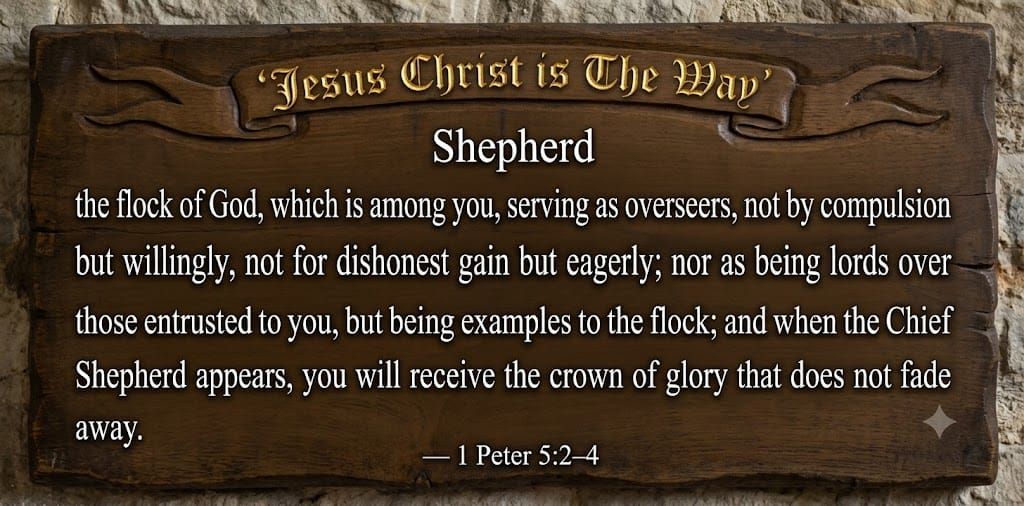
A Charge to Shepherds
“Shepherd the flock of God, which is among you, serving as overseers, not by compulsion but willingly, not for dishonest gain but eagerly; nor as being lords over those entrusted to you, but being examples to the flock; and when the Chief Shepherd appears, you will receive the crown of glory that does not fade away.”
— 1 Peter 5:2–4
Both the Rich Young Ruler (Luke 18:18–23) and Zacchaeus (Luke 19:1–10) are incredibly wealthy men who have life-altering encounters with Jesus. Yet, their stories serve as dramatic literary and spiritual foils for one another. Positioned back-to-back in Luke’s Gospel, they perfectly illustrate the great “Kingdom Reversal” theme—showing that what is impossible for man is entirely possible for God.
Here is how these two men compare across the critical dynamics of their encounters with Christ:
Kingdom Contrasts: The Rich Young Ruler vs. Zacchaeus
Social & Religious Status
- The Rich Young Ruler (Luke 18): A respected ruler, morally upright from his youth, and culturally viewed as “blessed by God.”
- Zacchaeus (Luke 19): A chief tax collector, culturally despised as a traitor and extortioner, and viewed as a pariah.
Initial Posture
- The Rich Young Ruler (Luke 18): Approaches Jesus confidently to display his religious resume and ask what he can do.
- Zacchaeus (Luke 19): Approaches out of pure curiosity, humbling himself to climb a sycamore tree just to catch a glimpse.
Jesus’ Command vs. Invitation
- The Rich Young Ruler (Luke 18): Jesus issues a command of subtraction: “Sell all that you have and distribute to the poor.”
- Zacchaeus (Luke 19): Jesus issues an invitation of fellowship: “I must stay at your house today.”
The Reaction to Jesus
- The Rich Young Ruler (Luke 18): He becomes deeply sorrowful and walks away because his wealth was his anchor.
- Zacchaeus (Luke 19): He welcomes Jesus joyfully and stands up to immediately surrender his wealth.
The Result
- The Rich Young Ruler (Luke 18): He leaves empty-handed, proving how hard it is for the rich to enter the Kingdom.
- Zacchaeus (Luke 19): Salvation comes to his house, proving the “camel can pass through the eye of a needle.”
Key Spiritual Takeaways
1. The Direction of Grace
The Rich Young Ruler thought he could buy or earn his way into eternal life with his moral pedigree, yet he couldn’t let go of earth. Zacchaeus knew he was spiritually bankrupt and socially condemned. When grace reached up into the tree to meet him, his empty hands were perfectly positioned to receive it.
2. Coercion vs. Transformation
Notice that Jesus never explicitly commands Zacchaeus to give his money away. The radical generosity we see in Chapter 19—giving half his goods to the poor and restoring fourfold to anyone he cheated—was not a mandatory rule imposed from the outside. It was the spontaneous overflow of a heart transformed by the unconditional love and presence of Christ.
Moving Forward: The Looming Temple Crisis
As we step out of Luke 18 and 19, the trajectory of the Gospel changes forever. Jesus has officially arrived in Jerusalem, and the final countdown to the Cross has begun. In our next study, we will dive into Luke 20 and 21, where the confrontation between the True King and the corrupt religious elite reaches a boiling point. Jesus will authoritatively shut down every trick question thrown at Him, redefine our understanding of authority, and pull back the curtain on the future to warn us about the ultimate destruction of the Temple and the final signs of His return.
Prepare your hearts, because the King is not just cleaning the Temple—He is preparing His church to stand firm until the end.
Call to Action
- Step Out in Faith: Pick one area this week where you have been holding back out of fear—whether it is investing deeper grace into your children or honoring God with your resources—and intentionally step out in active obedience.
- Share the Journey: If this deep dive into Luke was a blessing to you, forward this newsletter to a friend or share it on social media. Let’s keep building a community that hungers for the raw, unvarnished truth of God’s Word.
Closing Prayer
Heavenly Father,
We thank You that You are a God who does not wait for us to fix ourselves, but You actively come into our branches to seek and to save us. Lord, convict us where we are holding onto earthly securities. Empty our hands of the things of this world so that they may be completely open to receive Your unmatched mercy. Protect our families, guide our shepherding, and let us be found working joyfully when You return.
We pray all of this in the mighty and humble name of Jesus, who taught us to pray together:
Our Father, who art in heaven, hallowed be thy name.
Thy kingdom come, thy will be done, on earth as it is in heaven.
Give us this day our daily bread,
And forgive us our trespasses, as we forgive those who trespass against us.
And lead us not into temptation, but deliver us from evil.
For thine is the kingdom, and the power, and the glory, forever and ever.
Amen.
In Christ’s Grace and Truth,
Tomas
The-Way Ministry
Standing on Truth, Walking the Narrow Way

Appendix: Theological Study Materials
I. Comprehensive Biblical References
- Luke 18:1–8: The Parable of the Persistent Widow
- Luke 18:9–14: The Pharisee and the Tax Collector
- Luke 18:15–17: The Little Children and Jesus
- Luke 18:18–30: The Rich Young Ruler
- Luke 18:31–34: Jesus Predicts His Death a Third Time
- Luke 18:35–43: A Blind Beggar Receives His Sight (Bartimaeus)
- Luke 19:1–10: Zacchaeus the Tax Collector
- Luke 19:11–27: The Parable of the Ten Minas
- Luke 19:28–40: The Triumphal Entry at the Mount of Olives
- Luke 19:41–44: Jesus Weeps Over Jerusalem
- Luke 19:45–48: Jesus Cleanses the Temple
II. Critical and Exegetical Footnotes
- [1] Luke 18:3 (”Bring about justice”): The Greek verb used here is ekdikeō, which denotes legal vindication and the execution of right judgments, rather than human vengeance or emotional retaliation.
- [2] Luke 18:13 (”Have mercy on me”): The tax collector uses the word hilaskomai, which literally translates to “be propitiated” or “let a sacrifice cover my sins.” He is not asking for a simple pass; he is structurally appealing to the blood-atoning mercy seat of the Temple.
- [3] Luke 19:2 (”Chief Tax Collector”): The term architelōnēs is explicitly unique to Zacchaeus in the entire New Testament corpus. It indicates he was a regional tax commissioner who bought the rights to manage the local customs operations in Jericho, making him incredibly wealthy through institutionalized extortion.
- [4] Luke 19:13 (”Minas”): A mina (mna in Greek) was a unit of currency equivalent to roughly 100 drachmas, or approximately three months’ wages for a common agricultural day laborer.
III. Canonical Cross-References: The Reversal of Eschatological Status
The structural themes of Luke 18 and 19 demonstrate a clear canonical unity across Scripture regarding the grand inversion of status between the proud and the humble:
· Matthew 6:1–2 | The Hypocrisy of Display
Application: The outward performance of the Pharisee contrasted with secret contrition and grief.
· 1 Peter 5:2–4 | Humble Under-Shepherds
Application: Direct contrast to the corrupt religious elite who commercialized the Temple for dishonest gain.
· Zechariah 14:4 | Messiah’s Final Stance
Application: The predictive geography of the Mount of Olives, splitting in ultimate power upon His return.
· Revelation 6:10 | The Cry of the Martyrs
Application: Echoes the persistent widow’s cry for ultimate cosmic justice from God.
Digital Copyright Notice
Copyright © 2026. All Rights Reserved. This document is protected under international copyright and digital rights management laws.
- Fair Use Citation: Short quotations or excerpts used in blog reviews, theological essays, or academic papers must provide appropriate attribution referencing the author and title of this work.
- Permitted Use: Permission is granted to download, store, electronically view, and print physical copies of this text solely for personal use, private study, small group Bible discussions, or local church ministry settings.
Prohibited Use: No part of this digital publication may be reproduced, redistributed, resold, hosted on public servers, or transmitted in any form or by any means, including photocopying, digital file sharing, recording, or translation into other languages, for commercial purposes without the prior written permission of the copyright holder.