
The Gospel of Luke Review Chapters 20 & 21
How do we respond to the Cornerstone? The religious leaders stumbled over Him in pride, but in 1 Peter 2:4–10, Peter reminds us of who we are when our lives are built upon Christ:
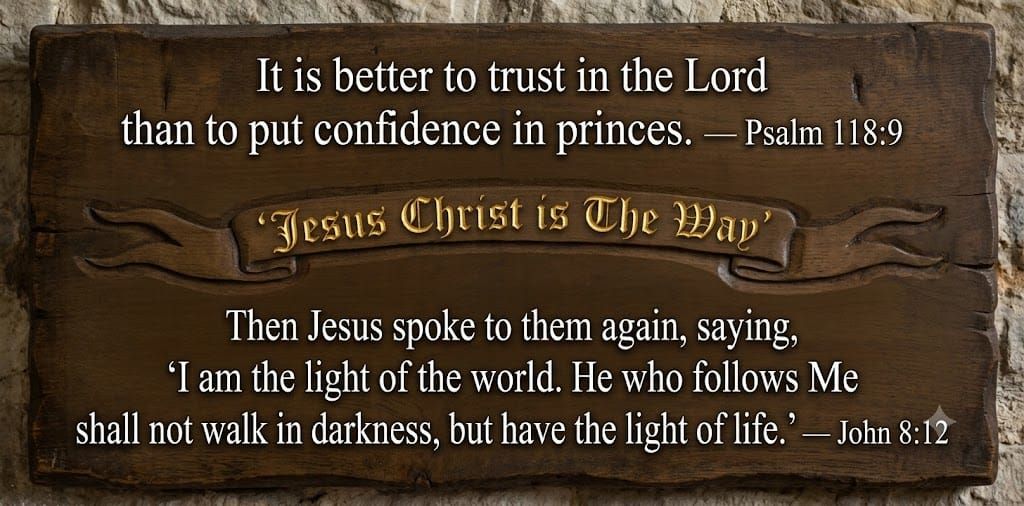
Traps of the Elites, the Widow's Mite, and Signs of the Return
Welcome to The-Way Ministry
Good afternoon, and welcome, brothers and sisters! May the peace of our Lord Jesus Christ and His abundant blessings be with you as we study His Word together today.
Before we open up today’s text, I want to invite you to lock arms with us as a regular partner in this ministry. This daily journey through the Word is a labor of love, and it directly sustains my family as I dedicate my time to writing and teaching. If The Way has been a breath of fresh air for your walk with Christ, would you consider subscribing?
You can join our community completely freely, receive these devotionals, or choose a paid subscription to help us fund and expand this work. If you’d rather just throw a one-time blessing into the pot, you can also “buy me a coffee” below. Every single bit of your partnership matters.
[Join The Way Substack (Free or Paid Subscription)]
[Support via The Way Blog (One-Time Gift)]
Thank you so much for your prayers, your presence, and your financial partnership. It means the world to us.
Setting the Stage
Let us review Luke 20 and 21 for a final time before moving on, where the confrontation between the True King and the corrupt religious elite reaches a boiling point. Jesus will authoritatively shut down every trick question thrown at Him, redefine our understanding of authority, and pull back the curtain on the future to warn us about the ultimate destruction of the Temple and the final signs of His return.
The main reason for a full review of the Gospel of Luke is to ensure and emphasize the importance and duty we all have to ourselves, our friends, and our families. I was reminded that one’s faith extends to one's family and closest friends, shedding light and allowing them to choose their own path.
“But if we walk in the light as He is in the light, we have fellowship with one another, and the blood of Jesus Christ His Son cleanses us from all sin.”
— 1 John 1:7 (NKJV)
Prepare your hearts, because the King is not just cleaning the Temple—He is preparing His church to stand firm until the end.
Part 1: The Authority of the King (Luke 20)
As Jesus enters the Temple courts in Luke 20, the religious elite line up to challenge His authority. They launch trick question after trick question—trying to trap Him on paying taxes to Caesar, authority, and the resurrection. But Jesus exposes their hearts authoritatively, leaving them speechless.
He then turns to the crowd and speaks the Parable of the Wicked Tenants (Luke 20:9–19), exposing the corrupt leaders who have abused their stewardship over God’s people.
The opening to these scriptures should put all of us on notice—especially church leaders. By questioning Jesus, these men are not seeking truth; they are passing judgment and looking for ways to discredit Him. They care more about protecting their own positions than submitting to God.
As I read this, two other letters from the Apostle Paul come to mind. First, I think of his letter to the Philippians, where Paul warns us not to rely on our own religious credentials or titles, but to have the same humble mind as Christ. Second, I think of 1 Corinthians, where Paul corrects the church because they were arguing, “I follow Paul,” or “I follow Apollos.” Just like the chief priests in Luke 20, the Corinthians were focused on human leadership, status, and authority.
When church leaders—then or now—focus on their own authority rather than Christ’s, we fall into the same trap as the chief priests. We start judging the Word of God rather than letting it judge us.
Pause & Connect: Isaiah 5:1–7
To truly grasp what Jesus is saying here, we have to look back to Isaiah 5:1–7. Isaiah describes God planting a beautiful vineyard, digging it out, planting it with the choicest vine, and expecting it to yield good grapes—yet it produced only wild, sour fruit. Isaiah writes:
Now let me sing to my Well-beloved
A song of My Beloved regarding His vineyard:
My Well-beloved has a vineyard
On a very fruitful hill.
He dug it up and cleared out its stones,
And planted it with the choicest vine.
He built a tower in its midst,
And also made a winepress in it;
So He expected it to bring forth good grapes,
But it brought forth wild grapes.
“And now, O inhabitants of Jerusalem and men of Judah,
Judge, please, between Me and My vineyard.
What more could have been done to My vineyard
That I have not done in it?
Why then, when I expected it to bring forth good grapes,
Did it bring forth wild grapes?
And now, please let Me tell you what I will do to My vineyard:
I will take away its hedge, and it shall be burned;
And break down its wall, and it shall be trampled down.
I will lay it waste;
It shall not be pruned or dug,
But there shall come up briers and thorns.
I will also command the clouds
That they rain no rain on it.”
For the vineyard of the Lord of hosts is the house of Israel,
And the men of Judah are His pleasant plant.
He looked for justice, but behold, oppression;
For righteousness, but behold, a cry for help.
— Isaiah 5:1–7 (NKJV)
When Jesus tells the Parable of the Tenants in Luke 20, He is invoking Isaiah’s song: God entrusted His vineyard to shepherds who mistreated the servants and ultimately plotted to murder the Owner’s beloved Son to seize control for themselves.
After delivering this stern warning, Jesus looks directly at them and quotes Psalm 118: “The stone which the builders rejected has become the chief cornerstone” (Luke 20:17).
Tracing the Pattern (Luke 20:1–26)
Before we look ahead, let’s trace the pattern of what just unfolded in these first twenty-six verses. We have witnessed a calculated, multi-pronged assault on the authority of Jesus Christ, broken down into three clear movements:
The Institutional Attack (Verses 1–8): The top tier of the religious establishment—the chief priests, scribes, and elders—demand to see Jesus’ credentials. Instead of playing their political game, Jesus exposes their cowardice by forcing them to choose between declaring John the Baptist a fraud or facing a riot from the people. They choose silence over truth.
The Prophetic Warning (Verses 9–19): Jesus turns the tables through the Parable of the Tenants. He lays bare Israel’s history of rejecting God’s messengers and prophesies His own upcoming murder at their hands. He warns them that the stone they reject will ultimately crush their false security.
The Political Trap (Verses 20–26): Undercover spies try to corner Jesus into choosing between treason against Rome and betrayal of the Jewish people over Roman taxes. Jesus bypasses the trap entirely by declaring that while Caesar can claim his temporary coins, God claims the human soul.
Bridge to Luke 20:27–47
What we see throughout these confrontations is a powerful, unshakeable truth: Jesus cannot be handled on human terms. The elite tried to trap Him with institutional power, historical guilt, and political leverage—and every single time, their traps collapsed on them.
But the religious leaders aren’t done yet. As we move into the final sections of Luke 20, the battleground shifts from politics to eternity. The Sadducees—the wealthy, aristocratic elites who mock the idea of an afterlife—step forward with a ridiculous, hypothetical riddle about a woman with seven dead husbands, trying to make the resurrection look foolish.
Once again, Jesus blows past their small-minded traps. He pulls back the curtain on eternity, declaring that our God is not a God of the dead, but of the living! He exposes the scribes who love their long robes and public honors while ruining the lives of the vulnerable. Jesus turns human hierarchy upside down.
Reflect: 1 Peter 2:4–10
How do we respond to the Cornerstone? The religious leaders stumbled over Him in pride, but in 1 Peter 2:4–10, Peter reminds us of who we are when our lives are built upon Christ:
“Coming to Him as to a living stone, rejected indeed by men, but chosen by God and precious, you also, as living stones, are being built up a spiritual house, a holy priesthood, to offer up spiritual sacrifices acceptable to God through Jesus Christ... But you are a chosen generation, a royal priesthood, a holy nation, His own special people, that you may proclaim the praises of Him who called you out of darkness into His marvelous light.”
— 1 Peter 2:4–5, 9 (NKJV)
The religious leaders were obsessed with protecting their physical status, titles, and political authority. But Peter shows us that through Jesus, we become the living stones, built into a holy nation.
At the end of Chapter 20, Jesus publicly warns His disciples against the scribes who “devour widows’ houses, and for a show make long prayers” (Luke 20:47). And right at that moment, Jesus looks up—bringing us directly to the treasury in Luke 21.
Part 2: Living on Faith & The Fall of the Temple (Luke 21)
Living on Faith
“Truly I tell you,” He said, “this poor widow has put in more than all the others. All these people gave their gifts out of their wealth, but she, out of her poverty, put in all she had to live on.” — Luke 21:3–4
This scene perfectly mirrors what Jesus teaches in Matthew chapter 6. There, He warns us not to be like the hypocrites who love to pray on the street corners just to be seen by others. This warning doesn’t just apply to long-winded, performative prayers; it applies to any religious act done to prove we are better than everyone else. The religious elites were putting on a show, but God sees the heart.
We see this same truth illustrated in the story of the rich young ruler who asked how to inherit eternal life. As we read earlier, Jesus remarked that it is easier for a camel to go through the eye of a needle than for a rich man to enter the kingdom of God. Why? Because of his tight grip on worldly possessions.
The wealthy elite in the treasury were giving from their abundance, keeping their security firmly rooted in their riches. But in the final, beautiful moments of this short Scripture, Jesus exposes the true heart of devotion and faith. In this poor widow, we don’t see a performance—we see absolute surrender.
Temple Ruins
Look at how Jesus flips the script here. This grand Temple structure was originally intended to be the dwelling place of God’s presence, modeled after the ancient house built for the Ark. But by the time Jesus stands in its courts, it has become a thorn in the side of the Almighty. It was no longer functioning as a house of prayer for all nations; instead, it had been co-opted by a corrupt religious elite. It was adorned with magnificent stones, yet spiritually built upon the exploitation and the very blood of the vulnerable people God called them to protect.
When Jesus proclaims that not one stone will be left upon another, He isn’t just predicting a military disaster; He is tearing down the old tradition of localized, brick-and-mortar worship. He is signaling a massive shift in how God relates to humanity.
This brings to mind the Gospel of John, chapter 4, where Jesus speaks with the Samaritan woman at the well. He tells her that a time is coming when true worshipers will not worship on a specific mountain or in a specific building but will worship the Father in spirit and in truth. Jesus is emphasizing that His holy temple will no longer be built of dead stones. Through the gift of the Holy Spirit, the true temple of the living God will be housed inside every one of us.
When the disciples heard Jesus predict the fall of the temple, they immediately asked: “Teacher, when will these things happen? And what will be the sign that they are about to take place?”
As we look closely at the warnings Christ gives in response, consider the current landscape of our world. Jesus masterfully frames the first great danger: deception. He warns that many will come in His name, claiming, “I am he,” and “The time is near.” They will be absolute deceivers of the Word, making false claims of divine authority.
This is exactly what the Apostle Paul had to fight against in his first letter to the Corinthians, when the church began to fracture into cliques, arguing over which human leader to follow. Paul had to scream in his letter: “Stop following men and follow the true light of Christ!”
Yet look around us today. With thousands of denominations and religions out there, each claiming to be the “one true church,” who are we supposed to believe? Tragically, so many of these institutions have perverted the very Person they claim to worship. Jesus looks down at us through the centuries and says:
Open your eyes. Do not follow them. Do not look to the noisy, commercialized institutions of man. Look inside your heart and soul for the true, quiet, transforming Spirit of Christ.
The Day of the Lord
Blow the trumpet in Zion,
And sound an alarm in My holy mountain!
Let all the inhabitants of the land tremble;
For the day of the Lord is coming,
For it is at hand:
2 A Day of darkness and gloominess,
A day of clouds and thick darkness,
Like the morning clouds spread over the mountains.
A people come, great and strong,
The likes of whom has never been;
Nor will there ever be any such after them,
Even for many successive generations.
3 A fire devours before them,
And behind them a flame burns;
The land is like the Garden of Eden before them,
And behind them a desolate wilderness;
Surely nothing shall escape them.
4 Their appearance is like the appearance of horses;
And like swift steeds, so they run.
5 With a noise like chariots
Over mountaintops they leap,
Like the noise of a flaming fire that devours the stubble,
Like a strong people set in battle array.
6 Before them the people writhe in pain;
All faces are drained of color.
7 They run like mighty men,
They climb the wall like men of war;
Everyone marches in formation,
And they do not break ranks.
8 They do not push one another;
Everyone marches in his own column.
Though they lunge between the weapons,
They are not cut down.
9 They run to and fro in the city,
They run on the wall;
They climb into the houses,
They enter at the windows like a thief.
10 The earth quakes before them,
The heavens tremble;
The sun and moon grow dark,
And the stars diminish their brightness.
11 The Lord gives voice before His army,
For His camp is very great;
For strong is the One who executes His word.
For the day of the Lord is great and very terrible;
Who can endure it?
— Joel 2:1–11 (NKJV)
The Eastern Gate & Our Hope
Luke ends this chapter by telling us that Jesus spent His days teaching in the temple and His nights resting on the Mount of Olives. Even with the weight of the cross resting heavily on His shoulders, He remained entirely focused on preparing His people.
But don’t miss the profound prophetic significance of where Jesus chose to rest. Every evening, He walked up the slopes of the Mount of Olives, looking directly across the Kidron Valley at the majestic Eastern Gate of Jerusalem. Scripture tells us that this is the very gate through which the Messiah will enter. Centuries after Jesus walked those paths, earthly rulers tried to alter the prophecy. They walled up the Eastern Gate with solid stone blocks and placed a cemetery right in front of it, believing they could physically block the Messiah from ever returning.
But hear me today, church: man-made walls cannot stop a cosmic King! The prophet Zechariah tells us that when Christ returns, His feet will stand once again on that very same Mount of Olives, and the mountain will split in two.
The world around us may be shaking, the headlines may be jarring, and the systems of man may be crumbling like dead stones. But we do not look at the world with dread. We look past the chaos, across the valley, straight toward the Eastern Gate. Our Savior, who spent His final earthly nights praying on that mountain, is the very same King who is coming back to break through the stone.
Lift up your heads, brothers and sisters, your redemption is drawing near!
Church, the message of Luke 21 is clear: everything we rely on in this passing world is shaking. The grand brick-and-mortar institutions, the corrupt systems that exploit the vulnerable, and the proud who trust in their own wealth are all crumbling like dead stones.
But amid the chaos, Jesus calls us to a different reality. He points us to the widow who surrendered everything, and He points us to the Mount of Olives, looking toward the Eastern Gate. He promises that while heaven and earth will pass away, His words will never fail. We do not look at the headlines with dread; we lift up our heads with anticipation because our King is on His way.
“But concerning the times and the seasons, brethren, you have no need that I should write to you. For you yourselves know perfectly that the day of the Lord so comes as a thief in the night. For when they say, ‘Peace and safety!’ then sudden destruction comes upon them, as labor pains upon a pregnant woman. And they shall not escape. But you, brethren, are not in darkness, so that this Day should overtake you as a thief. You are all sons of light and sons of the day. We are not of the night nor of darkness.
Therefore, let us not sleep as others do, but let us watch and be sober. For those who sleep, sleep at night, and those who get drunk are drunk at night. But let us who are of the day be sober, putting on the breastplate of faith and love, and as a helmet the hope of salvation. For God did not appoint us to wrath, but to obtain salvation through our Lord Jesus Christ, who died for us, that whether we wake or sleep, we should live together with Him.
Therefore, comfort each other and edify one another, just as you also are doing.”
— 1 Thessalonians 5:1–11 (NKJV)
Bridge to Luke 22
In the opening verses of Luke 22, we step into the upper room and the dark path toward Gethsemane. The spiritual battle shifts from global signs to personal betrayal. The religious elites, still desperate to protect their earthly status, finally find their inside man in Judas Iscariot.
Yet, even as the traps are laid and the physical shadow of the cross looms large, Jesus prepares a table. He takes bread and wine, resetting the covenant and showing His disciples that the ultimate victory will not be won by a worldly army, but through the broken body and spilled blood of the Lamb.
Conclusion & Call to Action
The progression across Luke 20–21 exposes a fundamental spiritual truth: God measures His people not by human authority, religious title, or institutional grandeur, but by heart orientation and quiet faithfulness. The chief priests and scribes held the seats of influence, yet they stumbled over the Cornerstone while protecting their prestige. In stark contrast, the poor widow offered two small coins—and in doing so, offered everything.
As Jesus prepares His disciples for the fall of earthly structures and the trials of the end age, His call to us is unmistakable: Do not put your trust in fragile human institutions, performative righteousness, or earthly security.
Call to Action
Examine Your Stewardship: Ask yourself where you are trusting in credentials or wealth rather than total surrender to Christ. Shift your reliance from material abundance to radical, Spirit-led trust.
Refuse Religious Performance: Strip away religious pretense. Pray, give, and serve not to be seen by others, but in quiet devotion before the God who sees the heart.
Stand Guard Against Deception: Anchor your soul directly in the Word and Spirit of Christ rather than running after human personalities or institutional titles.
Build on the True Cornerstone: Offer your life daily as a “living stone” built into a spiritual house, reflecting God’s justice and righteousness to a desperate world.
Closing Prayer & The Lord’s Prayer
Heavenly Father, Grant us the humble mind of Christ, that we may lay down our pride, our self-righteousness, and our trust in human institutions. Guard our hearts against deception, cleanse us of religious pretense, and give us the faith of the poor widow, a faith of total surrender to Your will. Build us up as living stones, anchored solely on Jesus Christ, our chief Cornerstone.
The Lord’s Prayer
Our Father in heaven,
Hallowed be Your name.
Your kingdom come.
Your will be done
On earth as it is in heaven.
Give us this day our daily bread.
And forgive us our debts,
As we forgive our debtors.
And do not lead us into temptation,
But deliver us from the evil one.
For Yours is the kingdom and the power and the glory forever.
Amen.
In Christ’s Grace and Truth,
Tomas
The-Way Ministry
Standing on Truth, Walking the Narrow Way
“© 2026 The-Way.blog Digital Publications. All Rights Reserved.”
Appendix: Theological Study Materials
I. Comprehensive Biblical References
Scriptural Passage Context & Significance
Isaiah 5:1–7 The Song of the Vineyard. Establishes the prophetic backdrop for Luke 20; God expects fruit (justice/righteousness) but finds wild grapes (oppression).
Joel 2:1–11 The Day of the LORD. A terrifying apocalyptic warning of divine judgment and catastrophic purging prior to redemption.
Psalm 118:22 The rejected stone becomes the cornerstone. Quoted directly by Jesus in Luke 20:17 to signal the shift in authority.
Matthew 6:1–6, 16–18: Jesus’ teaching on performing religious acts (almsgiving, prayer, fasting) in secret rather than for human applause.
Luke 18:18–30 The Rich Young Ruler. Illustrates how wealth creates a barrier to entering the Kingdom due to tight-fisted security.
Luke 20:1–8 The institutional challenge to Jesus’ authority by the chief priests, scribes, and elders.
Luke 20:9–19 The Parable of the Wicked Tenants. Prophetic indictment of corrupt religious leaders abusing God’s stewardship.
Luke 20:20–26 The trap regarding Roman taxes (”Render to Caesar...”). Jesus distinguishes earthly duties from ultimate allegiance to God.
Luke 20:27–40 The Sadducees’ riddle on the resurrection. Jesus reveals God as the God of the living, not the dead.
Luke 20:45–47 Warning against scribes who devour widows’ houses while making long, performative prayers.
Luke 21:1–4 The Widow’s Mite. Contrast between wealthy giving from surplus and sacrificial giving from poverty.
Luke 21:5–9 Prediction of the Temple’s destruction and initial warnings against end-times deceivers.
John 4:21–24 Jesus’ conversation with the Samaritan woman: true worship is no longer tied to physical temples, but in spirit and truth.
1 Corinthians 1:10–13; 3:4–9 Paul’s rebuke of sectarianism (”I follow Paul, I follow Apollos”), correcting human-centered loyalty.
Philippians 2:5–11 The Carmen Christi (Hymn of Christ). Model of self-emptying humility versus grasping for titles and status.
1 Peter 2:4–10 Believers framed as “living stones” built into a spiritual house, replacing the physical Jerusalem temple structure.
II. Critical and Exegetical Footnotes
Luke 20:17 — Akrogōniaios (Cornerstone / Capstone): The Greek term kephalē gōnias translates literally to “head of the corner.” In ancient Near Eastern architecture, this referred either to the foundation cornerstone that holds two walls together or to the keystone atop an arch that locks the entire structure in place. Jesus applying Psalm 118:22 to Himself asserts that He is the structural necessity of God’s true house; those who reject Him cause their own architectural and spiritual collapse.
Luke 20:47 — Katesthiō (Devour): The verb katesthiō denotes literal consumption or ruthless exploitation. Scribes often served as legal executors for estates; corrupt scribes leveraged their religious authority to extract high legal fees or mismanage properties belonging to helpless widows, directly violating Old Testament covenant protection statutes (Exodus 22:22; Deuteronomy 27:19).
Luke 21:2 — Lepta (Mites): A lepton (plural: lepta) was the smallest, lowest-value copper coin circulating in Judea during the First Century. Two lepta equaled one-sixty-fourth of a Roman denarius (a single day’s labor wage for a laborer). The widow’s contribution was financially negligible to the temple treasury, yet Christ categorizes it as greater than all large gifts because it represented 100% of her bios (life/subsistence).
Luke 21:6 — Temple Stones and Historical Fulfillment: Josephus (Antiquities 15.11.3) records that Herod’s expanded Temple complex utilized massive white limestone blocks measuring up to 45 feet long, 12 feet high, and 18 feet wide. Disciples marveling at these stones were focused on human durability. Jesus’ prophecy of total destruction was fulfilled literally in 70 AD when the Roman general Titus burned the Temple, melting the gold leaf and prompting soldiers to pry apart every stone to recover the melted metal.
Isaiah 5:2 — Be’ushim (Wild Grapes): The Hebrew word be’ushim literally means “stinking or rotten berries.” The term denotes poisonous, inedible fruit that looks like genuine grapes at a distance but is sour and toxic. Isaiah uses this wordplay to contrast God’s investment with Israel’s ethical rot (oppression instead of justice).
III. Canonical Cross-References: The Reversal of Eschatological Status
This comparison illustrates how God’s eternal Kingdom completely upends human standards, shifting from the temporary Earthly Hierarchy to the true Eschatological Reality.
1. From Human Power to Divine Authority
Earthly Hierarchy (Temporal Order):
The Religious Elite: Characterized by human titles, institutional power, and performative piety.
Eschatological Reality (Eternal Kingdom):
The Rejected Stone (Jesus Christ): Though rejected by human builders, He is exalted by God as the Chief Cornerstone.
2. From Physical Structures to Spiritual Dwelling
Earthly Hierarchy (Temporal Order):
The Physical Temple: Built of dead stones, grand on the outside, but corrupt within and destined for ultimate destruction.
Eschatological Reality (Eternal Kingdom):
Living Stones (The Believers): A holy priesthood indwelt by the Holy Spirit, forming the true, eternal temple of God.
3. From Self-Sufficient Giving to Total Surrender
Earthly Hierarchy (Temporal Order):
The Wealthy Donors: Gave out of their financial surplus while keeping their ultimate security rooted in worldly wealth.
Eschatological Reality (Eternal Kingdom):
The Poor Widow: Gave everything she had to live on—offering a sacrifice of absolute faith and total surrender, highly exalted by God.
Summary: The Great Eschatological Reversal
Across Luke 20 and 21, Scripture demonstrates a consistent canonical principle: The Great Eschatological Reversal. Human religious structures evaluate authority based on external metrics—wealth, titles, physical edifices, and public prestige. The Kingdom of God completely upends these metrics:
The Rejected vs. The Cornerstone: The builders (institutional leaders) cast away the stone that did not fit their political architecture, yet God makes that exact Stone the foundational pivot of redemptive history (Psalm 118:22; Luke 20:17; 1 Peter 2:4–8).
Dead Stones vs. Living Stones: The magnificent, physical Temple of Herod, adorned with costly stones, is reduced to rubble (Luke 21:5–6), while humble believers are built up into a permanent, spiritual house as a royal priesthood (1 Peter 2:5, 9; John 4:21–24).
The Abundant Gift vs. The Widow’s All: The wealthy brought large sums that cost them nothing in terms of personal security; the widow brought two small coins that stripped away her entire worldly safety net. Earthly metrics rank the wealthy first; divine metrics rank the widow first (Luke 21:1–4; Matthew 6:1–4).
Digital Copyright Notice
Copyright © 2026. All Rights Reserved. This document is protected under international copyright and digital rights management laws.
Fair Use Citation: Short quotations or excerpts used in blog reviews, theological essays, or academic papers must provide appropriate attribution referencing the author and title of this work.
Permitted Use: Permission is granted to download, store, electronically view, and print physical copies of this text solely for personal use, private study, small group Bible discussions, or local church ministry settings.
Prohibited Use: No part of this digital publication may be reproduced, redistributed, resold, hosted on public servers, or transmitted in any form or by any means, including photocopying, digital file sharing, recording, or translation into other languages, for commercial purposes without the prior written permission of the copyright holder.