
The Gospel of Luke Review Chapters 7-10
When you face a hostile or unwelcome environment—even in your own home—shaking the dust off your feet means refusing to let hurtful words settle into your soul. You leave the judgment to God, keep your spirit intact, and trust that His kingdom is still near.
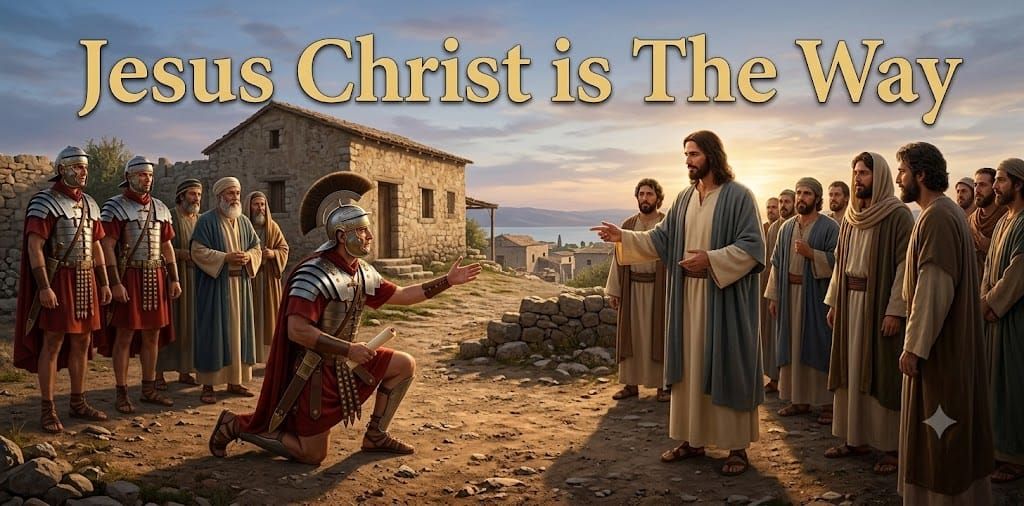
Authority, Identity, and Mission
Welcome to The-Way Ministry
Good afternoon, and welcome, brothers and sisters! May the peace of our Lord Jesus Christ and His abundant blessings be with you as we study His Word together today.
Before we dive into today’s text, I want to share a quick update on how you can support this ministry. If The Way has been a blessing to your walk, I invite you to consider helping us grow by becoming a paid subscriber or simply by "buying me a coffee" through our support links:
Your generosity directly helps us continue this daily journey with Christ, and it supports my family as I dedicate time to this work. Thank you so much for your prayers, your presence, and your partnership.
When we start pulling back those layers of translations—moving past centuries of traditional formatting to see the raw human emotions of people like Peter, James, and John through the writings of Paul and the New Testament—the Bible becomes so much more alive. It stops feeling like an ancient text and starts feeling like a mirror.
Luke 7: Authority, Identity, and Mission
When we look into Luke 7, we find ourselves staring directly into a mirror. This chapter is all about The Reach of the Kingdom—proving that God’s grace stretches far beyond the arbitrary boundaries people try to draw. Through four powerful encounters, Jesus completely upends the religious establishment's ideas of who is in and who is out.
1. The Faith of the Centurion: The Convergence of History and Authority
To understand why Jesus was so amazed by the Roman Centurion, we have to look at the historical markers God left from the plains of Shinar to the hills of Athens. The Gospel did not catch the world off guard; history itself was a setup.
- The Ancient Foundation: The concept of absolute, unchanging authority began with Abraham’s call out of Ur (modern-day Iraq) under a single sovereign God, and was later reinforced by the absolute, law-binding decrees of the Persian Empire. This shifted human understanding away from a chaotic pantheon of unpredictable gods to a global realization that supreme power resides in one Sovereign Word.
- The Athenian Cry: Centuries later in Greece, philosophy flourished yet left a void. As Paul later observed in Acts 17, the Greeks even built an altar to an "Unknown God." It was a cultural admission that human philosophy was incomplete humanity was waiting for a specific, living revelation to bridge the gap.
- The Shepherd of Jurisdiction: Enter the Roman Centurion in Luke 7. As a commander of 100 soldiers, he understood that authority is a vertical line. He knew that when he spoke, he did so with the backing of the Roman Emperor. When he looked at Jesus, he connected the historical dots. He recognized that Jesus didn't need to physically be present to heal his servant—He simply had to speak.
"But say the word and let my servant be healed." — Luke 7:7
In this moment, the Centurion recognized Jesus as the "Known" version of the Greeks’ "Unknown God." He was not an outlier; he was the voice of a weary world ready to trade silent stone altars for a Word with the authority to save.
2. The Widow’s Son Raised: The Gate of Choice
The town gate of Nain serves as a cosmic crossroads. On that afternoon, two massive crowds collided: one marching under the heavy shroud of death, grief, and systemic abandonment, and the other walking in the vibrant light of life, hope, and divine authority.
In our own lives, we regularly find ourselves trapped in the noise and confusion of that first crowd. We feel unseen by friends, overwhelmed by work, and burdened by family trials, crying out, "Does anyone see me?"
Luke 7 guarantees that the answer is a resounding yes.
- Unsolicited Grace: Jesus does not wait for us to formulate the perfect prayer or find the strength to ask for help. Driven by raw, gut-wrenching compassion, He steps across the cultural and physical barriers of our pain, touches our "coffin," and speaks life into our dead situations.
- Moving Past Amazement: This narrative challenges us to look deeper than the crowd did. We must not put Jesus in a box as merely a "great prophet" who provides temporary relief. He is the Sovereign Messiah standing in the dust with us, inviting us to move from blind amazement to a deep, anchoring faith—even when our modern trials test our resolve.
3. John the Baptist’s Question: Wrestling with Identity in the Dark
Sitting in the dark of Herod’s prison, John the Baptist sends his disciples to ask Jesus the hard, human question we all face in seasons of waiting: "Are you the one who is to come, or should we expect someone else?"
Instead of scolding John for his doubt, Jesus defends John’s reputation before the crowd and uses the moment to teach us how God’s timing works.
- The Bridge of Eras: Jesus defines John not as a wavering reed, but as the messenger predicted in Malachi 3:1. John was the greatest of the old era because he got to point to the Messiah in person. Yet, Jesus notes that the "least in the kingdom" is greater than John. Because of the death and resurrection, you and I can point to God’s saving plan with a clarity that even John didn't have in that prison cell.
- The Danger of Rigid Expectations: Jesus compares His cynical contemporaries to children in a marketplace refusing to join in any song. They criticized John for his self-denial ("He has a demon") and criticized Jesus for His celebration ("A glutton and a drunkard"). They missed God's movement because they wanted to control the music.
- Purpose in the Dark: Jesus did not overthrow Rome; He overthrew sin, sickness, and death. John’s foundation-laying was not in vain, and neither is your waiting. Delay is not absence. God uses periods of waiting to prepare you for the space He is building.
The Choice: When our expectations are shattered, we can stand on the sidelines and let the silence breed cynicism, or we can step out of the marketplace and allow the quiet to birth a resilient, mature faith.
4. A Sinful Woman Anoints Jesus: A Faith That Breaks Barriers
The chapter closes with a beautiful, scandalous display of vulnerability at the home of Simon, a prominent Pharisee. A woman publicly known as a "sinner" crashes the dinner, weeping at Jesus's feet, wiping them with her hair, and anointing them with expensive perfume.
This encounter highlights three foundational truths about genuine faith:
- Overcoming Cultural Barriers: In first-century culture, it was a significant social risk for a woman to approach a male religious figure so intimately in public.
- Overcoming Personal Shame: Because of her reputation, she knew a typical rabbi would have rejected and exposed her. Yet, she believed Jesus would respond to her brokenness with grace.
- Extravagant Gratitude: Her love was not an attempt to earn her salvation, but an overflowing, beautiful response to the radical grace she had already received.
The Mirror for Us Today
Throughout Luke 7, Jesus consistently shatters cultural expectations of righteousness. From a powerful Roman centurion to a grieving widow, and finally to a marginalized woman with a compromised past, Jesus reveals that the Kingdom of God belongs to the humble.
The religious elite saw a sinner; Jesus saw a transformed heart. As we close this chapter, we are left with a challenging question to hold up to our own lives: How many of us would be bold enough to identify with Jesus if it meant facing public rejection? Where have we seen people with messy lives and difficult histories display the most beautiful acts of faith?
Luke 8: Proclaiming and Demonstrating Power
Luke structures this chapter to pose a massive, inescapable question: Who is this man?
The first half of Chapter 8 uses His spoken words to show how we should receive truth; the second half uses raw, sovereign power to prove why He is worth listening to. He teaches how people receive His message and then demonstrates absolute authority over the physical and spiritual worlds.
The Ultimate "Good Soil": The Women Who Walked with Jesus
Before Jesus even delivers the famous Parable of the Sower, Luke introduces a group of women who had been healed of diseases and evil spirits. Breaking the rigid cultural and social boundaries of the day, they traveled alongside the disciples and became the primary financial pillars of Jesus's ministry.
- Mary Magdalene: Delivered from seven demons, her profound healing fueled a fierce, lifelong loyalty. She followed Jesus all the way to the cross, discovered the empty tomb, and was commissioned as the first witness of the resurrection—earning her the historic title, "the apostle to the apostles."
- Joanna: The wife of Chuza, the household manager of Herod Antipas (the tetrarch who eventually beheaded John the Baptist). In a stunning historical irony, while Herod was actively opposing God’s kingdom, his own chief manager’s wife was privately funding it.
- Susanna and Many Others: Women of means who chose to use their personal resources to support and sustain Jesus and His disciples on the road.
The Living Example: Before we read about the different soils, these women serve as the ultimate real-world model of the message. They heard the Word, retained it, protected it, let it bear fruit through sacrificial support, and ultimately became the primary witnesses of the resurrection.
Part 1: Receiving the Word of God
This section focuses on spiritual reception—how we listen to, retain, and live out Jesus’s teachings through three interconnected lessons:
- The Parable of the Sower (Luke 8:4–15) | Hearing the Word: Jesus compares human hearts to four types of soil receiving seed (the Word). Only the "good soil"—those who hear the Word, hold it fast with an honest heart, and persevere—produces a harvest.
- A Lamp Under a Jar (Luke 8:16–18) | Displaying the Word: Light is meant to be exposed and shared, not hidden under a bed. If you have truly received the "seed" of the Word, your life will naturally and inevitably shine for others to see.
- Jesus’ True Family (Luke 8:19–21) | Living the Word: When His mother and brothers arrive to see Him, Jesus redefines traditional family boundaries, declaring: "My mother and my brothers are those who hear the word of God and do it."
Part 2: Demonstrating Divine Authority
The chapter now shifts gears from Jesus's teaching to His raw, cosmic power. He proves His absolute sovereignty over every facet of human fear and existence.
- Authority Over Nature: Calming the Storm (Luke 8:22–25): Amid a furious, sinking gale on the Sea of Galilee, Jesus is sound asleep in the boat. Awakened by terrified, screaming disciples, He stands and calmly rebukes the wind and waves. The storm vanishes instantly into a perfect calm, prompting the breathless disciples to ask: "Who then is this? He commands even the winds and water, and they obey him."
- Authority Over the Spiritual Realm: The Gerasene Demoniac (Luke 8:26–39): On the Gentile side of the lake, Jesus encounters a man so oppressed by a "Legion" of demons that he is kept chained in the tombs. Jesus casts the spirits out into a herd of pigs, restoring the man's sanity, clothing, and dignity. While the locals beg Jesus to leave out of fear, Jesus commissions the restored man to stay and tell his community what God has done.
- Authority Over Sickness and Death: A Double Miracle (Luke 8:40–56): In a beautifully woven "sandwich" narrative, Jesus is on His way to heal the dying 12-year-old daughter of Jairus, a synagogue leader.
- The Interruption: A woman who has suffered from a chronic, isolating 12-year hemorrhage slips through the crowd and touches the fringe of Jesus's garment. She is instantly healed. Jesus stops to seek her out, calling her "Daughter" and affirming her faith.
- The Resurrection: While He is speaking, word arrives that Jairus's daughter has died. Jesus continues to the house, takes the young girl's hand, and commands her to arise. Her spirit returns, and she sits up.
The Spiritual Roadmap: Internal, External, Communal
The intentional structure of Luke 8 reveals a clear, step-by-step roadmap for our own spiritual journeys. True faith is never meant to be lived out in isolation.
- Internal (The Soil): Real discipleship starts deep within. We must constantly inspect our hearts, weeding out the thorns of anxiety and the rocks of cynicism to maintain "good soil" that can receive God's truth.
- External (The Lamp): True spiritual reception cannot remain private. Once the Word takes root internally, it naturally produces an outward, visible light of obedience and love that impacts the world around us.
- Communal (The Family): The ultimate culmination of hearing and doing is covenant community. We are adopted into a global, cosmic family where our deepest, most enduring bonds are shared with those walking in obedience alongside us.
Chapter 9: The Great Pivot
Luke 9 is the ultimate structural hinge of the entire Gospel. Up to this point, the focus has been on Jesus demonstrating His power to Galilee. Here, Jesus pivots. He begins to transition His authority to His followers, demands they understand His true identity, and sets His face toward Jerusalem and the cross.
I. The Divine Authorization & Commission: Power, Authority, and the Sent Church (Luke 9:1–6)
Jesus does not just issue a job description; He provides the tools. When He sends out the Twelve, He equips them with two distinct spiritual dimensions:
- Power (Dynamis): Raw, supernatural capability and strength to overcome.
- Authority (Exousia): The legal right, backed by the "Emperor of Heaven," to act on His behalf.
The Two-Fold Mission: They are sent to proclaim (preach the Kingdom) and demonstrate (heal the sick). The Gospel is always a word to be heard and a power to be seen.
Trust Before Perfection: Jesus authorizes the disciples despite their massive gaps in understanding. He does not wait for them to earn theological degrees. He does not call the qualified; He qualifies the called.
II. Cultural Confusion vs. True Identity: Who is This Man? (Luke 9:7–9, 18–21)
As the disciples carry this delegated power across the region, the public is forced to grapple with Jesus's identity. People float three theories, all rooted safely in the past:
- John the Baptist: Raised from the dead (a theory driven heavily by Herod's personal guilt).
- Elijah: Returning to fulfill the prophecy of Malachi.
- An Ancient Prophet: Resurrected to speak with shattering authority.
Herod’s Hollow Curiosity: King Herod "sought to see" Jesus, but not out of a desire to repent. His interest was driven by superstitious anxiety and a desire for entertainment. This tragic curiosity culminates in Luke 23, when Herod mocks a silent Jesus during His trial.
The Climax: Peter’s Confession
While the crowds try to fit Jesus into comfortable, historical boxes, Jesus pulls His disciples aside and asks the most critical question of our lives: "But what about you? Who do you say I am?"
Peter provides the definitive answer: "The Christ of God"—the promised, unique Messiah.
III. Provision to Proclamation: The Miracle of the Five Thousand (Luke 9:10–17)
Immediately after the disciples return from their first mission, Jesus takes them to a desolate place where they are confronted with an overwhelming physical need.
- The Classroom of Sufficiency: Faced with thousands of hungry people, the disciples react out of scarcity: "Send the crowd away." Jesus responds with a challenge: "You give them something to eat." By multiplying five loaves and two fish to feed thousands—leaving twelve baskets of leftovers—Jesus reveals Himself as the all-sufficient Source.
- The Miracle of Distribution: The Apostles learn a vital lesson for their future mission. They are not the source of provision; they are simply the distributors of His grace.
Call to Action: Feed His Sheep
- Surrender Your Scarcity: Offer your seemingly small resources ("five loaves and two fish") to Jesus in prayer, trusting Him to multiply them.
- Step Out to Serve: Offer encouragement, a meal, or your time to someone in need today. Remember: the miracle happens in the distribution, not in the storage.
IV. The Glory and the Cost: The Transfiguration and the Road (Luke 9:28–36, 51–62)
To anchor their faith for the difficult road ahead, Jesus takes Peter, James, and John up a mountain.
- The Ultimate Reveal: On the mountain, Jesus's appearance changes, and His clothes become dazzling white. departure (literally His exodus from Jerusalem.
- The Father's Voice: As Peter tries to build shelters to keep this mountaintop experience frozen in time, a cloud overshadows them, and God’s voice pierces the air: "This is my Son, whom I have chosen; listen to him."
Setting His Face
Immediately after descending the mountain, we see how far the disciples still have to go. They fail to cast a demon out of a boy, and they begin arguing among themselves about who will be the greatest in the Kingdom.
Jesus sharply rebukes their pride, places a small child next to Him, and makes the pivot absolute:
"As the time approached for him to be taken up, Jesus resolutely set his face to go to Jerusalem." — Luke 9:51
Following Him down this road requires complete surrender. When would-be followers make excuses about waiting to bury a parent or saying goodbye to family, Jesus warns them of the urgency of the mission: "No one who puts a hand to the plow and looks back is fit for service in the kingdom of God."
Chapter 10: Expanding the Mission
I. The Rejected Lamb and the Heavenly Witness (Luke 10:1–20)
When you face a hostile or unwelcome environment—even in your own home—shaking the dust off your feet means refusing to let hurtful words settle into your soul. You leave the judgment to God, keep your spirit intact, and trust that His kingdom is still near.
- The Weight of Isolation: In seasons of suffering, we can feel like Job. It is crushing when the people who are supposed to hold you up choose to tear you down, misjudge your heart, and hurl false accusations.
- The Vital Perspective Shift: Jesus does not leave us in the dust of rejection. When the seventy-two returned, celebrating their authority, He offered a deeper anchor:
"Do not rejoice that the spirits submit to you, but rejoice that your names are written in heaven." — Luke 10:20
- Our True Identity: The opinions of others do not rewrite who you are. Like Job, who declared, "Even now my witness is in heaven; my advocate is on high" (Job 16:19), our peace doesn't come from winning the argument. It comes from knowing exactly who we belong to.
II. The Trap of a Busy Life (Luke 10:38–42)
"Busy" is how most of our days are run. We rush between commitments, entirely consumed with the outward show of religious or social hospitality, and completely forget to stop and listen to the Guest in our home.
- Going Through the Motions: If we only flip through our Bibles, go to church, or pray under the careful guidance of a pulpit while our hearts remain distant, we are no different than the priest and the Levite on the road to Jericho. We prioritize outward appearance over inward character.
- Jesus’s Gentle Rebuke: Imagine Jesus looking past your frantic checklist and speaking directly to your heart today:
"Martha, Martha, you are worried and upset about many things, but few things are needed—or indeed only one. Mary has chosen what is better, and it will not be taken away from her." — Luke 10:41–42
III. Unmasking Superficial Religion
The close of Luke 10 tears away the mask of superficial, external religion by exposing two distinct spiritual traps and revealing their true remedies:
1. Institutional Hypocrisy (The Priest & The Levite)
- The Danger: Relying on religious rules, safety, and doctrine as a shield to avoid real human agony, choosing to cross to the other side of the road.
- The True Path: Active Mercy. Stepping directly into the mess, getting your hands dirty, and actively binding up the wounds of the broken (the Samaritan).
2. Private Anxiety (Martha)
- The Danger: Masking a fractured, anxious, and frustrated heart with relentless, frantic religious "busywork" and outward serving.
- The True Path: Quiet Devotion. Intentionally sitting still at the feet of Jesus, choosing the one thing that truly matters, and being transformed by His presence (Mary).
Call to Action
- Drop the Shield: Identify one area this week where you have used "rules," expectations, or busyness to avoid getting your hands dirty helping someone. Step across the road and act.
- Choose the Feet of Jesus: Before you open your checklist or social schedule tomorrow, sit in absolute stillness with God for fifteen minutes. Read for transformation, not just information.
- Expose the Hypocrisy: Refuse to judge your faith—or the faith of others—by external branding. Let your outward actions flow strictly from an inward well of Christ-like compassion.
Conclusion: The Mirror of Luke 7–10
As we close this segment of our journey, the mirror of Luke’s Gospel leaves us with a stark, challenging truth: the Kingdom of God does not operate on human terms.
In Luke 7 through 10, we saw Jesus systematically demolish the walls we build to feel secure. He bypassed religious gatekeepers to honor a Roman Centurion’s faith. He touched a coffin to resurrect a widow’s hope without being asked. He defended a weeping, scandalous woman in the home of a self-righteous Pharisee. He bypassed ancient gender barriers to seat Mary at His feet and fund His ministry through courageous women. He redefined "neighbor" through a despised Samaritan and "family" through simple obedience.
This is a Kingdom where the outsiders are brought in, the busy are called to stillness, and those who claim to see are exposed in their blindness. It is a total disruption of the status quo.
Looking Ahead: The Bridge to Luke 11–14
If chapters 7 through 10 established the identity and authority of the King, chapters 11 through 14 show us what it looks like to live under His reign as He walks resolutely toward Jerusalem.
As we prepare our hearts for next week's study, we will see Jesus deepen His instructions on:
- The Blueprint of Prayer (Luke 11): Moving beyond rote rituals to ask, seek, and knock with bold, relational persistence.
- The Warning Against Hypocrisy (Luke 12): Exposing the greed of the rich fool and calling us to a life free of worry, anchored in the Father's pleasure.
- The Narrow Way (Luke 13): A reminder that entering the Kingdom requires repentance, even as Jesus weeps over a stubborn Jerusalem.
- The Great Banquet (Luke 14): A radical lesson in humility where the proud are humbled, the humble are exalted, and the master of the feast invites the poor, the crippled, and the lame to fill his house.
Closing Prayer & The Lord's Prayer
Let’s pray.
Heavenly Father, we thank You that Your grace is wider than our boundaries and deeper than our shame. Cleanse the soil of our hearts this week. Help us to shake off the dust of rejection, step out from under our jars of fear, and sit quietly at Your feet. Protect us from the trap of empty religious busyness and give us hands ready to bind up the wounds of a broken world.
As we step out into the world, we pray the words Your Son taught us:
Our Father, who art in heaven, hallowed be thy name; thy kingdom come; thy will be done on earth as it is in heaven. Give us this day our daily bread; and forgive us our trespasses, as we forgive those who trespass against us; and lead us not into temptation but deliver us from evil. For thine is the kingdom, the power, and the glory, forever and ever. Amen.
Grace and Peace Be with You Always,
Tomas
© 2026 The-Way.blog Digital Publications. All Rights Reserved.
Reference Appendix
I. Comprehensive Biblical References
- The Centurion's Servant (Luke 7:1–10)
- Primary Themes: Gentile faith, covenant expansion, authority of the Sovereign Word.
- The Widow of Nain's Son (Luke 7:11–17)
- Primary Themes: Unsolicited grace, divine compassion overcoming ritual defilement.
- John the Baptist's Inquiry (Luke 7:18–35)
- Primary Themes: Prophetic fulfillment, wrestling with unmet expectations, the transition of covenantal eras.
- The Anointing by a Sinful Woman (Luke 7:36–50)
- Primary Themes: Radical forgiveness, true hospitality, and extravagant gratitude contrasted with rigid legalism.
- The Ministry Supporting Women (Luke 8:1–3)
- Primary Themes: Devotion, financial patronage, and the elevating inclusion of marginalized voices in active ministry.
- The Sower and the Lamp (Luke 8:4–18)
- Primary Themes: Posture of the heart, spiritual illumination, and stewardship of received truth.
- The True Family of Jesus (Luke 8:19–21)
- Primary Themes: Covenant kinship redefined by active obedience over biological ties.
- Calming the Storm (Luke 8:22–25)
- Primary Themes: Absolute authority over natural, physical, and cosmic chaos.
- The Gerasene Demoniac (Luke 8:26–39)
- Primary Themes: Cosmic victory, personal restoration, and a direct missionary commission to the Gentiles.
- Jairus's Daughter & The Hemorrhaging Woman (Luke 8:40–56)
- Primary Themes: Choosing faith over fear, collapsing the boundaries between the clean and the unclean.
- The Mission of the Twelve (Luke 9:1–6)
- Primary Themes: Delegated power and absolute legal authority given to the Church.
- Feeding of the Five Thousand (Luke 9:10–17)
- Primary Themes: Divine wilderness provision, the unfolding of a New Exodus, and Eucharistic foreshadowing.
- Peter's Confession & The Cross (Luke 9:18–27)
- Primary Themes: The true identity of the Messiah revealed, and the mandatory call to a cruciform (cross-shaped) life.
- The Transfiguration (Luke 9:28–36)
- Primary Themes: Mountaintop glory, and Jesus unveiled as the ultimate Prophet predicted in Deuteronomy 18:15.
- The Mission of the Seventy-Two (Luke 10:1–24)
- Primary Themes: The fall of Satan, structural mission, names eternally written in heaven, and joy in the Holy Spirit.
- The Good Samaritan (Luke 10:25–37)
- Primary Themes: Neighborliness redefined as active mercy, and the collapse of self-justifying legalistic loopholes.
- Mary and Martha (Luke 10:38–42)
- Primary Themes: The priority of quiet discipleship and presence over anxious, performance-driven serving.
II. Critical and Exegetical Footnotes
- Luke 7:2–10 — The Centurion’s Authority Lineage: The Centurion’s statement, "For I too am a man set under authority, with soldiers under me" (Luke 7:8), utilizes a vital Greco-Roman conceptualization of hierarchical delegation. In Roman military law, a centurion was not an autonomous actor; his commands carried the weight of the Senatus Populusque Romanus (SPQR) and the Emperor. Thus, the Greek term ἐξουσία (exousia) refers to legal, authorized right, whereas δύναμις (dynamis) refers to physical power. The Centurion recognizes that Jesus operates under divine commission, meaning His spoken word carries the judicial and creative authority of God Himself, bypassing physical and geographical limitations.
- Luke 8:2 — Mary Magdalene's "Seven Demons": The Greek text states that Mary was one "from whom seven demons had gone out" (ἀφ’ ἧς δαιμόνια ἑπτὰ ἐξεληλύθει). In ancient Near Eastern idiom, "seven" (ἑπτὰ) denotes completeness or totality. This indicates a state of absolute spiritual and psychological oppression rather than a commentary on her moral character (medieval traditions incorrectly conflated her with the sinful woman of Luke 7). Her deliverance represents the complete reclaiming of human dignity by the Kingdom.
- Luke 9:31 — The "Departure" (Exodus) at Jerusalem: Luke uses the highly specific Greek word ἔξοδος (exodos) to describe the topic of conversation between Jesus, Moses, and Elijah on the Mount of Transfiguration. This is a deliberate narrative link to the Old Testament Exodus. Jesus's impending death, resurrection, and ascension in Jerusalem are framed not as a tragic execution, but as the cosmic "Exodus"—the ultimate deliverance of humanity from the bondage of sin and spiritual exile.
- Luke 10:30 — The Jericho Road and Levite Purity Laws: The priest and the Levite who passed by the beaten man on the other side were likely operating under the purity laws of Leviticus 21:1–4, which forbade contact with a corpse (or someone who appeared dead, ἡμιθανῆ, hēmithanē, "half-dead"). Luke exposes the ultimate tragedy of their theology: they prioritized ritual purity (avoiding ceremonial defilement) over the weightier matters of the Torah—specifically ἔλεος (eleos, mercy). The Samaritan, unbound by Judean purity disputes, becomes the true keeper of the Law by displaying active, costly compassion.
III. Canonical Cross-References: The Reversal of Eschatological Status
A central theme woven throughout Luke's Gospel is the radical reversal of status—where the low are lifted up, and the self-sufficient are sent away empty (deeply foreshadowed in Mary’s Magnificat, Luke 1:51–53).
This guide traces how the key narratives in Luke 7–10 connect with, fulfill, and expand broader Old and New Testament theology:
- Luke 7:1–10 (Gentile Centurion's Faith)
- Canonical Cross-References: Isaiah 56:6–7 & Malachi 1:11
- Theological Synthesis: These passages prophesied a day when foreigners would join themselves to Yahweh, and His name would be great among the nations "from the rising of the sun to its setting." By praising the Roman centurion's faith above anyone in Israel, Jesus signals that the messianic table is officially being opened to the nations, collapsing ancient ethnic boundaries.
- Luke 7:11–17 (Raising the Widow's Son)
- Canonical Cross-References: 1 Kings 17:17–24
- Theological Synthesis: Luke deliberately structures this miracle to mirror Elijah's resurrection of the widow's son at Zarephath (even using the exact Greek phrasing from the Septuagint, "and He gave him to his mother"). This establishes Jesus's prophetic credentials to the crowd, but with a critical distinction: while Elijah had to cry out and stretch himself over the boy multiple times, Jesus raises the dead with a single, self-authorized command.
- Luke 7:36–50 (The Anointing by a Sinful Woman)
- Canonical Cross-References: Hosea 14:1–4 & Isaiah 43:25
- Theological Synthesis: Hosea speaks of a God who heals faithlessness and loves freely, while Isaiah declares that Yahweh alone blots out transgressions for His own sake. Jesus acts directly as this forgiving God, bypassing the Jerusalem temple, its priesthood, and its sacrificial systems entirely. He demonstrates His own divine prerogative to forgive sins right at a dinner table.
- Luke 8:22–25 (Calming the Storm)
- Canonical Cross-References: Psalm 107:28–30 & Psalm 89:9
- Theological Synthesis: In Hebrew Scripture, Yahweh alone rules the raging of the sea and stills its waves when they rise. By sleeping through the chaos (showing absolute trust) and then commanding the wind and water with a word, Jesus reveals Himself not just as a prophet, but as the personal embodiment of the Creator God of Israel.
- Luke 9:28–36 (The Transfiguration)
- Canonical Cross-References: Exodus 34:29–35 & Deuteronomy 18:15
- Theological Synthesis: While Moses's face merely reflected the fading glory of Yahweh after being on Mount Sinai, Jesus’s face is transformed and His clothes become flash-white with His own intrinsic, uncreated glory. He is revealed on this mountaintop as the ultimate, long-awaited Prophet predicted by Moses, whom the people must listen to.
- Luke 10:25–37 (The Good Samaritan)
- Canonical Cross-References: Hosea 6:6 & Micah 6:8
- Theological Synthesis: Yahweh repeatedly told Israel that He desires steadfast love and mercy rather than empty ritual sacrifice. In Luke, the religious elites use ritual laws as an excuse to avoid suffering, while the marginalized Samaritan embodies the true heart of the Torah by enacting costly, hands-on justice. True covenant relationship is redefined as active mercy rather than institutional or genealogical proximity.
Digital Copyright Notice
Copyright © 2026. All Rights Reserved. This document is protected under international copyright and digital rights management laws.
- Fair Use Citation: Short quotations or excerpts used in blog reviews, theological essays, or academic papers must provide appropriate attribution referencing the author and title of this work.
- Permitted Use: Permission is granted to download, store, electronically view, and print physical copies of this text solely for personal use, private study, small group Bible discussions, or local church ministry settings.
· Prohibited Use: No part of this digital publication may be reproduced, redistributed, resold, hosted on public servers, or transmitted in any form or by any means, including photocopying, digital file sharing, recording, or translation into other languages, for commercial purposes without the prior written permission of the copyright holder.